

36
From smartphones to cars to critical infrastructure, these early satellites power some of the most modern technologies of today
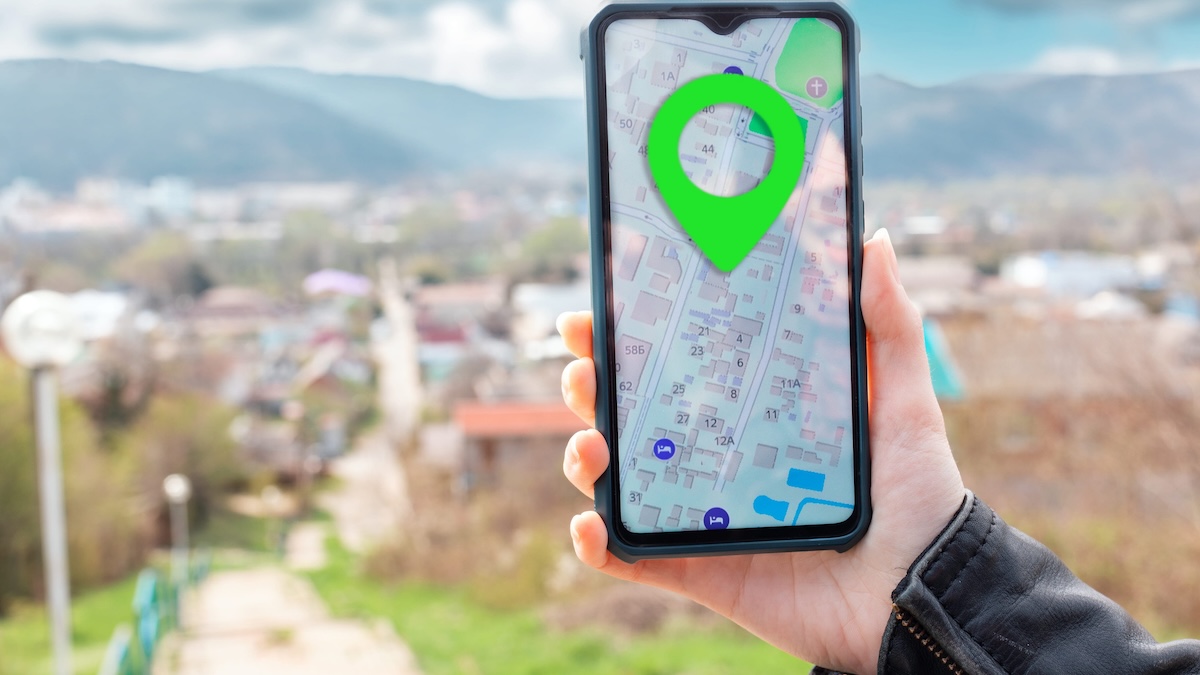
GNSS is not a term that peppers media language often. Nevertheless, it underpins almost all technologies that we use in everyday life. GNSS systems are present in modern automobiles, feeding the moving maps on trip computers that tell us where to go; GNSS services in smartphones enable features like location sharing and geotagging; they’re even in small devices like Apple AirTags and Oura rings that stream location data and other metrics in real time.
What is GNSS and how does it work?
GNSS is often mentioned in connection with PNT. PNT or positioning, navigation, and timing is a broad term used to describe services and systems that provide positioning, navigation and timing capabilities. GNSS is a flavor of PNT service.
Let’s break it down. GNSS stands for Global Navigation Satellite System, which NASA describes as “a space geodesy technique that provides autonomous geospatial positioning with global coverage.” In other words, these are satellite constellations that send global positioning data to a wide range of applications helping pinpoint the locations of objects, static or moving. The signals are freely available for consumer and commercial applications, and encrypted for government and other critical use cases.
Here’s how it works. The satellites are deployed in medium Earth orbit (MEO) from where they broadcast signals containing data to devices. Embedded GNSS receivers in the devices receive and process the data, computing the position of an object relative to the world, time-stamping the events with an approximate 10 nanoseconds of precision.
The process of positioning works across latitude, longitude, and altitude through trilateration. One satellite points to a broad circular area — approximately 35% of the Earth’s surface — where the receiver is located, a second satellite narrows it down to where two circles intersect, and a third satellite pinpoints the precise location where all three circles intersect. A fourth satellite then adds height, allowing the system to calculate altitude as well as position.
History
The GNSS constellations that are in orbit today are: the U.S. Global Positioning System or GPS constellation, developed by the U.S. Department of War (formerly Department of Defense), that has 24 satellites in orbit; Galileo, created and operated by the European Union, and has 26 satellites; the Russian GLONASS, the second operating constellation to provide global coverage, with 25 satellites; and BeiDou or BDS, owned and operated by the Chinese National Space Administration, with 35 satellites.
Additionally, there are two other regional satellite systems — one in Japan called QZSS, and the other in India called NavIC. All of these are medium Earth orbit (MEO) satellites.
The U.S. GPS system was the first of its kind, and as others joined, the term GNSS was coined as an umbrella term to describe this kind of satellite systems. So GPS may be a more commonly used term, but GNSS is the accurate name for the type of service.
Applications
GNSS data is used in a multitude of applications, starting with the military, which is what the first systems were designed for. The data was supposed to be used by military personnel for location awareness.
But soon the technology found its way into an array of civilian and commercial applications. Today, it underpins everything from cars and construction, to shipping, aerospace, agriculture, transportation, and financial systems.
At a high level, GNSS data enables lane-level positioning in autonomous driving; provides high-precision time synchronization in cellular networks and trading platforms; it supports crop mapping and resource optimization in precision agriculture; and in survey and mapping, highly-accurate GNSS data is used for geodetic control, land surveying, and infrastructure monitoring.
GNSS still continues to be a key enabler in the defense sector where troops use GNSS information to track movements of potential targets, feed situational awareness systems, and inform weapon systems.
The Office of Space Commerce estimates that GPS generated $1.4 trillion in the U.S. between its deployment in the 1980s and 2019. However, the study suggests that an outage could potentially cost as much as $1 billion a day, underscoring the extent to its technological dependence.