


This week in scams, social engineering sits at the center of several major headlines, from investment platform breaches to social media account takeovers and new warnings about AI-driven fraud.
Every week, this roundup breaks down the scam and cybersecurity stories making news and explains how they actually work, so readers can better recognize risk and avoid being manipulated.
Let’s get into it:
Betterment Warns Customers of Breach
The big picture:
Attackers accessed third-party systems used by Betterment, then used the information they stole to impersonate the company, contact customers, and promise scam crypto investment opportunities with too-good-to-be-true returns.
What happened:
Attackers used social engineering to compromise third-party tools Betterment uses for marketing and operations, as reported by TechCrunch. With access to internal systems, they sent messages to customers that appeared legitimate.
The messages promised to triple crypto holdings if recipients sent $10,000 to a wallet controlled by the attackers, a classic “send money to get more back” lure, later detailed by The Verge.
Betterment says no account logins or passwords were compromised, but personal data like names, contact details, and dates of birth were exposed, enough to make the messages feel real.
Red flags to watch for:
- Promises of guaranteed or multiplied crypto returns
- Requests to send money first to “unlock” a benefit
- Messages tied to a breach but asking for immediate action outside the app
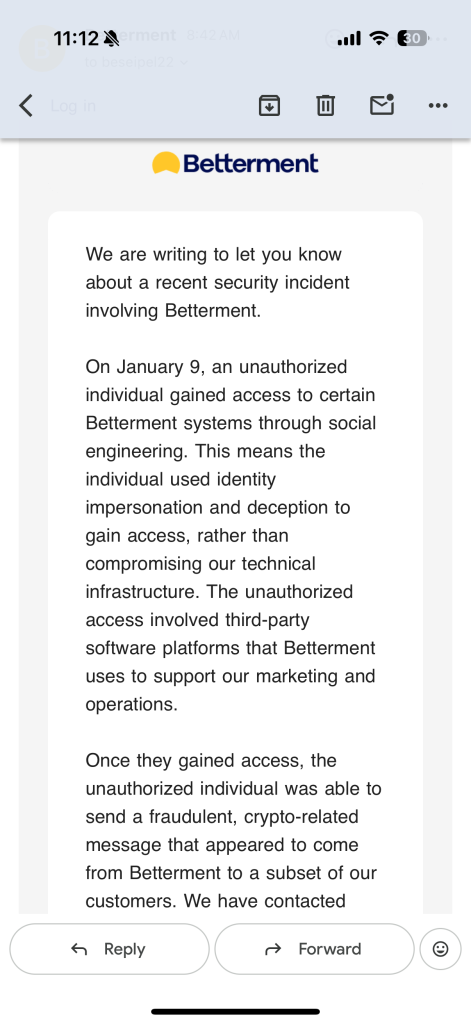
An image of Betterment’s email to customers
How the breach happened:
Social engineering is a type of scam that targets people rather than software or security systems. Instead of hacking code, scammers focus on tricking someone into giving them access.
Attackers research how a company operates, which tools it uses, and who is likely to have permissions. They then impersonate a trusted source, such as a vendor, coworker, or automated system, and send a realistic message asking for a routine action.
That action might be approving a login, resetting credentials, sharing a file, or clicking a link. Once the person complies, the scammer gains legitimate access and can move through systems using real permissions. Social engineering works because it exploits trust, familiarity, and urgency, making normal workplace behavior the pathway to a breach.
Social Engineering Scams Fueled by AI On the Rise
Big picture:
Fraud is increasingly driven by impersonation, automation, and trust abuse rather than technical hacking, according to new industry forecasts.
What happened:
A new Future of Fraud Forecast from Experian warns that fraudsters are rapidly weaponizing AI and identity manipulation. The report highlights agentic AI systems committing fraud autonomously, deepfake job candidates passing live interviews, cloned websites overwhelming takedown efforts, and emotionally intelligent bots running scams at scale.
The scope of the problem is already visible. Federal Trade Commission data shows consumers lost more than $12.5 billion to fraud in 2024, while nearly 60% of companies reported rising fraud losses between 2024 and 2025. Experian’s forecast suggests these losses will accelerate as fraud becomes harder to attribute, trace, and interrupt.
Red flags to watch:
- Requests or actions initiated without clear human ownership
- Identity verification steps that feel automated or unusually frictionless
- Transactions triggered by AI systems with unclear accountability
Phishing Scam Locks Users Out of X Accounts
Big picture: Officials are warning of increasing phishing attacks that steal X users’ accounts and then use their profile to sell crypto.
What happened: The Better Business Bureau issued a warning about phishing messages targeting users on X, particularly accounts with large followings. Victims receive direct messages that appear to come from colleagues or professional contacts, often asking them to click a link to support a contest, event, or opportunity.
Once the link is clicked, victims are locked out of their accounts. The compromised accounts are then used to promote cryptocurrency and other products, while automatically sending the same phishing message to additional contacts.
Red flags to watch:
- Unsolicited direct messages containing links
- Requests framed as favors, votes, or professional support
- Sudden loss of account access after clicking a link
How this happened and what to learn:
The scam relies on account impersonation and lateral spread. Instead of reaching strangers, attackers move through existing trust networks, using one compromised account to reach the next.
The takeaway is that familiarity does not equal legitimacy. Even messages from known contacts should be treated with caution when links or logins are involved.
McAfee’s Safety Tips for This Week
- Verify inside official apps or sites. If you get a security email, don’t click any links. Instead, open the official app or type the website address yourself for more information.
- Stay alert to trending scams. Weight-loss drug fraud like Ozempic offers is already surging in the new year, and awareness is your first defense.
McAfee will be back next week with another roundup of the scams making headlines and the practical steps you can take to stay safer online.

Introducing McAfee+
Identity protection and privacy for your digital life