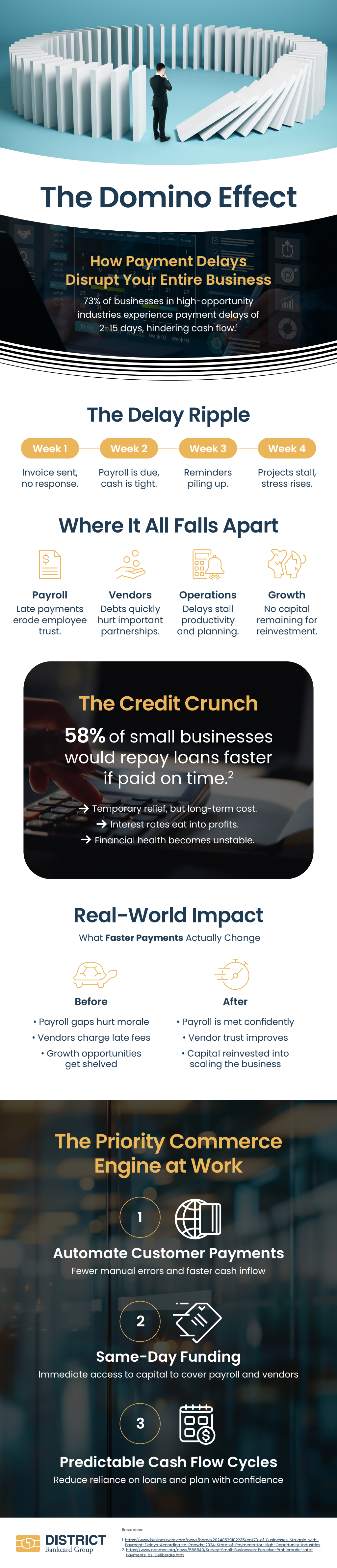
Payment delays often appear minor at first. An invoice sits unpaid for a few extra days, or a customer asks for an extension. Over time, these small disruptions create wider financial strain that affects planning, staffing, and growth. Artificial intelligence now plays a central role in showing how late payments move through an organization and where the true costs emerge.
Turning Payment Data Into Clear Signals
Traditional reporting shows overdue balances and aging summaries, but it rarely explains how delays influence the rest of the operation. AI systems analyze payment history, customer behavior, and cash flow patterns together. This approach reveals correlations that are easy to miss with manual review.
For example, AI can connect delayed payments with rising short-term borrowing or postponed vendor commitments. These links help finance teams see how timing gaps translate into added expenses or missed opportunities. Instead of reacting after issues appear, leaders gain early visibility into financial pressure points.
Predicting Cash Flow Disruptions
Cash flow forecasting becomes far more accurate with AI-driven models. These systems learn from past behavior and adjust projections as new data arrives. If a customer segment shows a pattern of late payments during certain months, AI factors that risk into future forecasts.
This predictive view supports smarter planning decisions. Businesses can adjust inventory levels, staffing schedules, or capital spending based on likely cash availability. The result is steadier operations even when payment timing shifts.
Exposing Hidden Operational Costs
Late payments affect more than accounting metrics. They influence daily operations in subtle ways. AI tools track how delays increase administrative workload, slow supplier payments, and reduce negotiating leverage.
For instance, repeated follow-ups on overdue invoices consume staff time that could be spent on analysis or customer support. AI highlights these hidden labor costs by mapping time spent against payment performance. This insight helps leaders weigh the full impact of payment behavior beyond simple balances.
Supporting Risk Management and Compliance
Payment delays can also raise compliance and reporting risks, especially for organizations that handle regulated transactions. AI monitors payment flows for irregular patterns that may signal issues such as system errors or process gaps.
In sectors that involve public funds, accurate timing and documentation are critical. AI helps manage oversight in areas such as payment processing for government by flagging delays that could affect reporting accuracy or contractual obligations. This proactive monitoring reduces exposure and supports stronger financial controls.
Improving Customer and Vendor Relationships
AI does more than identify problems. It supports better communication strategies. By segmenting customers based on payment behavior, businesses can apply the right outreach approach for each group. Some delays may reflect process issues, while others signal financial stress.
With data-backed insight, finance teams can engage earlier and more constructively. Vendors also benefit from clearer payment forecasts, which strengthens trust and supply continuity. AI shifts conversations from reactive reminders to informed collaboration.
Building Resilience Through Better Insight
The greatest value of AI lies in its ability to connect cause and effect across the business. Payment delays are rarely isolated events. They interact with budgeting, staffing, vendor terms, and strategic planning. AI brings these connections into view and updates them continuously as conditions change.
Organizations that rely on this insight gain greater resilience. They move from guessing about cash flow risk to managing it with clarity. Over time, this shift supports steadier growth and more confident decision-making.
Late payments will always exist to some degree, but their disruptive power does not have to remain hidden. AI gives businesses a clearer picture of how timing affects performance across the organization. With that visibility, leaders can respond earlier, plan smarter, and reduce the downstream impact of payment delays on the entire enterprise. For more information on the impact of payment delays, check out the infographic below.