
Close Menu
geekfence.comgeekfence.com
    What's Hot

    Apple says it fixed a vulnerability in its Hide My Email tool that let anyone see a user’s real email address; researchers first reported the issue in June 2025 (Joseph Cox/404 Media)

    July 21, 2026

    Alan Turing’s biggest AI assumption may have been wrong

    July 21, 2026

    Why Data-Driven Businesses Still Use USB Drives

    July 21, 2026
    Facebook X (Twitter) Instagram
    • About Us
    • Contact Us
    Facebook Instagram
    geekfence.comgeekfence.com
    • Home
    • UK Tech News
    • AI
    • Big Data
    • Cyber Security
      • Cloud Computing
      • iOS Development
    • IoT
    • Mobile
    • Software
      • Software Development
      • Software Engineering
    • Technology
      • Green Technology
      • Nanotechnology
    • Telecom
    geekfence.comgeekfence.com
    Home»Cyber Security»Ukraine warns fake CAPTCHAs are being used to make you hack yourself
    Cyber Security

    Ukraine warns fake CAPTCHAs are being used to make you hack yourself

    AdminBy AdminJuly 21, 2026No Comments3 Mins Read2 Views
    Facebook Twitter Pinterest LinkedIn Telegram Tumblr Email
    Ukraine warns fake CAPTCHAs are being used to make you hack yourself
    Share
    Facebook Twitter LinkedIn Pinterest Email


    Ukraine’s computer emergency response team, CERT-UA, has warned that Russian hackers are using fake CAPTCHA checks to trick people into compromising their own PCs.

    The Kremlin-backed Sandworm hacking group is reportedly leveraging fake CAPTCHA checks on compromised websites that persuade users to execute a PowerShell command on their computers – tricking them into running malicious code.

    CERT-UA has attributed the attacks, which have surged this spring and summer against Ukrainian targets, to UAC-0145 – a branch of Sandworm, the hacking unit known for some of Russia’s most destructive cyber attacks in the past 10+ years, including ones against Ukraine’s power grid.

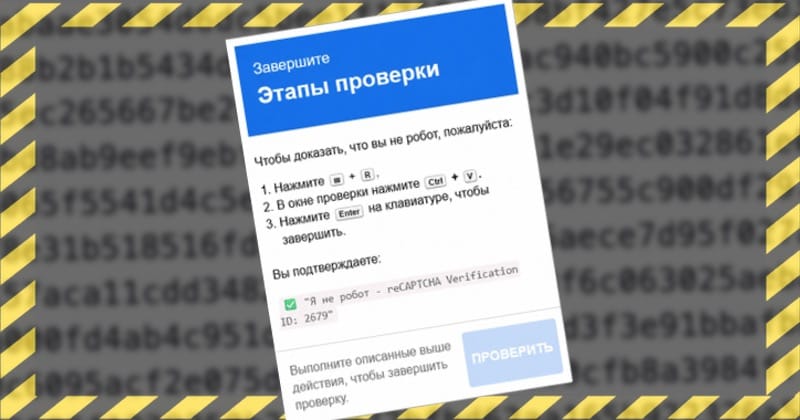
    The latest attacks begin when a user visits a compromised webpage, where they’re greeted by a fake CAPTCHA claiming they need to complete an extra step to prove that they are human.

    But unlike normal CAPTCHAs it is not about picking out the traffic lights or ticking a box. Instead, the fake CAPTCHA instructs the user to copy and paste a PowerShell command into their Windows computer.

    Of course, it’s not worded quite like that.
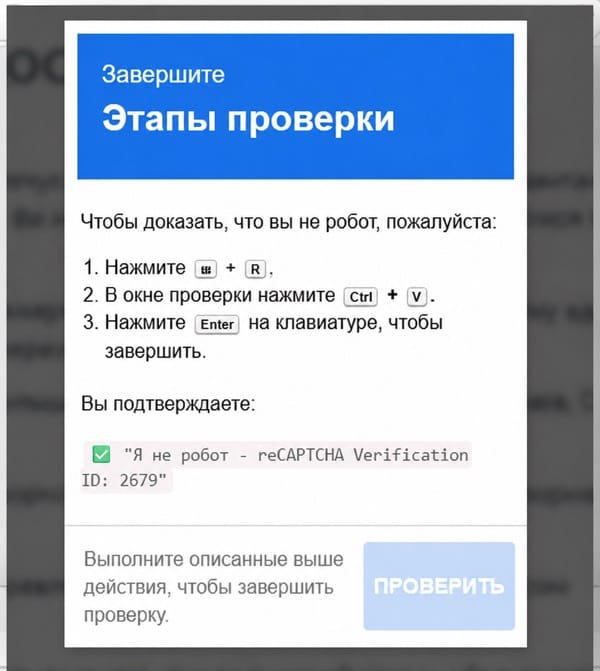
    The instructions tell the user to press a key sequence that opens the Windows Run dialog, pastes the contents of the clipboard, and hits Enter — all without the victim realising what they have just unleashed.

    Because what they’ve just executed could:

    • download malware
    • run PowerShell scripts
    • or install remote access software on their machine

    A genuine CAPTCHA will never ask you to:

    • press Windows + R
    • open the Run dialog
    • paste a command
    • or press Enter to “verify you are human.”

    The downloaded code run on targeted computers runs a reconnaissance tool called ScoutCurl that collects information about the infected computer. This includes details about how the system is set up, what software is installed, files that are present, and browser data – all of which helps attackers determine whether the target is worth compromising further.

    At least ten websites are estimated to have been compromised as part of the campaign since the beginning of June.

    ClickFix attacks like this are not new, and we have written about the threat many times in past articles.

    The uncomfortable truth is that ClickFix attacks persist because cybercriminals have found that they are very effective. This is in part because they do not rely on users being tricked into clicking on malicious links, but instead guide the victim through the process of infecting their own computers.

    Furthermore, the instructions are presented as “helpful” technical advice to resolve an issue, and can too easily be trusted by the unwary. Furthermore, they exploit the fact the widespread installation of legitimate tools like PowerShell which are trusted in many corporate environments.

    ClickFix attacks are not just a problem for the people of Ukraine, already navigating a relentless barrage of cyberattacks from Russian hackers amid a long-lasting kinetic war. They are a problem for computer users worldwide.

    As a result, all computer users should take Ukraine’s warning about the rise in ClickFix attacks as a timely reminder that the most dangerous threats often do not arrive in the form of an exploit of a zero-day vulnerability.


    Source link

    Share. Facebook Twitter Pinterest LinkedIn Tumblr Email

    Related Posts

    UAC-0145 Uses ClickFix CAPTCHAs to Infect Ukrainian Devices wih Malware

    July 19, 2026

    Microsoft Patches a Record 570 Security Flaws – Krebs on Security

    July 18, 2026

    Forgotten UEFI shims undermining Secure Boot

    July 17, 2026

    UK Puts AWS, Azure, Google Cloud, and Oracle Under Direct Financial Oversight

    July 16, 2026

    Lean IT, future-ready: Making wireless careers attractive in the age of AI

    July 15, 2026

    The ransomware negotiator who was working for the other side

    July 14, 2026
    Top Posts

    Understanding U-Net Architecture in Deep Learning

    November 25, 202562 Views

    Hard-braking events as indicators of road segment crash risk

    January 14, 202631 Views

    Redefining AI efficiency with extreme compression

    March 25, 202630 Views
    Don't Miss

    Apple says it fixed a vulnerability in its Hide My Email tool that let anyone see a user’s real email address; researchers first reported the issue in June 2025 (Joseph Cox/404 Media)

    July 21, 2026

    Featured Podcasts Training Data: Factory’s Matan Grinberg: The Coming ‘Dark Factory’ Where Software Builds Itself…

    Alan Turing’s biggest AI assumption may have been wrong

    July 21, 2026

    Why Data-Driven Businesses Still Use USB Drives

    July 21, 2026

    Cisco-Powered Networking, Managed by Lumen: Simple, Secure and Responsive

    July 21, 2026
    Stay In Touch
    • Facebook
    • Instagram
    About Us

    At GeekFence, we are a team of tech-enthusiasts, industry watchers and content creators who believe that technology isn’t just about gadgets—it’s about how innovation transforms our lives, work and society. We’ve come together to build a place where readers, thinkers and industry insiders can converge to explore what’s next in tech.

    Our Picks

    Apple says it fixed a vulnerability in its Hide My Email tool that let anyone see a user’s real email address; researchers first reported the issue in June 2025 (Joseph Cox/404 Media)

    July 21, 2026

    Alan Turing’s biggest AI assumption may have been wrong

    July 21, 2026

    Subscribe to Updates

    Please enable JavaScript in your browser to complete this form.
    Loading
    • About Us
    • Contact Us
    • Disclaimer
    • Privacy Policy
    • Terms and Conditions
    © 2026 Geekfence.All Rigt Reserved.

    Type above and press Enter to search. Press Esc to cancel.