

Artificial intelligence can now craft award-winning essays and help doctors detect disease with impressive accuracy. Yet when it comes to true mental flexibility, living brains still have the clear advantage.
Humans can adjust to new situations and information with remarkable ease. Learning unfamiliar computer software, trying a new recipe, or figuring out the rules of a new game often happens quickly for people, while AI systems typically struggle to adapt in real time and to learn effectively “on the fly.”
In a new study, neuroscientists at Princeton University identify one key reason for this difference. The human brain repeatedly reuses the same cognitive “blocks” across many different situations, combining and recombining them to form new patterns of behavior.
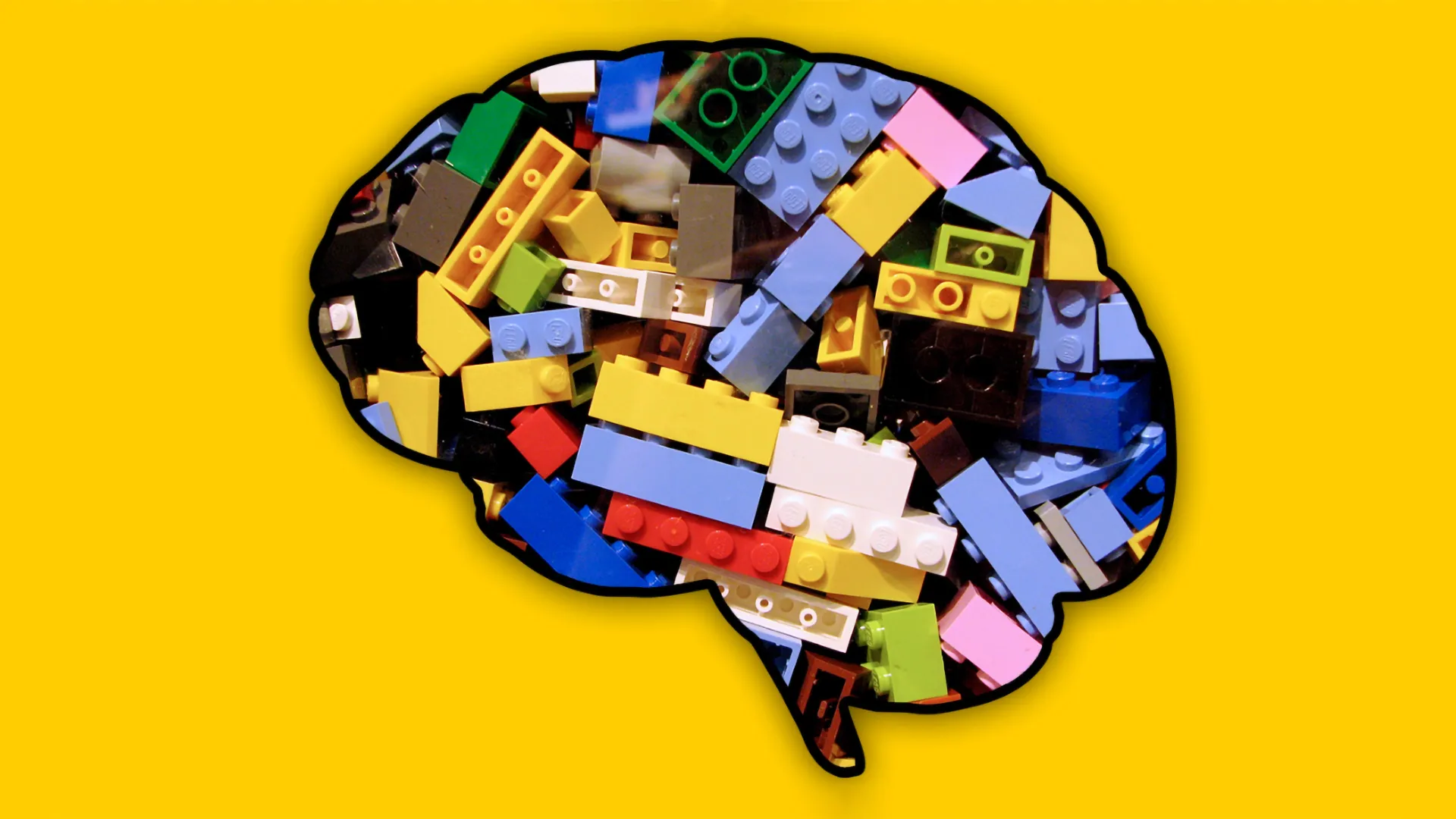
“State-of-the-art AI models can reach human, or even super-human, performance on individual tasks. But they struggle to learn and perform many different tasks,” said Tim Buschman, Ph.D., senior author of the study and associate director of the Princeton Neuroscience Institute. “We found that the brain is flexible because it can reuse components of cognition in many different tasks. By snapping together these ‘cognitive Legos,’ the brain is able to build new tasks.”
The research was published on November 26 in the journal Nature.
Compositionality: reusing skills in new situations
If someone already knows how to tune a bicycle, learning to repair a motorcycle can feel more straightforward. That ability to build a new skill out of simpler, familiar ones drawn from related experiences is known as compositionality.
“If you already know how to bake bread, you can use this ability to bake a cake without relearning how to bake from scratch,” said Sina Tafazoli, Ph.D., a postdoctoral researcher in the Buschman lab at Princeton and lead author of the new study. “You repurpose existing skills — using an oven, measuring ingredients, kneading dough — and combine them with new ones, like whipping batter and making frosting, to create something entirely different.”
Until now, evidence for exactly how the brain supports this kind of flexible, compositional thinking has been limited and sometimes conflicting.
To get a clearer picture, Tafazoli trained two male rhesus macaques to carry out three related tasks while recording activity across their brains.
Testing flexibility with visual categorization tasks
Instead of real-world jobs like baking or bike repair, the animals were asked to perform three visual categorization tasks. On a screen, they saw a series of colorful, balloon-like blobs. Their job was to decide whether each blob looked more like a bunny or the letter “T” (categorizing the shape) or whether it appeared more red or more green (categorizing color).
The challenge was more difficult than it sounded. The blobs varied in how clear the differences were. Some images obviously resembled a bunny or were vividly red, while others were ambiguous and required careful judgment to tell the categories apart.
To report their decision about the shape or color, each monkey indicated its answer by looking in one of four different directions on the screen. In one version of the task, for example, looking left meant the animal judged the blob to be a bunny, while looking right signaled that it looked more like a “T.”
A crucial part of the experiment was that each task had its own specific rules, yet still shared key components with the others.
One of the color tasks and the shape task required the animals to look in the same directions to indicate their choices, while both color tasks asked the monkeys to categorize the color in the same way (as either more red or more green) but to look in different directions when signaling their color judgment (categorizing the color).
This design allowed the researchers to see whether the brain reused the same neural patterns, or cognitive building blocks, whenever tasks shared certain features.
Prefrontal cortex as a hub for reusable cognitive blocks
After examining patterns of brain activity, Tafazoli and Buschman found that the prefrontal cortex, a region at the front of the brain involved in high-level thinking and decision-making, contained several recurring patterns of activity. These patterns appeared whenever groups of neurons worked together toward a common goal, such as distinguishing colors.
Buschman referred to these patterns as the brain’s “cognitive Legos,” a set of building blocks that can be flexibly combined to produce different behaviors.
“I think about a cognitive block like a function in a computer program,” Buschman said. “One set of neurons might discriminate color, and its output can be mapped onto another function that drives an action. That organization allows the brain to perform a task by sequentially performing each component of that task.”
For one of the color tasks, for instance, the brain would assemble a block that determines the color of the image together with another block that guides eye movements in particular directions. When the animal switched to a different task, such as judging shapes instead of colors while still using similar eye movements, the brain simply activated the block for shape processing along with the block for those same eye movements.
This sharing of blocks appeared primarily in the prefrontal cortex and was not seen to the same extent in other brain regions. The finding suggests that this type of compositionality may be a distinctive feature of the prefrontal cortex.
Turning blocks on and off to sharpen focus
Tafazoli and Buschman also observed that the prefrontal cortex seemed to quiet certain cognitive blocks when they were not needed. This likely helps the brain concentrate on the most relevant task at any given moment.
“The brain has a limited capacity for cognitive control,” Tafazoli said. “You have to compress some of your abilities so that you can focus on those that are currently important. Focusing on shape categorization, for example, momentarily diminishes the ability to encode color because the goal is shape discrimination, not color.”
By selectively activating and suppressing different blocks, the brain can avoid being overloaded and can keep performance focused on the current goal.
Cognitive Legos, AI, and mental health
These cognitive Legos may help explain why people are often able to pick up new tasks so rapidly. The brain does not always need to start from scratch. Instead, it can draw on existing mental components, recombine them, and avoid duplicating work, a strategy that current AI systems generally lack.
“A major issue with machine learning is catastrophic interference,” Tafazoli said. “When a machine or a neural network learns something new, they forget and overwrite previous memories. If an artificial neural network knows how to bake a cake but then learns to bake cookies, it will forget how to bake a cake.”
Incorporating compositionality into AI could eventually make artificial systems more human-like in their learning, allowing them to acquire new skills over time without erasing older ones.
The same principles could also influence medicine. Many neurological and psychiatric conditions, including schizophrenia, obsessive-compulsive disorder, and some forms of brain injury, can make it difficult for people to apply existing skills in new situations. These problems may arise when the brain can no longer smoothly recombine its cognitive building blocks.
“Imagine being able to help people regain the ability to shift strategies, learn new routines, or adapt to change,” Tafazoli said. “In the long run, understanding how the brain reuses and recombines knowledge could help us design therapies that restore that process.”
Funding for the study was provided by the National Institutes of Health (R01MH129492, 5T32MH065214).