
Close Menu
geekfence.comgeekfence.com
    What's Hot

    World ID expands its ‘proof of human’ vision for the AI era – Computerworld

    April 19, 2026

    Francis Bacon and the Scientific Method

    April 19, 2026

    War in the Middle East, Damaged Data Centers, and Cloud Disruptions

    April 19, 2026
    Facebook X (Twitter) Instagram
    • About Us
    • Contact Us
    Facebook Instagram
    geekfence.comgeekfence.com
    • Home
    • UK Tech News
    • AI
    • Big Data
    • Cyber Security
      • Cloud Computing
      • iOS Development
    • IoT
    • Mobile
    • Software
      • Software Development
      • Software Engineering
    • Technology
      • Green Technology
      • Nanotechnology
    • Telecom
    geekfence.comgeekfence.com
    Home»Artificial Intelligence»Featured video: Coding for underwater robotics | MIT News
    Artificial Intelligence

    Featured video: Coding for underwater robotics | MIT News

    AdminBy AdminMarch 2, 2026No Comments2 Mins Read3 Views
    Facebook Twitter Pinterest LinkedIn Telegram Tumblr Email
    Featured video: Coding for underwater robotics | MIT News
    Share
    Facebook Twitter LinkedIn Pinterest Email


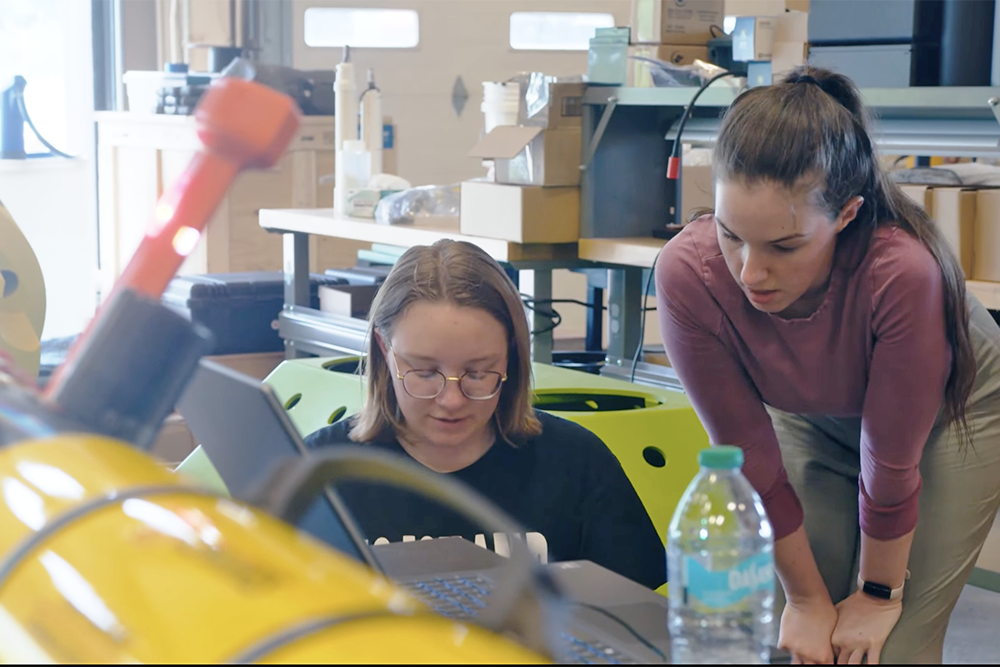
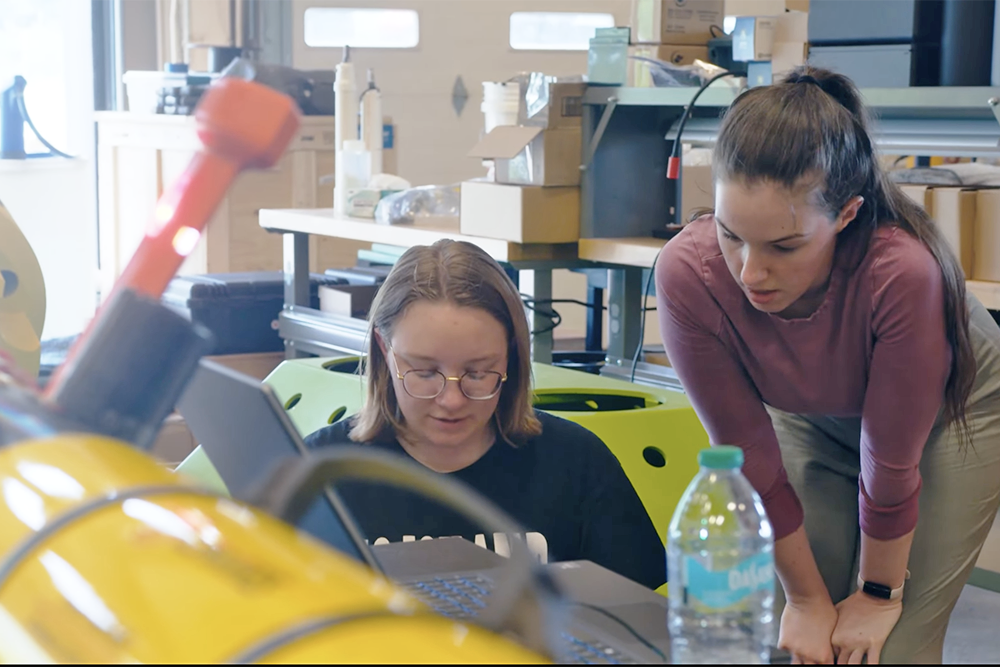
    During a summer internship at MIT Lincoln Laboratory, Ivy Mahncke, an undergraduate student of robotics engineering at Olin College of Engineering, took a hands-on approach to testing algorithms for underwater navigation. She first discovered her love for working with underwater robotics as an intern at the Woods Hole Oceanographic Institution in 2024. Drawn by the chance to tackle new problems and cutting-edge algorithm development, Mahncke began an internship with Lincoln Laboratory’s Advanced Undersea Systems and Technology Group in 2025. 

    Mahncke spent the summer developing and troubleshooting an algorithm that would help a human diver and robotic vehicle collaboratively navigate underwater. The lack of traditional localization aids — such as the Global Positioning System, or GPS — in an underwater environment posed challenges for navigation that Mahncke and her mentors sought to overcome. Her work in the laboratory culminated in field tests of the algorithm on an operational underwater vehicle. Accompanying group staff to field test sites in the Atlantic Ocean, Charles River, and Lake Superior, Mahncke had the opportunity see her software in action in the real world.

    “One of the lead engineers on the project had split off to go do other work. And she said, ‘Here’s my laptop. Here are the things that you need to do. I trust you to go do them.’ And so I got to be out on the water as not just an extra pair of hands, but as one of the lead field testers,” Mahncke says. “I really felt that my supervisors saw me as the future generation of engineers, either at Lincoln Lab or just in the broader industry.”

    Says Madeline Miller, Mahncke’s internship supervisor: “Ivy’s internship coincided with a rigorous series of field tests at the end of an ambitious program. We figuratively threw her right in the water, and she not only floated, but played an integral part in our program’s ability to hit several reach goals.”

    Lincoln Laboratory’s summer research program runs from mid-May to August. Applications are now open. 

    Video by Tim Briggs/MIT Lincoln Laboratory | 2 minutes, 59 seconds


    Source link

    Share. Facebook Twitter Pinterest LinkedIn Tumblr Email

    Related Posts

    How Much Coding Is Required To Work in AI and LLM-related Jobs?

    April 19, 2026

    Posit AI Blog: Implementing rotation equivariance: Group-equivariant CNN from scratch

    April 18, 2026

    The Download: bad news for inner Neanderthals, and AI warfare’s human illusion

    April 17, 2026

    AI Is Writing Our Code Faster Than We Can Verify It – O’Reilly

    April 16, 2026

    Measuring and bridging the realism gap in user simulators

    April 15, 2026

    Tune in on Thursday for Xbox First Look: Metro 2039

    April 14, 2026
    Top Posts

    Understanding U-Net Architecture in Deep Learning

    November 25, 202530 Views

    Hard-braking events as indicators of road segment crash risk

    January 14, 202625 Views

    Redefining AI efficiency with extreme compression

    March 25, 202624 Views
    Don't Miss

    World ID expands its ‘proof of human’ vision for the AI era – Computerworld

    April 19, 2026

    How ‘proof of human’ works Billed as the infrastructure for the age of AI, World…

    Francis Bacon and the Scientific Method

    April 19, 2026

    War in the Middle East, Damaged Data Centers, and Cloud Disruptions

    April 19, 2026

    How Much Coding Is Required To Work in AI and LLM-related Jobs?

    April 19, 2026
    Stay In Touch
    • Facebook
    • Instagram
    About Us

    At GeekFence, we are a team of tech-enthusiasts, industry watchers and content creators who believe that technology isn’t just about gadgets—it’s about how innovation transforms our lives, work and society. We’ve come together to build a place where readers, thinkers and industry insiders can converge to explore what’s next in tech.

    Our Picks

    World ID expands its ‘proof of human’ vision for the AI era – Computerworld

    April 19, 2026

    Francis Bacon and the Scientific Method

    April 19, 2026

    Subscribe to Updates

    Please enable JavaScript in your browser to complete this form.
    Loading
    • About Us
    • Contact Us
    • Disclaimer
    • Privacy Policy
    • Terms and Conditions
    © 2026 Geekfence.All Rigt Reserved.

    Type above and press Enter to search. Press Esc to cancel.