

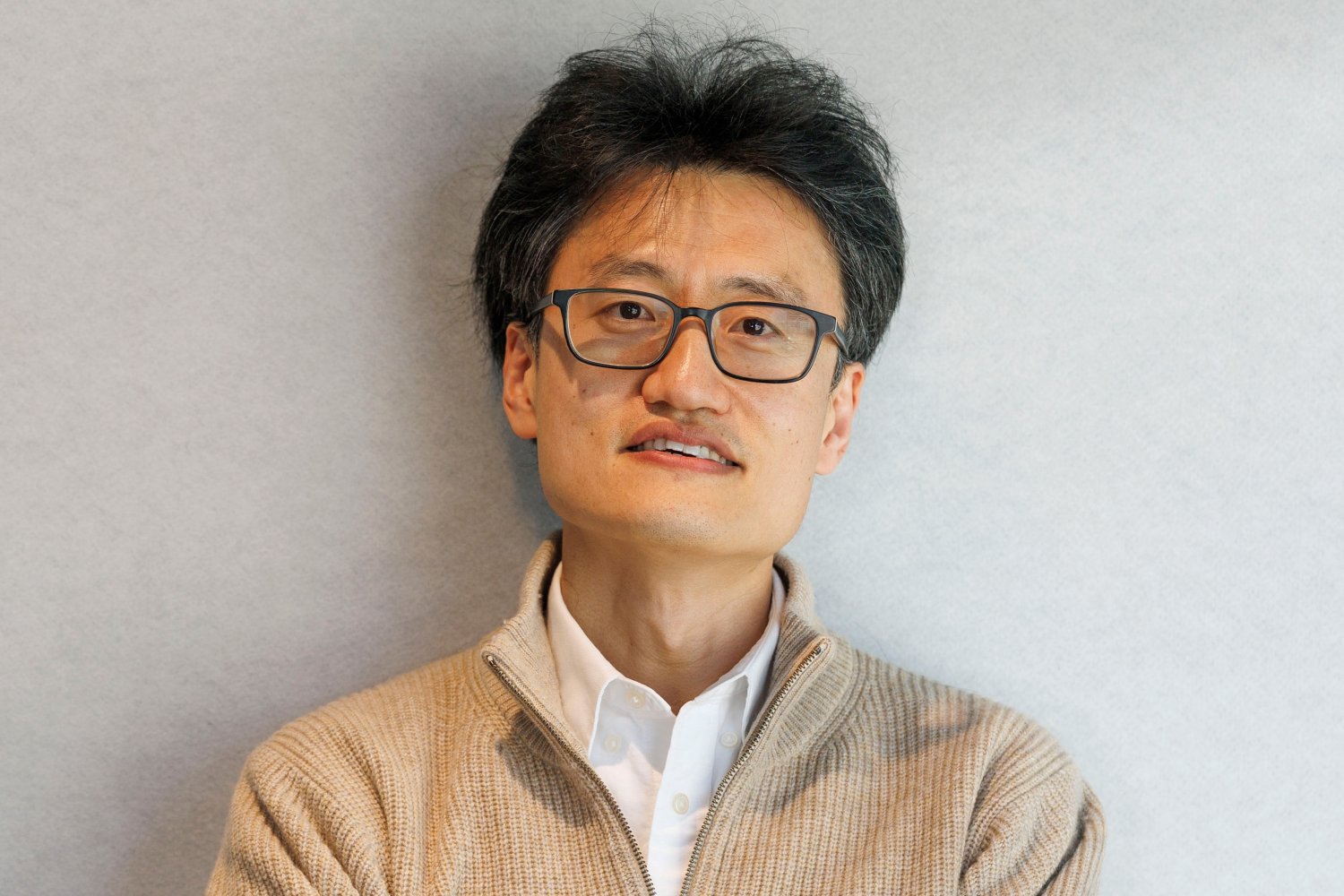
Jinhua Zhao MCP ’04, SM ’04, PhD ’09 has been appointed head of the Department of Urban Studies and Planning (DUSP), effective July 1. Zhao is the Class of 1941 Professor of Cities and Transportation at MIT.
In making the announcement, dean of the MIT School of Architecture and Planning Hashim Sarkis noted that Zhao is a renowned transportation planner, educator, and scholar, and a world leader in imagining and shaping better futures for mobility.
“Jinhua is one of those rare scholars who moves seamlessly between cutting-edge research and real-world policy,” says Sarkis. “His work with governments and transportation agencies around the world is a model for what MIT’s impact can look like beyond our campus.”
Zhao succeeds Professor Christopher Zegras, who has served as department head since 2020. Under his leadership, DUSP expanded opportunities for students to engage directly with communities and policymakers around the world and continued to strengthen its long-standing connection between research and practice. “I want to extend my gratitude to Chris Zegras for his excellent and level-headed leadership, especially in challenging times,” says Sarkis.
After earning advanced degrees at MIT, Zhao joined the DUSP faculty. He says he found the Institute’s lack of conventionality and its culture of sharing ideas across disciplines stimulating.
“MIT is a small school in the best sense of the word,” says Zhao. “We have fewer boundaries than other universities — intellectually and physically. Our ‘infinite corridor’ literally connects us to so many disciplines.”
Shaping mobility systems worldwide
That connectivity has been key for Zhao’s research and programs he has founded at MIT. Respected as a global authority on mobility, his research has been put into practice across some of the world’s most complex mobility challenges. He and his team have shaped policy for Transport for London, the Mass Transit Railway in Hong Kong, and Japan Railways. His research has positively impacted leading U.S. transit authorities including Boston’s MBTA, the Chicago Transit Authority, and Washington’s Metropolitan Area Transit Authority. He has guided strategic planning for mobility industry on the future of autonomous and digital mobility, and developed autonomous vehicle (AV) deployment strategy in Singapore and the Middle East.
“Every city I’ve worked with faces the same tension: The technology is moving faster than the institutions designed to govern it,” says Zhao. “My work has been about closing that gap.”
At MIT, Zhao founded the MIT Mobility Initiative, which engages mobility and transportation researchers across the Institute as well as leaders in these disciplines from around the world. Zhao hosts the weekly MIT Mobility Forum via Zoom, with each discussion open to the public. What began as a small internal list of participants has grown into a global platform, drawing more than 200 practitioners, policymakers, and researchers every week around the world. The sizeable interest in the subject doesn’t surprise Zhao.
“No single discipline owns transportation,” says Zhao. “AI and autonomous systems are reshaping urban living faster than most institutions can adapt. The question is no longer what we know. It is whether the people who need it most — municipal governments, transport agencies, federal ministries — can access it when they make decisions on transportation. This is why the forum exists.”
Zhao directs the JTL Urban Mobility Lab that unites behavioral science and transportation technology to shape travel behavior, design mobility systems, and improve transportation policies. He is also a lead principal investigator with Mens, Manus, and Machina, an MIT initiative at the intersection of artificial intelligence, the future of work, and human learning, developing the tools and strategies for how cities, institutions, and economies can be designed to ensure AI augments, rather than displaces, the people within them.
DUSP’s global agenda
“If you look at the global agenda, what are the issues people are facing?” asks Zhao. “An aging society; AI and its impact on jobs; the energy crisis; traffic congestion. These are just some of the problems people feel connected to because they are embodied in our cities and communities. I want DUSP to engage with the city leaders and share our research and insights.”
As he prepares to step into his role as department head, Zhao says he would like the research generated within DUSP to more quickly reach those who need it most: the planners, officials, and engineers making decisions in cities right now. A transit authority grappling with AV integration; a city government rethinking aging infrastructure; a leading transport ministry navigating the policy implications of AI — these are the constituencies Zhao believes DUSP should be in active conversation with.
“We know a great deal about how cities grow, how people move, and how that will change. The question is whether the people responsible for making these changes — in city halls, transport agencies, federal ministries — can access what we know, when they need it.”