

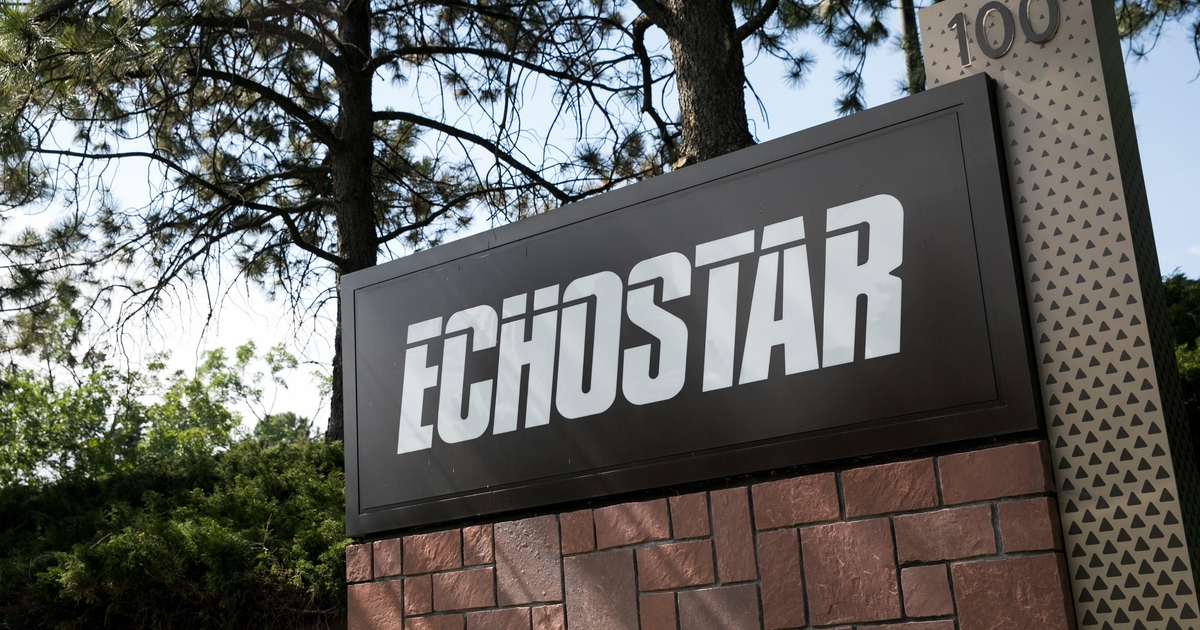
EchoStar subsidiary Hughes Satellite Systems Corporation filed for Chapter 11 bankruptcy protection over the weekend ahead of $1.5 billion in debt payments due today.
News emerged last week that the company was headed for bankruptcy because it did not have enough funds to meet its debt obligation. The voluntary Chapter 11 petition was filed in the Bankruptcy Court for the Southern District of Texas on Sunday (August 2) to give the company time to reorganize financially and operationally.
In the “near-term,” Hughes said it has enough liquidity to fund operations during the process and will use existing cash as it seeks to “right-size” its balance sheet.
The company also noted that EchoStar and Hughes’ international subsidiaries are not included in the proceeding and that EchoStar’s other operations will not be affected.
Along with bolstering its capital structure and addressing debt, the restructuring will also “accelerate” the satellite company’s shift from residential broadband satellite services to serving enterprise, government and defense customers.
As Hughes refocuses on enterprise segments, its satellite broadband subscriber losses deepened in the second quarter. It lost 59,000 net broadband customers in Q2, up from 34,000 a year ago. It ended the period with 622,000 broadband customers, marking a 24.1% drop from 819,000 customers at the same time last year.
This is the second EchoStar-related bankruptcy filing in the last month. Dish DBS voluntarily filed Chapter 11 cases under a prepackaged restructuring associated with closing the Dish Wireless business. Dish DBS includes the Dish satellite pay-TV service, Sling TV streaming service and Dish Wireless.
The latter is the unit that is decommissioning its national 5G network after parent EchoStar inked deals to sell spectrum to AT&T and SpaceX. EchoStar says it migrated all wireless traffic from its 5G network to AT&T’s radio access network in November last year, as part of its so-called “hybrid MNO” agreement, whereby it continues to operate its own 5G core.
EchoStar loses more customers
EchoStar continued to lose pay-TV customers in Q2. It ended the period with 6.39 million pay-TV subscribers, down 10.1% from 7.11 million in the same period last year.
The Dish TV customer base shrank 12% year-over-year to 4.68 million subscribers as of June 30. Net subscriber losses increased to 161,000 in Q2, compared to 152,000 net losses in the same period last year. The decline was attributed to higher churn (1.49% in Q2 compared, up from 1.29% in Q2 last year) and lower gross subscriber activations.
The Sling TV streaming service lost 80,000 customers in Q2, down from 109,000 net losses in Q2 last year. Sling TV subscriptions decreased 4.4% to 1.71 million as of June 30.
In wireless, where EchoStar provides services under the Boost Mobile and Gen Mobile brands, net subscriber losses totaled 118,000, compared to net additions of 212,000 last year. The decline was due to lower gross wireless activations (504,000 in Q2 compared to 634,00 in Q2 last year), lower net government-subsidized additions and higher churn (2.88% in Q2 compared to 2.69% last year).
EchoStar explained the lower gross wireless additions were mostly the result of lower marketing spend and a focus on “profitable growth” under the new hybrid MNO cost structure. It also pointed to an intense competition, aggressive discounts and bigger device subsidies as other factors hindering customer growth.
Financial snapshot
EchoStar reported total revenue of $3.58 billion in Q2, down 3.8% from last year, and a net income of $8.46 billion, compared to a net loss of $306.1 million a year ago. The swing to profit was attributed to a “non-cash gain on deconsolidation” of approximately $9.73 billion resulting from the Dish DBS bankruptcy cases. Operating income was $512 million, up from an operating loss of $213 million a year ago.
Pay-TV service revenue, the company’s largest top-line segment, dropped 8.7% to $2.25 billion in Q2.
Wireless service revenue dipped 0.3% to $929 million, while satellite broadband revenue fell 6.7% to $317 million.