
Close Menu
geekfence.comgeekfence.com
    What's Hot

    Wilkie refers gambling concerns to anti-corruption commission

    August 13, 2026

    Lumen ready for AI traffic rush – with programmable fabric and “more fiber than anyone”

    August 13, 2026

    With a feel for physics, AI models simulate a wider range of real-world scenarios | MIT News

    August 13, 2026
    Facebook X (Twitter) Instagram
    • About Us
    • Contact Us
    Facebook Instagram
    geekfence.comgeekfence.com
    • Home
    • UK Tech News
    • AI
    • Big Data
    • Cyber Security
      • Cloud Computing
      • iOS Development
    • IoT
    • Mobile
    • Software
      • Software Development
      • Software Engineering
    • Technology
      • Green Technology
      • Nanotechnology
    • Telecom
    geekfence.comgeekfence.com
    Home»Nanotechnology»How polarons travel through TiO₂ – Physics World
    Nanotechnology

    How polarons travel through TiO₂ – Physics World

    AdminBy AdminMay 6, 2026No Comments2 Mins Read10 Views
    Facebook Twitter Pinterest LinkedIn Telegram Tumblr Email
    How polarons travel through TiO₂ – Physics World
    Share
    Facebook Twitter LinkedIn Pinterest Email


    New simulations and ultraclean films reveal the clearest picture yet of polaron transport in TiO₂
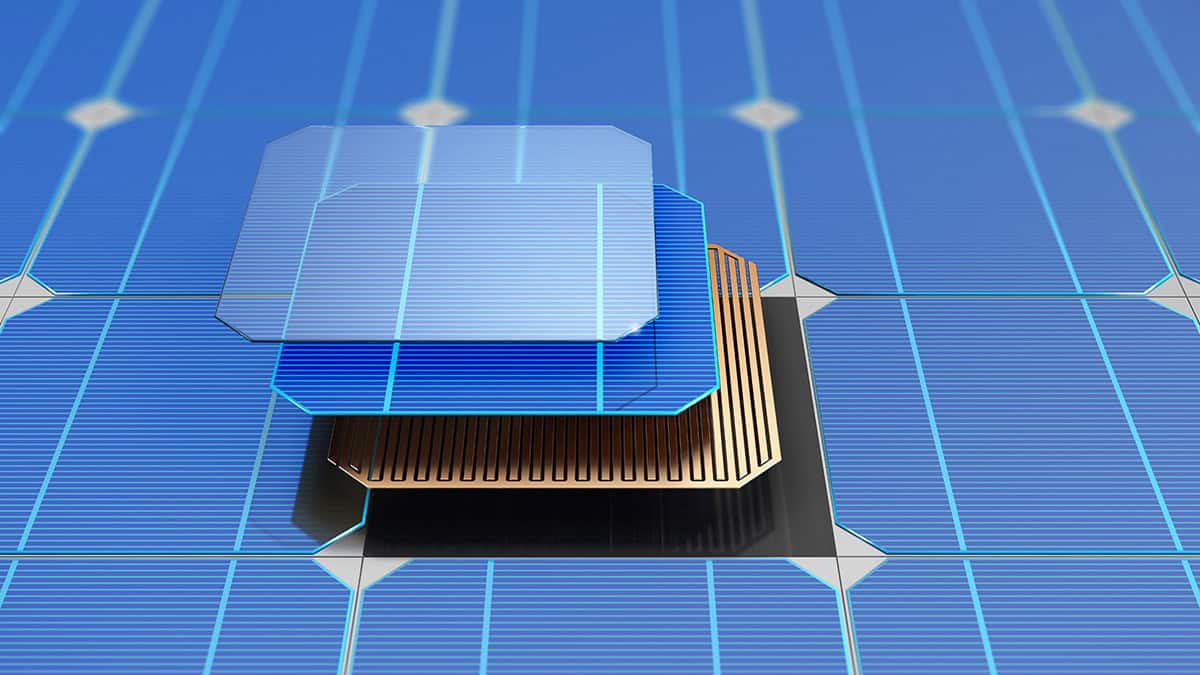
    Solar panel material layers schematic

    Solar panel material layers schematic (Courtesy: Shutterstock/Laremenko Sergii)

    Complex oxide materials form a large family of compounds with highly tuneable electronic properties, making them important for electronics, magnetic devices, and energy technologies. In many of these materials, electrons interact strongly with lattice vibrations and form polarons, quasiparticles consisting of an electron plus the surrounding lattice distortion. Polarons play a key role in determining how materials conduct electricity, but they are difficult to study because theoretical modelling requires advanced methods to describe strong electron-lattice interactions characteristic of polarons, and experiments must be performed on ultraclean samples to reveal intrinsic behaviour.

    In this work, the researchers combine experimental and theoretical approaches to study polarons in TiO₂, a material that is ideal for this purpose because it has a simple crystal structure, well‑known phonon modes, well‑characterised defects, and strong, reproducible electron-phonon coupling. They use a state of the art simulation method called first‑principles electron‑phonon diagrammatic Monte Carlo (FEP‑DMC), which accurately predicts polaron formation and transport. The calculations predict a room temperature mobility of around 45 cm² V⁻¹ s⁻¹ and a characteristic temperature scaling of μ ∝ T⁻¹·⁹, while also revealing microscopic details of polaron structure, phonon cloud distribution, and lattice distortion that experiments alone cannot access.

    Lead researchers Marco Bernardi (left) from California Institute of Technology and Bharat Jalan (right) from University of Minnesota
    Lead researchers Marco Bernardi (left) from California Institute of Technology and Bharat Jalan (right) from University of Minnesota (Courtesy: Bernardi/California Institute of Technology and Jalan/ Minnesota)

    The team then grew ultrahigh‑quality TiO₂ thin films with controlled oxygen vacancies using hybrid molecular beam epitaxy, achieving record high electron mobility in excellent agreement with the theoretical predictions. Microscopy and spectroscopy measurements show that oxygen vacancies act as intrinsic n‑type dopants and strongly influence low‑temperature transport, including in‑plane resistance anisotropy and signatures of the Kondo effect.

    Together, these results provide the most detailed picture to date of how large polarons move in TiO₂ and demonstrate that the theoretical method is a reliable predictive tool for polaronic materials. This unified framework will help guide the design and engineering of improved electronic and energy materials in the future.

    Do you want to learn more about this topic?

    Review Phonons and thermal transport in graphene and graphene-based materials by Denis L Nika and Alexander A Balandin (2017)


    Source link

    Share. Facebook Twitter Pinterest LinkedIn Tumblr Email

    Related Posts

    A programmable DNA origami nanosyringe for directed membrane translocation

    August 12, 2026

    Magnetic molecules explain a puzzling material – Physics World

    August 11, 2026

    Pomegranate Peel Nanomaterials Give TiO₂ New Control Over CO₂ Reduction

    August 10, 2026

    New fuel cell breakthrough could help power energy-hungry data centers

    August 9, 2026

    Spectral biophysical cytometry with nanosensors reveals remodelling of immune cells in atherosclerosis

    August 7, 2026

    Kristian Dominek Barajas – ‘I’m able to take a really complicated problem and give it my best guess’ – Physics World

    August 6, 2026
    Top Posts

    Understanding U-Net Architecture in Deep Learning

    November 25, 202577 Views

    The Next Paradigm in Efficient Inference Scaling – The Berkeley Artificial Intelligence Research Blog

    May 16, 202642 Views

    Is it too late to start learning AI and machine learning in my 30s or 40s?

    April 9, 202640 Views
    Don't Miss

    Wilkie refers gambling concerns to anti-corruption commission

    August 13, 2026

    Independent MP Andrew Wilkie has taken the fight over gambling reform to the National Anti-Corruption…

    Lumen ready for AI traffic rush – with programmable fabric and “more fiber than anyone”

    August 13, 2026

    With a feel for physics, AI models simulate a wider range of real-world scenarios | MIT News

    August 13, 2026

    Monitoring beyond SNMP: Turning your network into a sensor

    August 13, 2026
    Stay In Touch
    • Facebook
    • Instagram
    About Us

    At GeekFence, we are a team of tech-enthusiasts, industry watchers and content creators who believe that technology isn’t just about gadgets—it’s about how innovation transforms our lives, work and society. We’ve come together to build a place where readers, thinkers and industry insiders can converge to explore what’s next in tech.

    Our Picks

    Wilkie refers gambling concerns to anti-corruption commission

    August 13, 2026

    Lumen ready for AI traffic rush – with programmable fabric and “more fiber than anyone”

    August 13, 2026

    Subscribe to Updates

    Please enable JavaScript in your browser to complete this form.
    Loading
    • About Us
    • Contact Us
    • Disclaimer
    • Privacy Policy
    • Terms and Conditions
    © 2026 Geekfence.All Rigt Reserved.

    Type above and press Enter to search. Press Esc to cancel.