
Close Menu
geekfence.comgeekfence.com
    What's Hot

    OpenAI launches GPT-5.2 as it battles Google’s Gemini 3 for AI model supremacy – Computerworld

    December 14, 2025

    The Download: Expanded carrier screening, and how Southeast Asia plans to get to space

    December 14, 2025

    How Bayer transforms Pharma R&D with a cloud-based data science ecosystem using Amazon SageMaker

    December 14, 2025
    Facebook X (Twitter) Instagram
    • About Us
    • Contact Us
    Facebook Instagram
    geekfence.comgeekfence.com
    • Home
    • UK Tech News
    • AI
    • Big Data
    • Cyber Security
      • Cloud Computing
      • iOS Development
    • IoT
    • Mobile
    • Software
      • Software Development
      • Software Engineering
    • Technology
      • Green Technology
      • Nanotechnology
    • Telecom
    geekfence.comgeekfence.com
    Home»Nanotechnology»Flexible electrodes for the future of light detection – Physics World
    Nanotechnology

    Flexible electrodes for the future of light detection – Physics World

    AdminBy AdminNovember 20, 2025No Comments2 Mins Read0 Views
    Facebook Twitter Pinterest LinkedIn Telegram Tumblr Email
    Flexible electrodes for the future of light detection – Physics World
    Share
    Facebook Twitter LinkedIn Pinterest Email


    By tuning the work function of PEDOT:PSS electrodes, researchers enhance photodetector efficiency and adaptability, advancing the future of optoelectronic systems
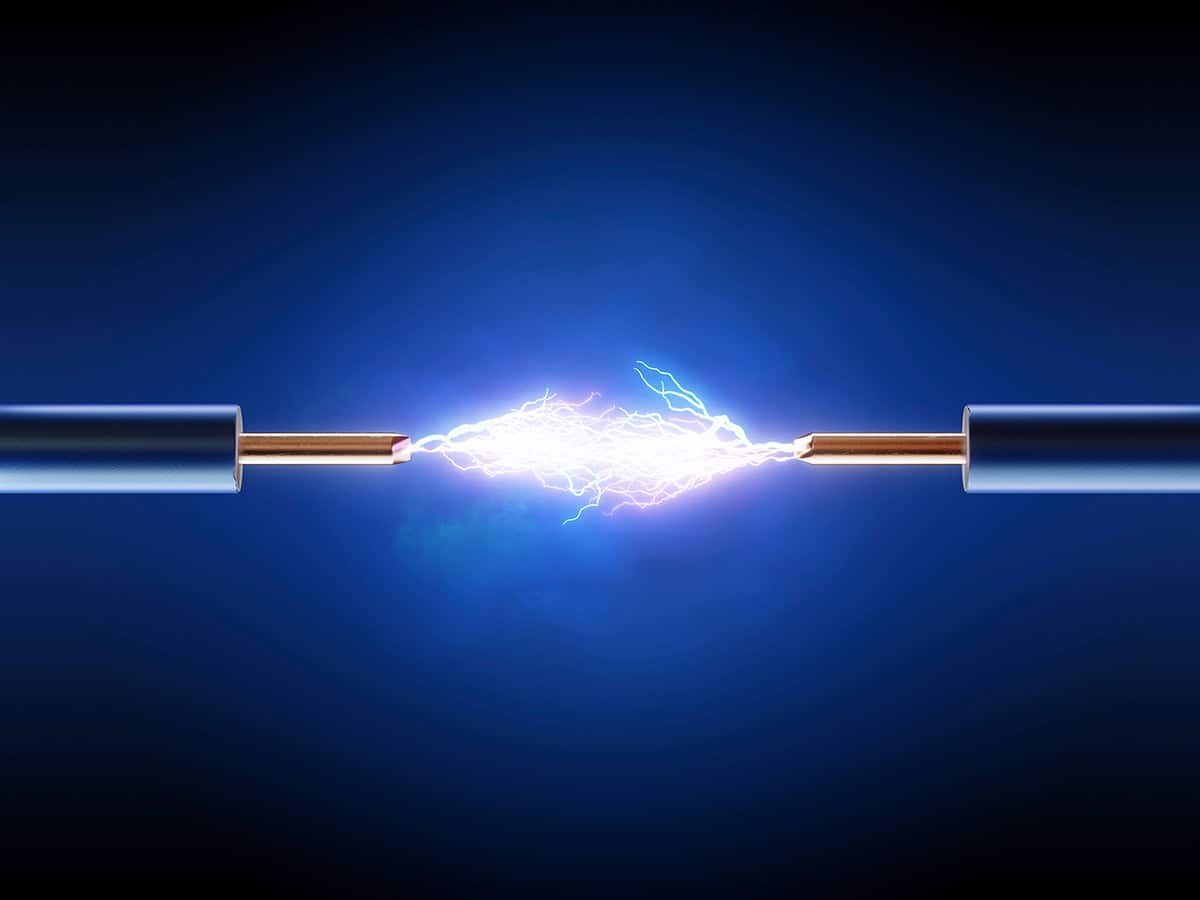
    Image of electricity

    Image of electricity (Courtesy: iStock/Johan63)

    Photodetectors convert light into electrical signals and are essential in technologies ranging from consumer electronics and communications to healthcare. They also play a vital role in scientific research. Researchers are continually working to improve their sensitivity, response speed, spectral range, and design efficiency.

    Since the discovery of graphene’s remarkable electrical properties, there has been growing interest in using graphene and other two-dimensional (2D) materials to advance photodetection technologies. When light interacts with these materials, it excites electrons that must travel to a nearby contact electrode to generate an electrical signal. The ease with which this occurs depends on the work functions of the materials involved, specifically, the difference between them, known as the Schottky barrier height. Selecting an optimal combination of 2D material and electrode can minimize this barrier, enhancing the photodetector’s sensitivity and speed. Unfortunately, traditional electrode materials have fixed work functions which are limiting 2D photodetector technology.

    PEDOT:PSS is a widely used electrode material in photodetectors due to its low cost, flexibility, and transparency. In this study, the researchers have developed PEDOT:PSS electrodes with tunable work functions ranging from 5.1 to 3.2 eV, making them compatible with a variety of 2D materials and ideal for optimizing device performance in metal-semiconductor-metal architectures. In addition, their thorough investigation demonstrates that the produced photodetectors performed excellently, with a significant forward current flow (rectification ratio ~10⁵), a strong conversion of light to electrical output (responsivity up to 1.8 A/W), and an exceptionally high Ilight/Idark ratio of 10⁸. Furthermore, the detectors were highly sensitive with low noise, had very fast response times (as fast as 3.2 μs), and thanks to the transparency of PEDOT:PSS, showed extended sensitivity into the near-infrared region.

    This study demonstrates a tunable, transparent polymer electrode that enhances the performance and versatility of 2D photodetectors, offering a promising path toward flexible, self-powered, and wearable optoelectronic systems, and paving the way for next-generation intelligent interactive technologies.

    Do you want to learn more about this topic?

    Two-dimensional material/group-III nitride hetero-structures and devices by Tingting Lin, Yi Zeng, Xinyu Liao, Jing Li, Changjian Zhou and Wenliang Wang (2025)


    Source link

    Share. Facebook Twitter Pinterest LinkedIn Tumblr Email

    Related Posts

    Synergistic composite engineering: Bridging immunomodulaftion, bone regeneration and precision therapy in osteosarcoma management

    December 14, 2025

    Sustainable functional ceramics | Nature Nanotechnology

    December 13, 2025

    Quantum Magazine Issue 1

    December 12, 2025

    Diagnosing brain cancer without a biopsy – Physics World

    December 11, 2025

    Plasmonic Coupling Sharpens Quasi-2D Perovskite Photodetectors

    December 10, 2025

    The “impossible” LED breakthrough that changes everything

    December 9, 2025
    Top Posts

    Microsoft 365 Copilot now enables you to build apps and workflows

    October 29, 20257 Views

    Understanding U-Net Architecture in Deep Learning

    November 25, 20256 Views

    Here’s the latest company planning for gene-edited babies

    November 2, 20255 Views
    Don't Miss

    OpenAI launches GPT-5.2 as it battles Google’s Gemini 3 for AI model supremacy – Computerworld

    December 14, 2025

    Rachid ‘Rush’ Wehbi, CEO of e-commerce platform Sell The Trend, has tested GPT-5.2 under real-world…

    The Download: Expanded carrier screening, and how Southeast Asia plans to get to space

    December 14, 2025

    How Bayer transforms Pharma R&D with a cloud-based data science ecosystem using Amazon SageMaker

    December 14, 2025

    How cloud infrastructure shapes the modern Diablo experience 

    December 14, 2025
    Stay In Touch
    • Facebook
    • Instagram
    About Us

    At GeekFence, we are a team of tech-enthusiasts, industry watchers and content creators who believe that technology isn’t just about gadgets—it’s about how innovation transforms our lives, work and society. We’ve come together to build a place where readers, thinkers and industry insiders can converge to explore what’s next in tech.

    Our Picks

    OpenAI launches GPT-5.2 as it battles Google’s Gemini 3 for AI model supremacy – Computerworld

    December 14, 2025

    The Download: Expanded carrier screening, and how Southeast Asia plans to get to space

    December 14, 2025

    Subscribe to Updates

    Please enable JavaScript in your browser to complete this form.
    Loading
    • About Us
    • Contact Us
    • Disclaimer
    • Privacy Policy
    • Terms and Conditions
    © 2025 Geekfence.All Rigt Reserved.

    Type above and press Enter to search. Press Esc to cancel.