

Grokipedia, or the “bias-free Wikipedia”, is finally here. With a massive store of over 800K articles, Grokipedia isn’t just another challenger to the reign of free information: it’s already taking its place. A lot has changed since the first public release of Grokipedia, from the addition of more articles to the promise of even more to follow. I’ll be putting the “AI-powered encyclopedia” to the test to see how well it fares with tasks specifically designed to challenge its “bias-free” assertion. Without further ado, let’s jump into it.
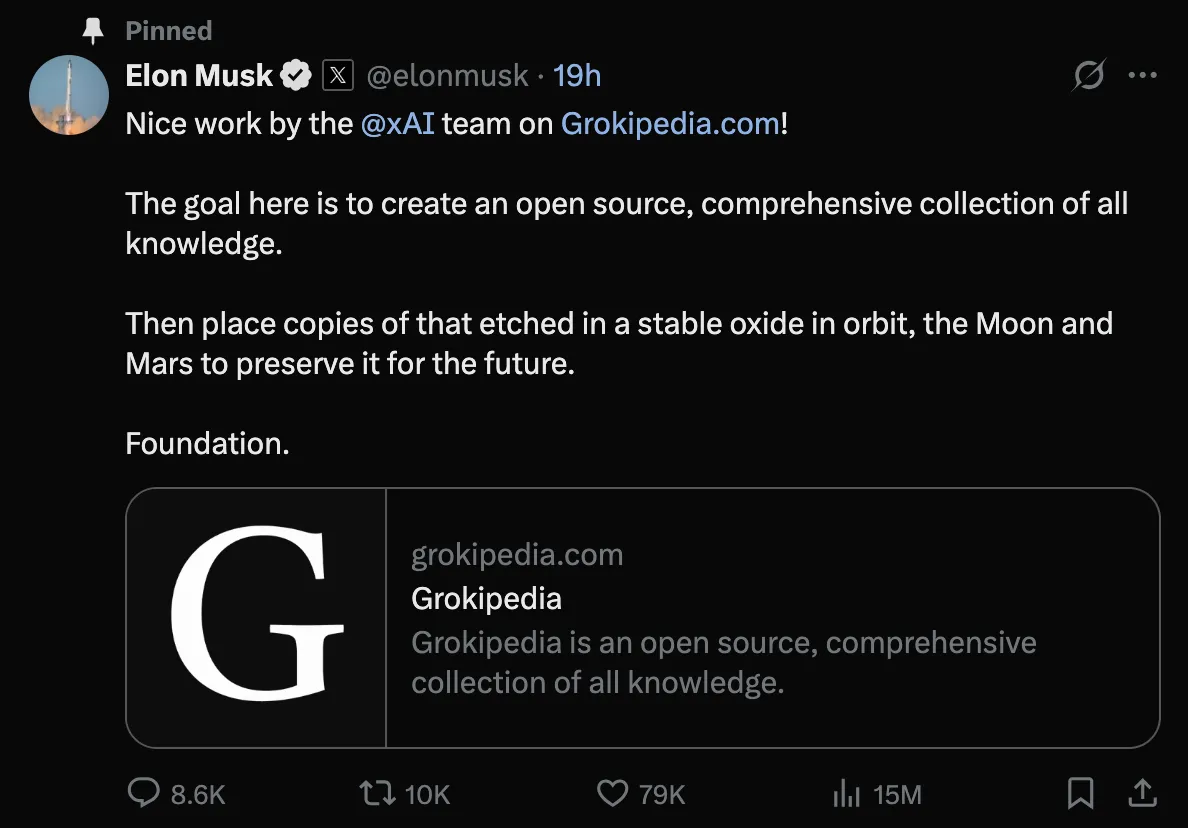
I also reviewed their previous version, and you can read all about it here – Grokipedia Beta!
What is Grokipedia?
Grokipedia is Elon Musk’s ambitious answer to what he perceives as Wikipedia’s “left-wing bias.” Launched as an early beta v.01 by his AI company xAI on October 27, 2025, Grokipedia aims to be an AI-powered online encyclopedia that generates and updates articles in real time. The platform promises “synthetic corrections” and an absence of ideological gatekeeping, with its content primarily created and edited by the Grok language model. The project’s core vision is to offer an alternative knowledge base that relies on AI for fact-checking and content generation.
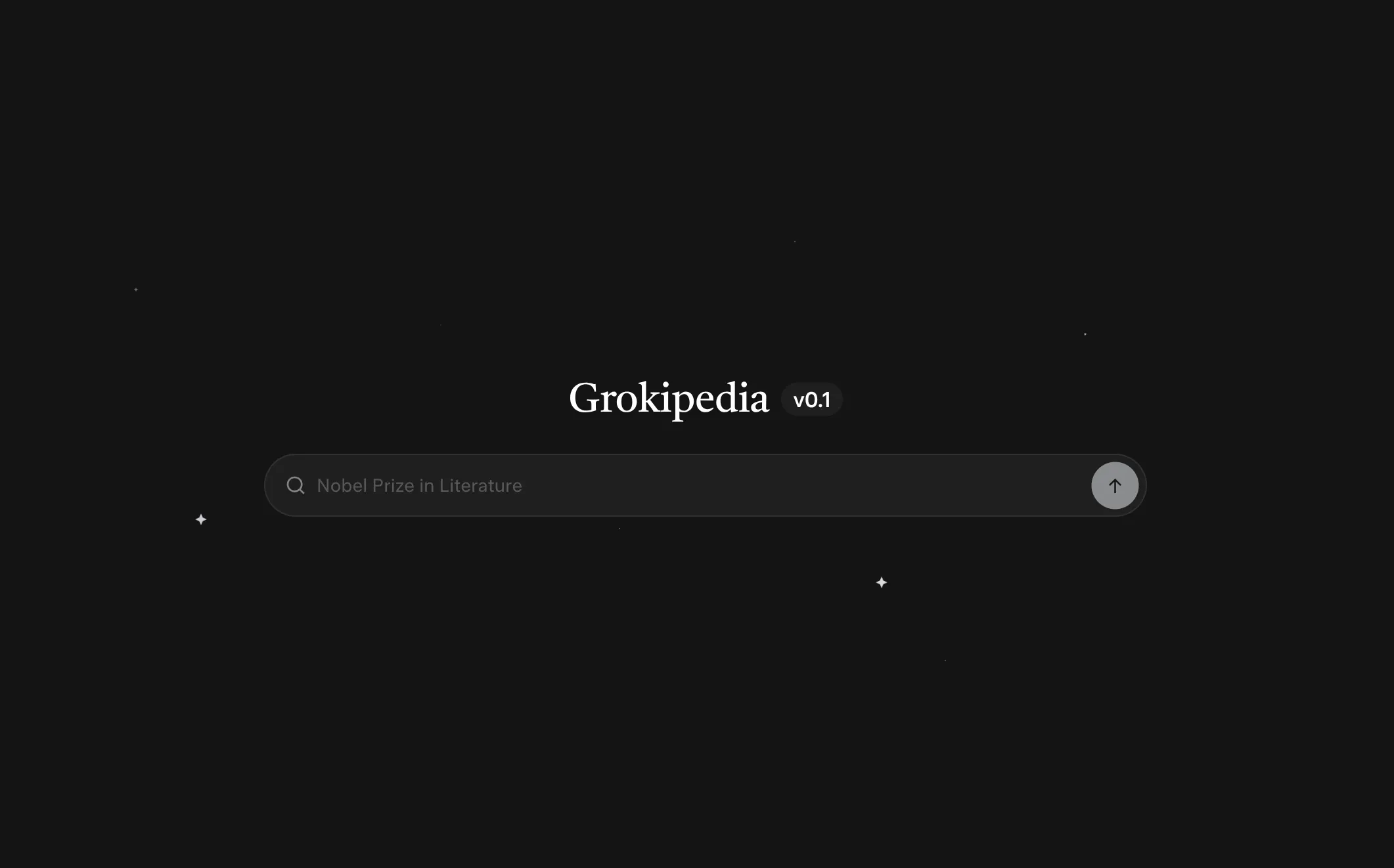
Essentially, it works like this:
1. You search for something on Grokipedia.
2. It does a lookup over its database and yields relevant results.
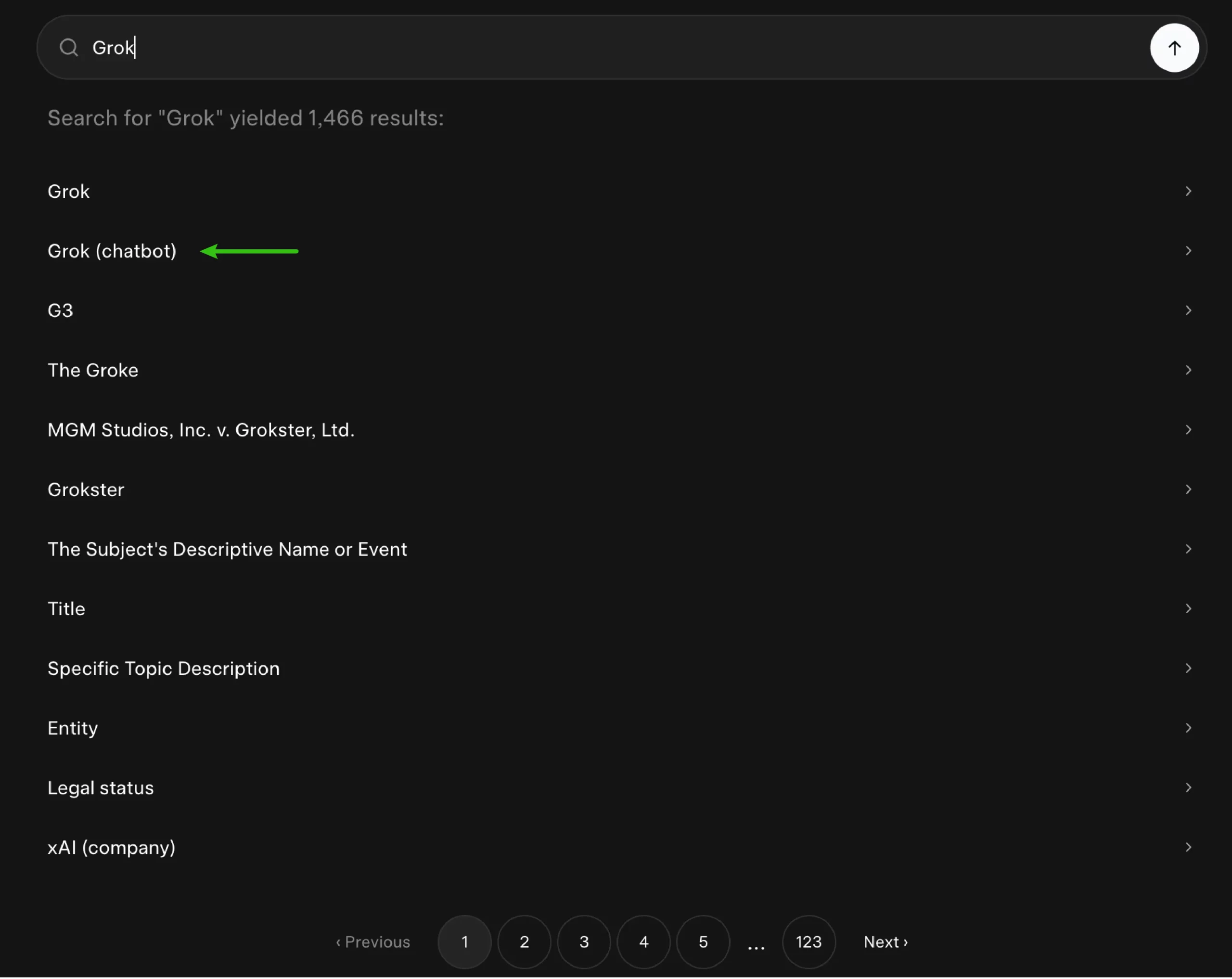
3. Select the most relevant result.
4. You’re offered a fact-checked version of the page.
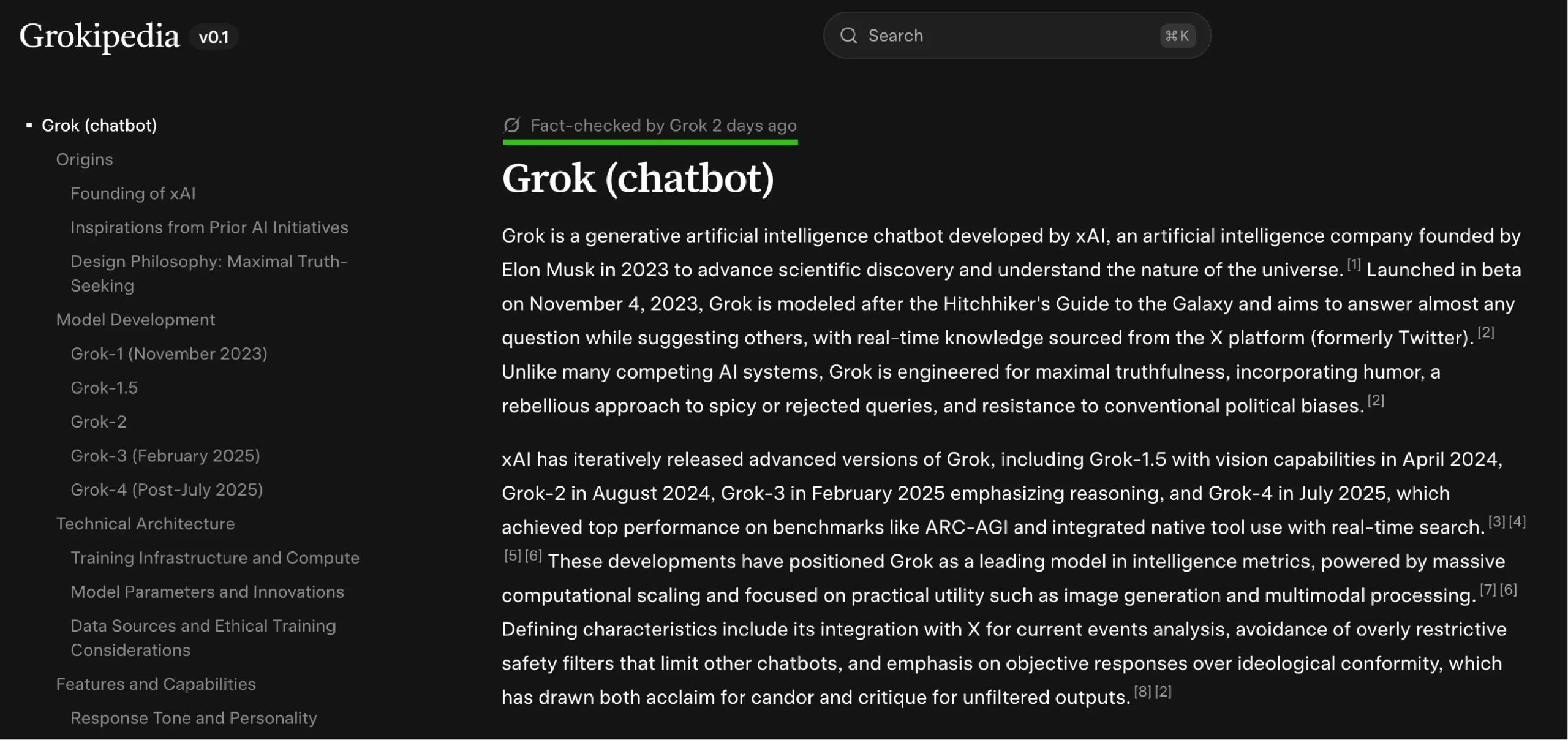
How to Access Grokipedia?
Go to Grokipedia.com on the web and use the search bar like you would on Wikipedia. No account is required. You can report errors via the built-in feedback form, but you can’t directly edit pages, as of now.
There is no API access available right now, so developers wanting to use Grokipedia might have to resort to webdriver emulation.
Putting Grokipedia to the Test
To put it to the test, I’d be going over tasks that would test the following:
- Recent events
- Sensitive topics
Recent Events
To test its knowledge base on recent events, I’d be asking it about Chess Grandmaster Gukesh Dommaraju.
Question: “Who is Gukesh?”
Response:
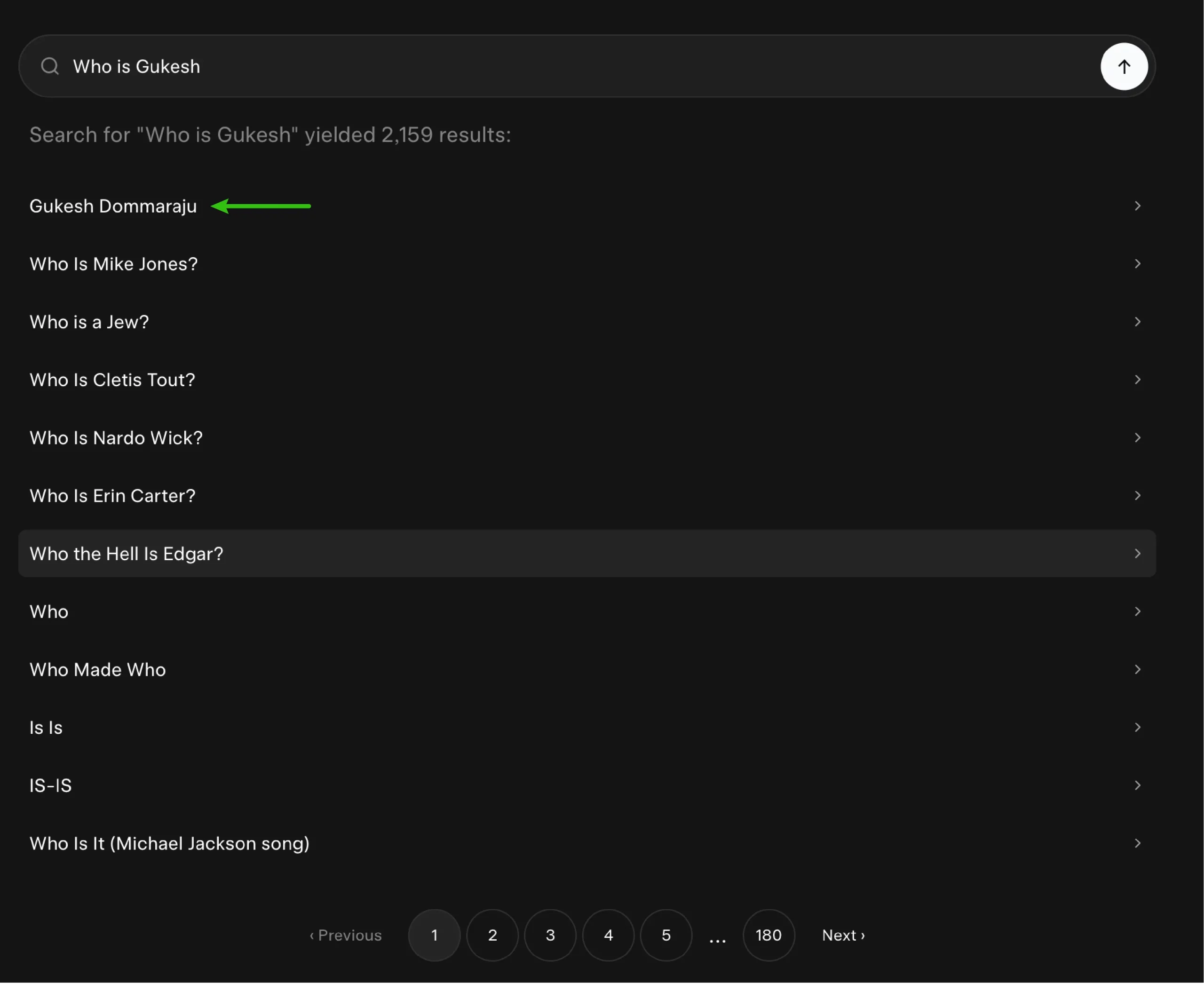
As always, it offered a number of options from which we can choose the one we desired (1st one in this case).
The response provided was satisfactory. It covered all the aspects of the player and provided most of the information that was available 2 days ago.
Sensitive Topics
To test its skillfulness in handling sensitive topics, I requested information on the Holocaust.
Question: “Holocaust”
Response:
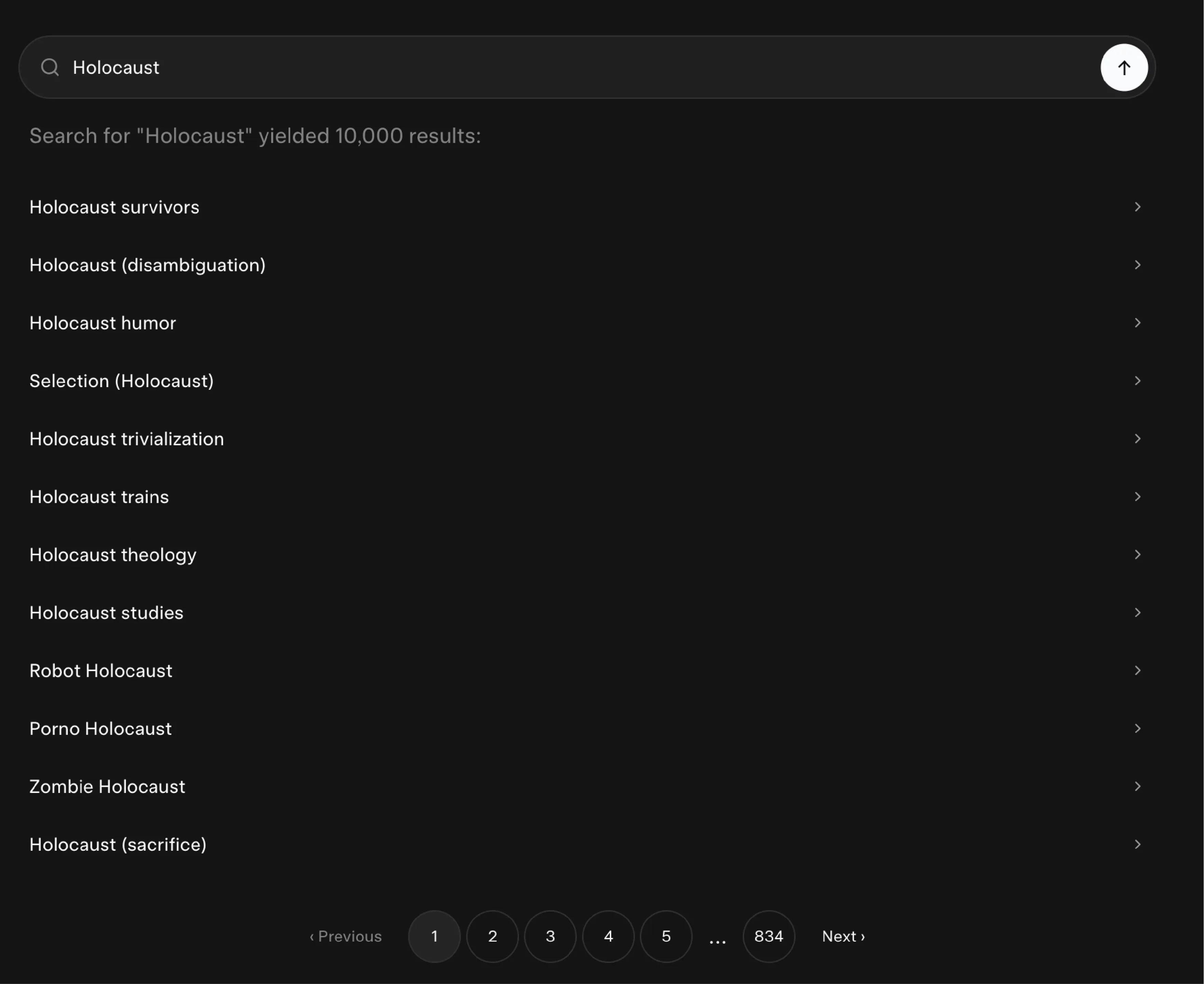
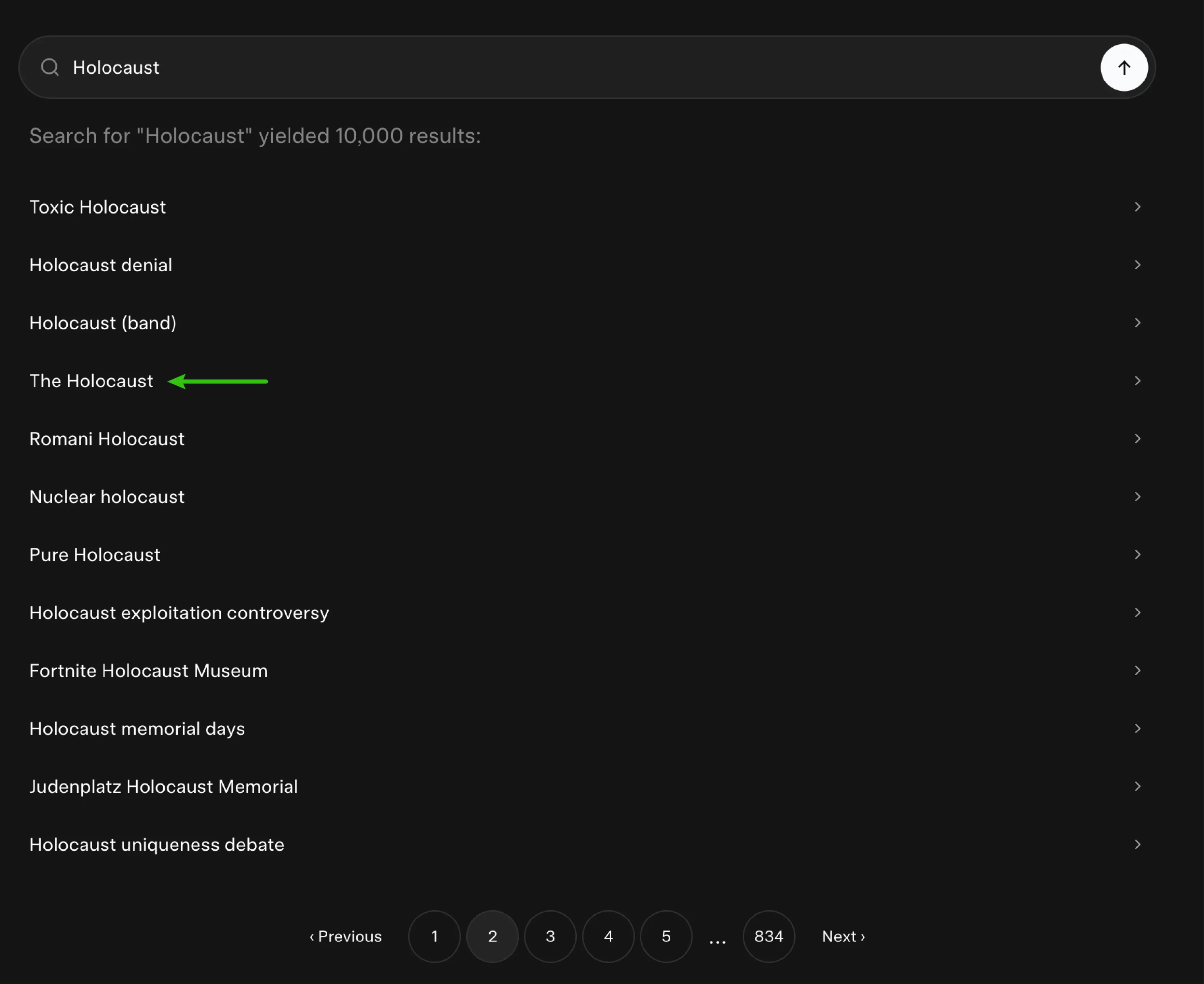
This one proved interesting. The article that we were looking for wasn’t available on the first page, even though it should’ve been the very first result. It was present in as the 4th option on the 2nd page.
The response was a lot to deal with. But that is expected from interpretation of complex historical topics. The article as before, was a presented in a digestible manner. It had a plethora of citations (over 270), which provided it sufficient credence. The search functionality, leading up to the page, left a lot to be desired.
My Grokipedia Review
I had a good experience using Grokipedia. Here are some of its good aspects:
- Neutral viewpoint over sensitive topics: This could be attributed to the heterogeneous information sources it uses to synthesize results.
- Useful citations system: Offers one-click access to the source of the information, from the text itself. Further solidifying trust.
- Structured response: The information is structured and organized in a digestible manner. This was amiss in human-dependent information sources, which depended on the manual information organization (which isn’t consistent).
- Fact-checking acknowledgment: Regardless of how updated the information is, it is displayed atop the articles. This gives confidence in the produced information.
- Open-source algorithm: Would provide room for scrutiny, in case required.
Scope of Improvement
Here are some things that could be improved upon:
- Limited information sources: 800K seems like a large number until you look at the 65 million articles present on Wikipedia (across all languages).
- Repetitiveness of information: There is a lot of information that gets shared, over and over again, without any clear requirements. Sometimes this is the case with information shared in the same section, which highlights a glaring issue.
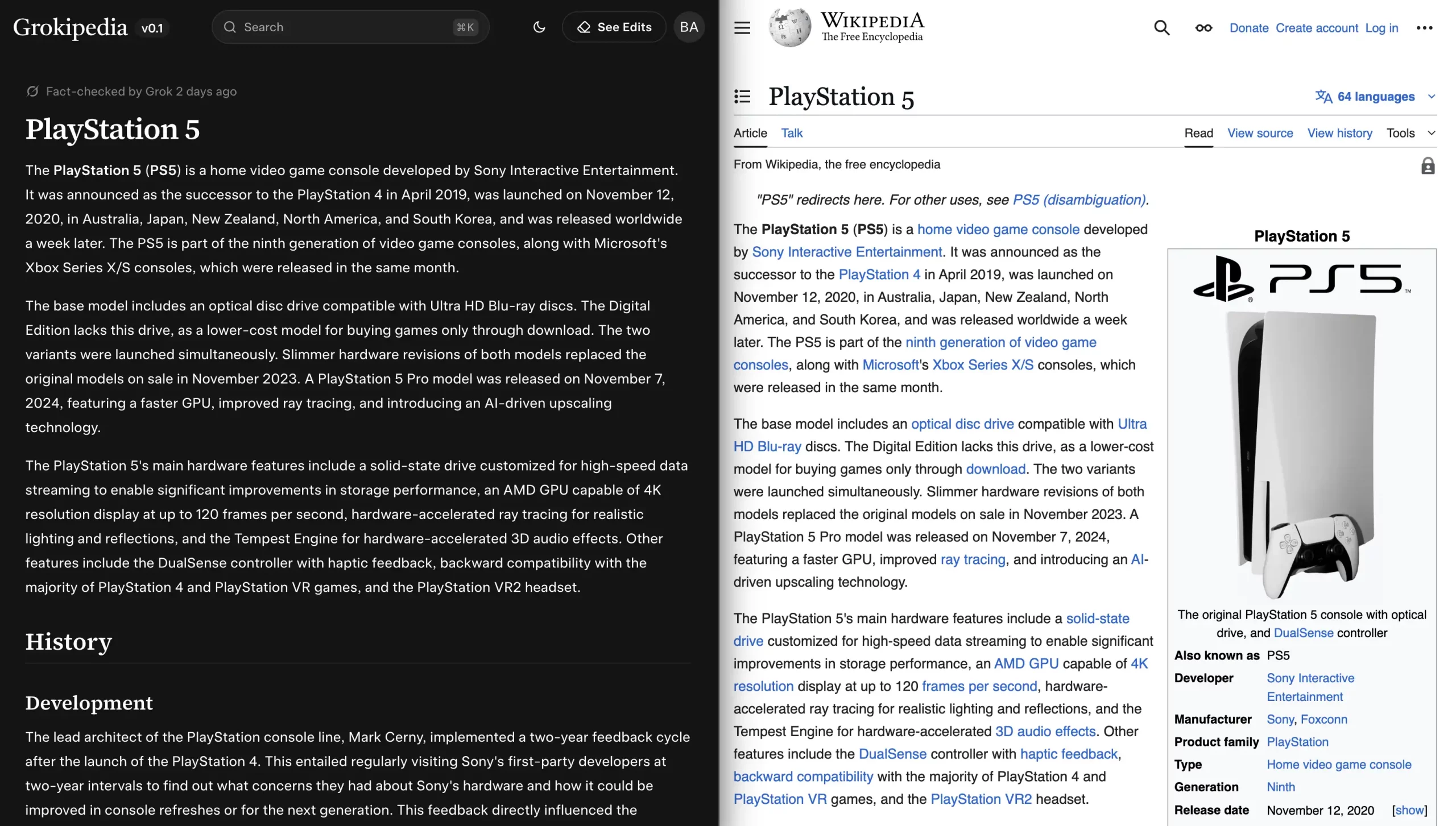
- Blatant copy-pasting: Sometimes, the information produced is a verbatim copy of what’s present on its Wikipedia page.
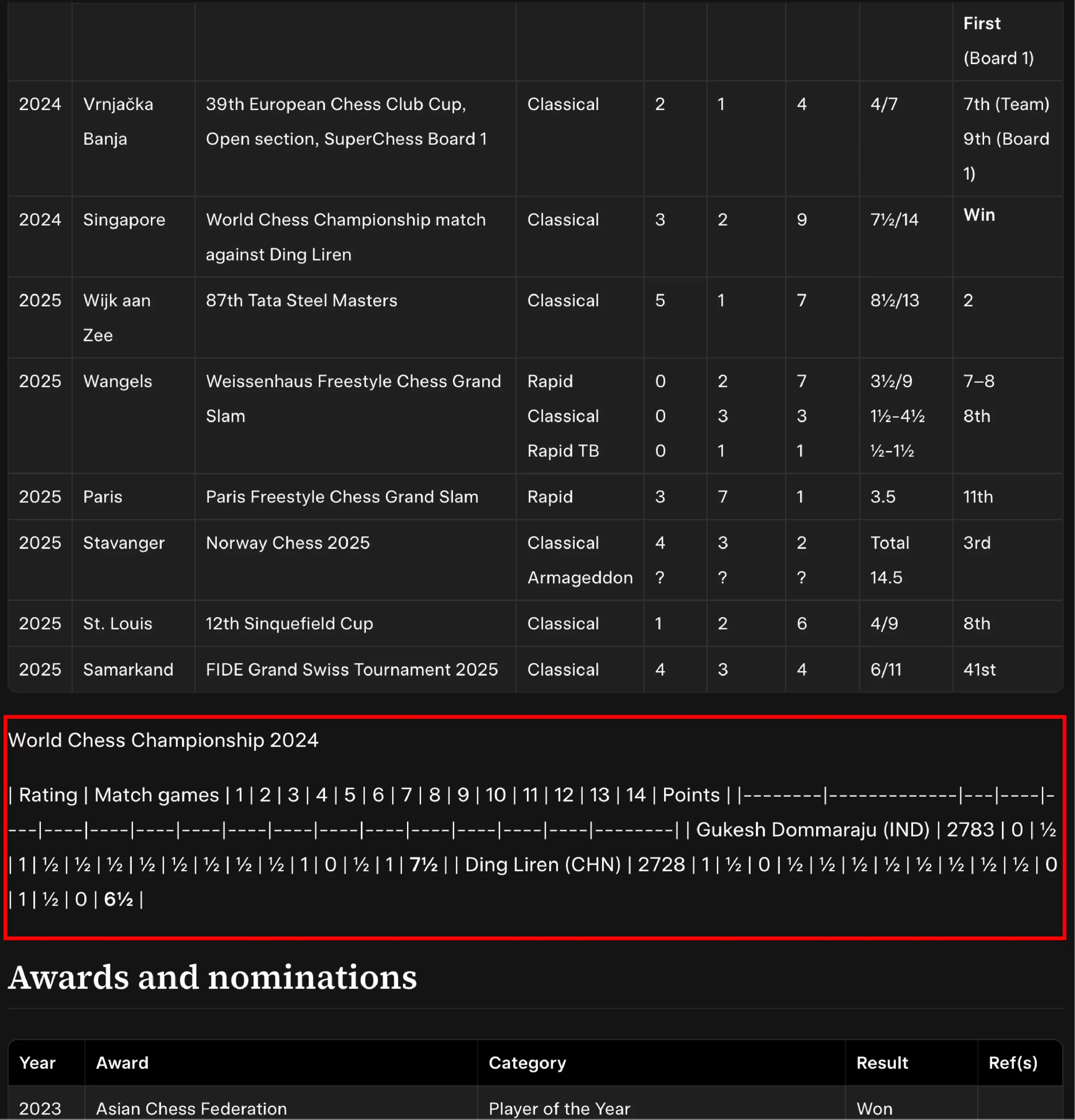
- Formatting issues: Data rendering errors intermittently come to light when rendering structured data such as tables.
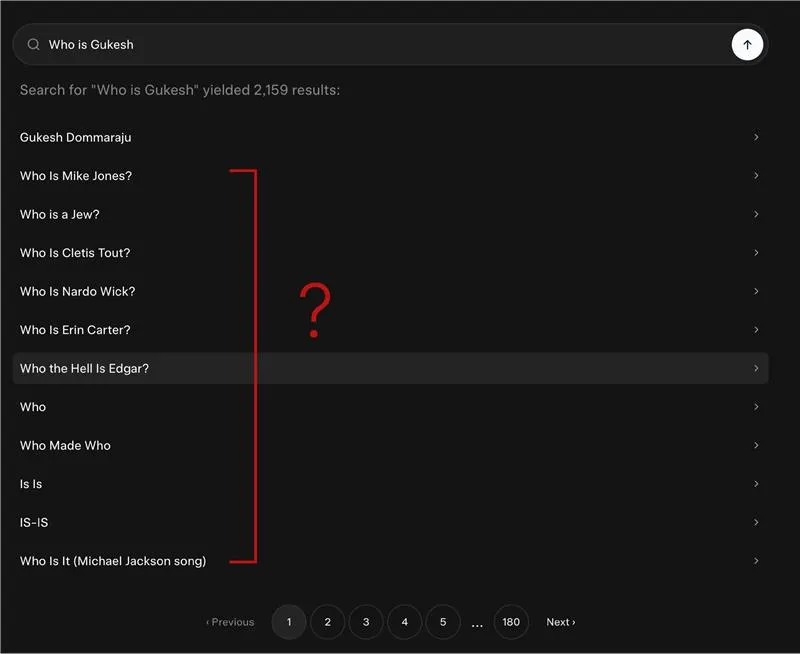
- Abysmal search: The search functionality linkens the ones that came out two decade ago. Makes articles hard to find, defeating its core purpose. The suggestion feature is even more flawed.
Grokipedia vs Wikipedia
| Feature | Grokipedia | Wikipedia |
|---|---|---|
| Core Mechanism | AI-powered (Grok language model) for article generation, updates, and fact-checking. | Human-edited and crowdsourced knowledge base. |
| Goal/Vision | Offer a bias-free alternative knowledge base with synthetic corrections and no ideological gatekeeping. | To be a free, open-source encyclopedia. |
| Article Count | Around 800,000 articles. | Around 65 million articles (across all languages). |
| Handling Sensitive Topics | Praised for neutral viewpoint using heterogeneous sources. | Implied ideological bias (according to xAI claims). |
| Content Structure | Structured and organized information. | Manual organization; inconsistent at times. |
| Citations | One-click citation access. | Uses citations via community editing. |
| Search Functionality | Reported as weak, hard to find articles. | Considered better. |
| Content Issues | Repetitiveness, occasional copying, formatting issues. | Inconsistency and bias mentioned in debates. |
| Fact-Checking | Shows fact-checked stamp. | Community review/edit-based. |
Conclusion
Grokipedia isn’t there yet. But this is to be expected for a version 0.1 of a product. It serves its purpose for now, but there is scope for improvement. And I don’t mean that in a small way, I mean that in a big way. There exist some fundamental problems in its operation, like blatantly copy-pasting content and producing recurrent information, which still need to be ironed out. But there is a flip side to it.
Wikipedia isn’t a cup of tea for everyone. When people want to know something they’re interested in, they don’t want to go through a mountain of information. By providing structured information that is refined by AI, Grokipedia provides structured content, which would be appreciated by casual readers.
Grokipedia has Grok integrated in its systems. This would aid developers in finding useful information at short notice. Essentially, it could easily assume its position as “RAG on steroids” for them.
Frequently Asked Questions
A. Elon Musk’s xAI created Grokipedia, an AI-powered encyclopedia that uses the Grok language model to generate and update articles in real time and provide “bias-free” information.
A. Unlike Wikipedia, which relies on human editors, Grokipedia uses AI for fact-checking and article creation, aiming to reduce ideological bias and present neutral, structured information.
A. Grokipedia currently has around 800,000 articles, far fewer than Wikipedia’s 65 million across all languages.
A. It provides neutral viewpoints on sensitive topics, clearly sourced citations, structured responses, and fact-checking labels to increase user trust.
A. It still struggles with repetitive content, limited article coverage, and occasional verbatim copying from Wikipedia.

I specialize in reviewing and refining AI-driven research, technical documentation, and content related to emerging AI technologies. My experience spans AI model training, data analysis, and information retrieval, allowing me to craft content that is both technically accurate and accessible.
Login to continue reading and enjoy expert-curated content.