

Leading electrical industry bodies have warned that plug-in solar photovoltaic (PV) systems should not be rushed into the UK consumer market until safety, regulatory and technical frameworks are fully established, despite government plans to make the technology widely available.
The warning comes in a joint statement issued by the Electrical Contractors’ Association (ECA), Electrical Safety First (ESF), the Institution of Engineering and Technology (IET), NICEIC and SELECT, following government announcements aimed at accelerating access to low-cost renewable energy technologies.
The organisations stressed that they support wider adoption of clean energy but argued that public safety must remain the overriding priority.
“Public safety must be the first principle in any rollout of plug-in solar PV units,” the statement said. “Whilst we support wider access to cheap and clean energy, these products should only enter the mass market once the necessary regulatory, technical and product safety framework is fully in place.”
The groups warned that without such safeguards there is “a serious risk of avoidable hazards in homes, uncertainty for the electricity system, and lasting damage to public confidence in the energy transition”.
Plug-in solar PV systems, sometimes referred to as balcony solar systems, are designed to allow consumers to generate electricity through small solar panels connected directly to standard domestic socket outlets. Electrical Safety First acknowledged that the technology offers households “a simple and cost-effective way to generate electricity” and presents “a clear opportunity to reduce energy bills and support decarbonisation goals”.
However, the charity’s accompanying technical report identifies a range of electrical safety concerns that it believes must be resolved before large-scale deployment can proceed safely.
Principal concerns include the effect of bi-directional electricity flows on existing household wiring and safety devices. Unlike conventional appliances, plug-in PV units introduce electricity into domestic circuits rather than simply drawing power from them. The joint statement notes that many household electrical installations were never designed for this purpose and warns that under certain conditions protective devices may fail to operate as intended.
Six key areas of concern
The groups highlighted six key areas of concern: bi-directional power flow, fire risks in older properties, inconsistent product standards, electricity network resilience, unresolved insurance and liability issues, and unsafe installation practices including the use of extension leads and multiple interconnected devices.
Fire safety features prominently in both documents. The joint statement notes that more than half of the UK’s housing stock is over 100 years old and warns that ageing wiring systems may be unable to accommodate additional electrical loads safely.
The Electrical Safety First report similarly warns that “uncontrolled current injection can overload circuits, creating a risk of overheating and fire”, while also highlighting concerns that plug-in PV systems may interfere with residual current devices (RCDs), potentially leading to nuisance tripping or failures to detect dangerous faults.
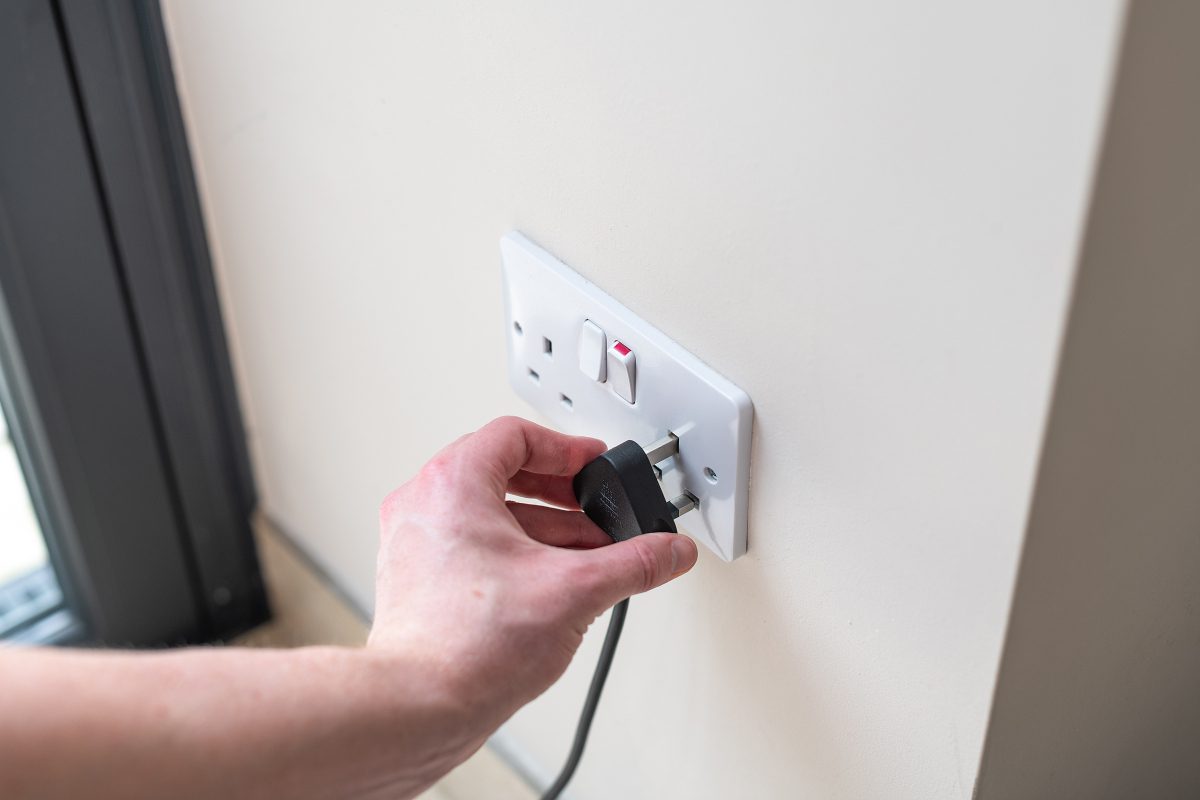
Particular concern is expressed over the use of standard UK plugs and sockets. According to the report, BS 1363, the principal British Standard governing domestic plugs, explicitly states that such plugs “shall not be used for the connection of electrical power generators to socket-outlets”.
The report also warns that consumers may connect multiple units through extension leads or multi-plug adaptors, increasing the risk of overloads, overheating and fire. It further notes that non-professional installation of panels on balconies or at height raises concerns regarding structural security and falling objects.
Electricity network operators could also face challenges if large numbers of devices are installed without appropriate notification procedures. The joint statement argues that widespread deployment without effective oversight could reduce visibility of connected generation capacity at a time when network operators require accurate information to manage local electricity systems.
The organisations point to Germany as an example of a country that has permitted plug-in solar systems only after establishing technical standards, registration requirements, inverter certification requirements and clear consumer guidance.
Recommended course
The electrical industry groups are calling for a structured framework before market expansion proceeds. The joint statement says plug-in solar PV systems should not be rolled out until there are “clear product standards, robust enforcement, competent installation pathways, appropriate consumer guidance, and a mechanism to protect both householders and the electricity distribution network”.
Electrical Safety First concluded in its report: “Plug-in solar PV systems can help reduce energy costs and support the UK’s sustainability goals but safe deployment depends on rigorous safety standards, coordinated protection measures, professional oversight, and clear regulatory frameworks.” It adds: “Without these safeguards there is a risk of harm to consumers and the wider public.”
The organisations argue that proper due diligence should be viewed not as an obstacle to decarbonisation but as an essential prerequisite for public confidence. As the joint statement concludes: “Due diligence is not a barrier to progress. It is what makes progress safe, credible and sustainable.”

