
Close Menu
geekfence.comgeekfence.com
    What's Hot

    Designing trust & safety (T&S) in customer experience management (CXM): why T&S is becoming core to CXM operating model 

    January 24, 2026

    iPhone 18 Series Could Finally Bring Back Touch ID

    January 24, 2026

    The Visual Haystacks Benchmark! – The Berkeley Artificial Intelligence Research Blog

    January 24, 2026
    Facebook X (Twitter) Instagram
    • About Us
    • Contact Us
    Facebook Instagram
    geekfence.comgeekfence.com
    • Home
    • UK Tech News
    • AI
    • Big Data
    • Cyber Security
      • Cloud Computing
      • iOS Development
    • IoT
    • Mobile
    • Software
      • Software Development
      • Software Engineering
    • Technology
      • Green Technology
      • Nanotechnology
    • Telecom
    geekfence.comgeekfence.com
    Home»Green Technology»Dual-layer system intercepts most micro- and nanoplastics from landfill leachate, say researchers
    Green Technology

    Dual-layer system intercepts most micro- and nanoplastics from landfill leachate, say researchers

    AdminBy AdminJanuary 14, 2026No Comments3 Mins Read0 Views
    Facebook Twitter Pinterest LinkedIn Telegram Tumblr Email
    Dual-layer system intercepts most micro- and nanoplastics from landfill leachate, say researchers
    Share
    Facebook Twitter LinkedIn Pinterest Email


    Dual-layer system intercepts most micro- and nanoplastics from landfill leachate, say researchers
    The membrane performed well over multiple filtration cycles, and could be cleaned and reused thanks to a methodical backwashing system.

    Researchers have created a new two-layer membrane filtration system that can significantly reduce the amount of micro and nanoplastics that leak from landfills into local water basins.

    The group – at the University of British Columbia (UBCO) – has published the study which details how a double-layer membrane installed at landfills can act as a filter to keep these pollutants out of groundwater and surrounding ecosystems.

    “Landfills are silent threats to our environment, acting as major reservoirs for emerging pollutants,” said Dr Sumi Siddiqua, Professor at UBCO’s School of Engineering. “Conventional drainage systems fail against microscopic contaminants, including nanoplastics and hazardous chemicals. This allows them to infiltrate groundwater.”

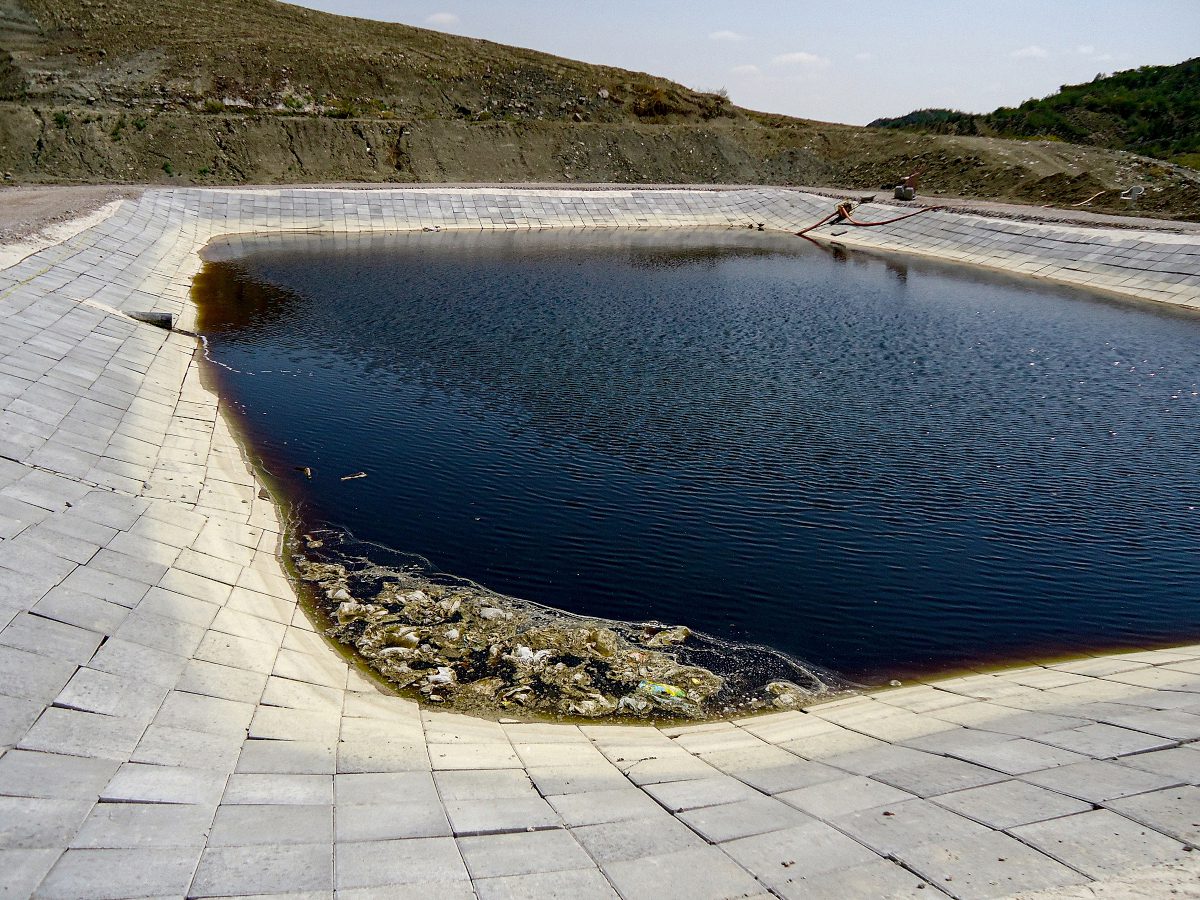
    Although most landfills are designed to contain the leachate generated when rainwater passes through waste, recent studies show leachate has become a major collection basin for microscopic plastic, which can escape into water systems.

    “As plastic waste breaks down, these particles accumulate in landfill leachate,” said co-author Mahmoud Babalar. “Current systems handle liquid waste, but they were never designed to completely intercept plastic micro and nano particles.”

    The two-layer membrane system featured in their study, published in the Journal of Environmental Management, proved to be the most effective when it comes to trapping these pollutants. The top layer uses chemical attraction and filtration to capture micro and nanoplastics. It is engineered to bind plastic particles efficiently, even in complex, organic-rich leachate. The lower layer establishes a protective barrier that repels the remaining plastic particles through electrostatic forces, reducing clogging, membrane fouling and maintaining steady performance over time.

    “The two complementary layers work together to block tiny plastic particles under harsh landfill conditions,” he adds. “This combination of layers allows the membrane to filter plastics while liquid can still flow, which is a critical requirement for landfill safety.”

    In repeated lab tests, the membrane removed nearly all microplastics and captured more than 98 per cent of nanoplastics. Babalar says that during the testing, the membrane performed well over multiple filtration cycles, and could be cleaned and reused thanks to a methodical backwashing system.

    “The membrane is made from durable, chemically stable materials designed to withstand temperature changes, aggressive wastewater and long-term exposure,” he adds. “Its ability to be cleaned and reused reduces waste and supports more sustainable landfill operations.”

    Beyond filtration, the researchers say the technology could serve as a foundation for next-generation landfill liners that combine structural protection with active pollution control. This discovery has significant potential to protect groundwater and surface water supplies, reduce the spread of pollutants and also support circular waste management and climate-resilient infrastructure.

    The study marks an important step toward smarter landfill systems that not only contain waste but also actively prevent long-term environmental harm, said Dr Siddiqua.

    “Our unique dual-layer modified matrix membrane system is specifically engineered to handle highly contaminated, fouling-intensive raw leachate, positioning it as a foundational component of advanced waste containment.”



    Source link

    Share. Facebook Twitter Pinterest LinkedIn Tumblr Email

    Related Posts

    B.C.’s climate accountability report comes at a critical time, highlighting what has worked and where progress must continue

    January 24, 2026

    Funding for decarbonization more accessible than companies think

    January 23, 2026

    Vertical Aerospace Brings Valo to New York, Outlining Plans for Electric Air Taxi Routes

    January 22, 2026

    Nature groups say nuclear review exaggerates the cost of preventing harm to nature

    January 20, 2026

    Revolutionizing Healthcare: How Digital Product Engineering Is Enabling Safer, Smarter, and More Accessible Care

    January 19, 2026

    Deal allowing a quota of Chinese EVs a breakthrough for consumers with potential for investment in a modern auto sector

    January 18, 2026
    Top Posts

    Understanding U-Net Architecture in Deep Learning

    November 25, 202511 Views

    Hard-braking events as indicators of road segment crash risk

    January 14, 20269 Views

    Microsoft 365 Copilot now enables you to build apps and workflows

    October 29, 20258 Views
    Don't Miss

    Designing trust & safety (T&S) in customer experience management (CXM): why T&S is becoming core to CXM operating model 

    January 24, 2026

    Customer Experience (CX) now sits at the intersection of Artificial Intelligence (AI)-enabled automation, identity and access journeys, AI-generated content…

    iPhone 18 Series Could Finally Bring Back Touch ID

    January 24, 2026

    The Visual Haystacks Benchmark! – The Berkeley Artificial Intelligence Research Blog

    January 24, 2026

    Data and Analytics Leaders Think They’re AI-Ready. They’re Probably Not. 

    January 24, 2026
    Stay In Touch
    • Facebook
    • Instagram
    About Us

    At GeekFence, we are a team of tech-enthusiasts, industry watchers and content creators who believe that technology isn’t just about gadgets—it’s about how innovation transforms our lives, work and society. We’ve come together to build a place where readers, thinkers and industry insiders can converge to explore what’s next in tech.

    Our Picks

    Designing trust & safety (T&S) in customer experience management (CXM): why T&S is becoming core to CXM operating model 

    January 24, 2026

    iPhone 18 Series Could Finally Bring Back Touch ID

    January 24, 2026

    Subscribe to Updates

    Please enable JavaScript in your browser to complete this form.
    Loading
    • About Us
    • Contact Us
    • Disclaimer
    • Privacy Policy
    • Terms and Conditions
    © 2026 Geekfence.All Rigt Reserved.

    Type above and press Enter to search. Press Esc to cancel.