

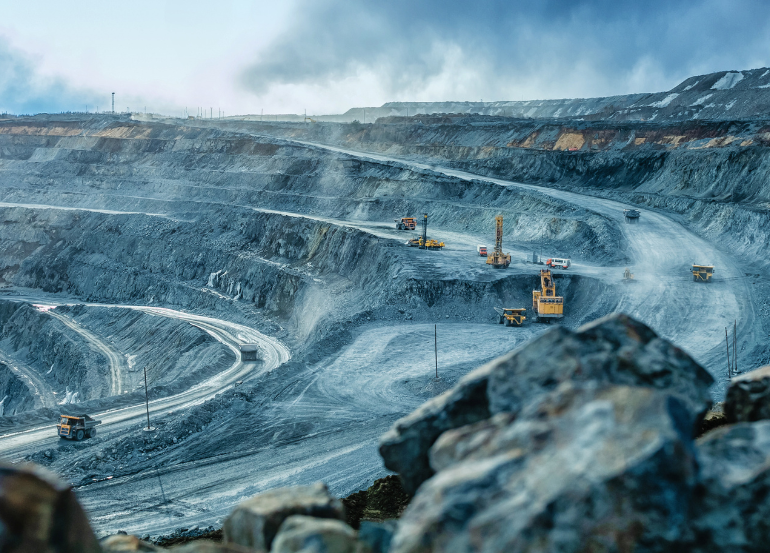
If you close your eyes and picture a mine, you probably imagine dusty boots, heavy machinery, and the rhythmic sound of rock being crushed. And while that’s still part of reality, the “brains” of the operation have shifted dramatically. Today’s mining landscape is less about brute force and more about bytes, bits, and the invisible threads of wireless connectivity that keep everything moving. The industry now relies on automation and innovation as its operational reality.
Automation has become foundational to the modern mining industry. The following applications are a reality in many mining operations.
- Autonomous Haulage Systems (AHS): Autonomous trucks are now a cornerstone of large-scale surface mining. These systems remove personnel from hazardous environments and significantly reduce accidents caused by human error or fatigue.
- AI-Driven Predictive Maintenance (PdM): AI is being used to move the industry from reactive to proactive asset management. Machine learning models analyze sensor data (vibration, heat, acoustics) to predict failures weeks in advance, reducing unplanned downtime.
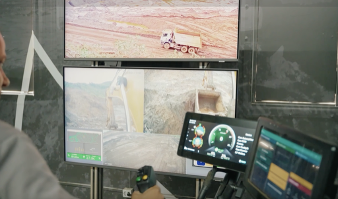
- Tele-Remote Operations: Mining is now adopting remote-controlled operations which allow operators to man equipment from a remote safe location. This significantly enhances safety and enables operations in areas that would otherwise be hazardous for personnel.
Why the rapid adoption? It comes down to two primary drivers: safety and productivity. Safety is the most critical factor; by moving operators from hazardous pits into remote control centers, we effectively remove humans from the most dangerous zones. Simultaneously, productivity gains are substantial. For example, autonomous haul trucks do not require coffee breaks or shift changes, allowing them to keep the cycle moving 24/7.
However, there is a caveat: automation is only as effective as the network that powers it.
You can have the most advanced tele-remote dozer in the world, but if its connection drops while it’s navigating a steep grade, you end up with expensive paperweight.
Mining environments are notoriously hostile. We’re talking about massive open pits or deep, signal-dampening underground tunnels filled with dust, vibration, and extreme temperature swings. A standard office Wi-Fi setup simply won’t cut it.
To support mission-critical applications, the network must provide:
- Ultra-Reliable, Low-Latency Connectivity: Tele-remote operations require instantaneous camera feeds and command execution. Minimizing latency is critical, as any delay could result in accidents and damage to expensive equipment.
- Seamless Handoffs: As a haul truck moves across a site, it needs to switch between access points without dropping a single packet. “Zero packet loss” isn’t just a marketing term here; it’s a requirement.
- Ruggedized Hardware:Equipment must be industrial-grade to ensure maximum durability. Key requirements include IP66/IP67 certification for dust and water resistance, as well as the capacity to withstand extreme temperatures and high-vibration environments.
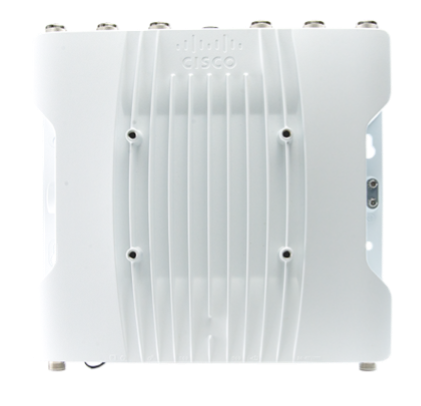
To meet the extreme demands of modern mining, Cisco has developed a portfolio specifically engineered for these harsh environments. At the heart of this solution is the Cisco Catalyst IW9167E Heavy Duty Access Point. Built to survive the most challenging conditions, this device is IP66/IP67-rated, ensuring total protection against dust, water, and it can withstand extreme temperature fluctuations and vibrations.
When paired with Cisco Ultra-Reliable Wireless Backhaul (URWB), the IW9167E transforms from a simple access point into a mission-critical communication backbone. Unlike traditional wireless technologies, URWB is designed specifically for continuous mobility. It provides fiber-like reliability and seamless handoffs, ensuring that autonomous trucks and remote-controlled equipment maintain a rock-solid connection even while traversing vast, rugged pits at speed. With URWB, “zero packet loss” becomes a standard operational reality, eliminating the risk of equipment downtime due to network drops.
Proven in the Field: Validated Designs and Partnerships
We know that in mining, theoretical performance isn’t enough; solutions must be proven under pressure. Cisco doesn’t just provide hardware; we provide a roadmap for success.
Our commitment to reliability is best demonstrated through our Cisco Validated Designs (CVDs). These are comprehensive, validated design guides that remove the guesswork from network deployment. By visiting our Cisco Mining Design Zone, you can access architectures that have been tested and verified in lab environments to ensure they meet the rigorous demands of the mining sector.
Real-world success stories, such as our work with Aterpa, highlight the transformative power of these solutions. Aterpa leveraged our technology to support tele-remote operations for dam decommissioning projects, enabling work in environments where human presence was not allowed.
Furthermore, our strategic partnership with global industry leaders like Caterpillar allows us to rigorously test and validate our wireless solutions against the specific applications and machinery used on-site. This collaborative approach ensures that when you deploy Cisco, you are deploying a solution that has been tested and validated by key players in the mining industry.
Whether you are looking to enhance safety by removing personnel from hazardous zones or aiming to boost productivity through 24/7 autonomous operations, the right network is foundational to your entire operation.
Don’t let connectivity gaps hold your operation back. Cisco is here to help you design, deploy, and scale a wireless network that is resilient to support your operations. If you are ready to learn more about how our industrial wireless solutions can drive efficiency in your specific mining environment, we invite you to reach out to our team today. Let’s build the future of mining together.
Subscribe to the Industrial IoT Newsletter
Follow us on LinkedIn and YouTube
Download The 2026 State of Industrial AI