
Close Menu
geekfence.comgeekfence.com
    What's Hot

    Open Cosmos launches first satellites for new LEO constellation

    January 25, 2026

    Achieving superior intent extraction through decomposition

    January 25, 2026

    How UX Research Reveals Hidden AI Orchestration Failures

    January 25, 2026
    Facebook X (Twitter) Instagram
    • About Us
    • Contact Us
    Facebook Instagram
    geekfence.comgeekfence.com
    • Home
    • UK Tech News
    • AI
    • Big Data
    • Cyber Security
      • Cloud Computing
      • iOS Development
    • IoT
    • Mobile
    • Software
      • Software Development
      • Software Engineering
    • Technology
      • Green Technology
      • Nanotechnology
    • Telecom
    geekfence.comgeekfence.com
    Home»iOS Development»clipped() doesn’t affect hit testing – Ole Begemann
    iOS Development

    clipped() doesn’t affect hit testing – Ole Begemann

    AdminBy AdminDecember 11, 2025No Comments3 Mins Read1 Views
    Facebook Twitter Pinterest LinkedIn Telegram Tumblr Email
    clipped() doesn’t affect hit testing – Ole Begemann
    Share
    Facebook Twitter LinkedIn Pinterest Email


    The clipped() modifier in SwiftUI clips a view to its bounds, hiding any out-of-bounds content. But note that clipping doesn’t affect hit testing; the clipped view can still receive taps/clicks outside the visible area.

    I tested this on iOS 16.1 and macOS 13.0.

    Example

    Here’s a 300×300 square, which we then constrain to a 100×100 frame. I also added a border around the outer frame to visualize the views:

    Rectangle()
      .fill(.orange.gradient)
      .frame(width: 300, height: 300)
      // Set view to 100×100 → renders out of bounds
      .frame(width: 100, height: 100)
      .border(.blue)
    

    SwiftUI views don’t clip their content by default, hence the full 300×300 square remains visible. Notice the blue border that indicates the 100×100 outer frame:
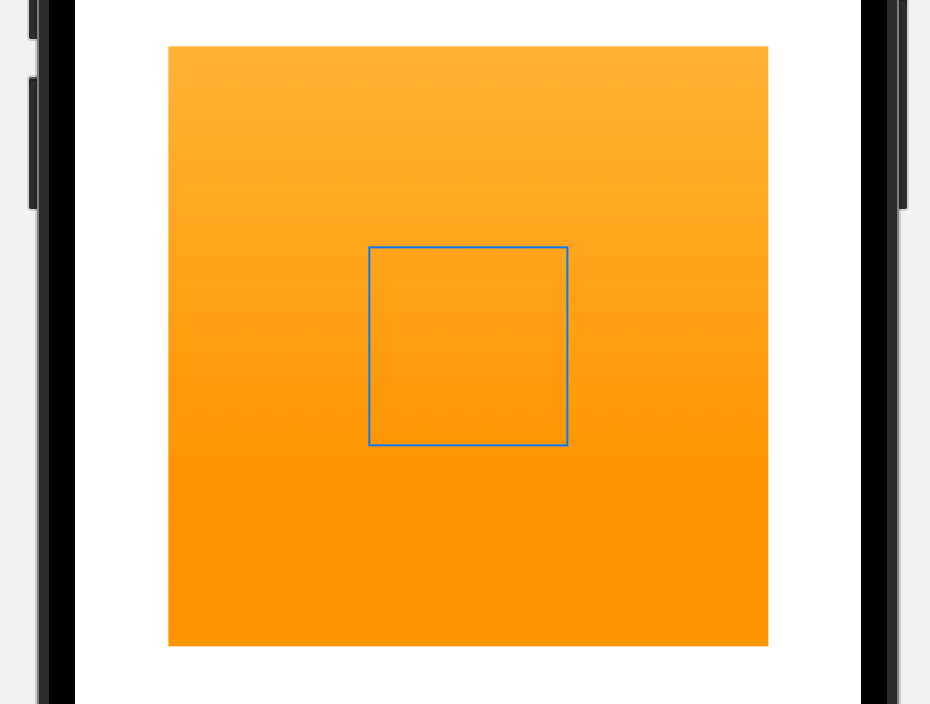
    clipped() doesn’t affect hit testing – Ole Begemann

    Now let’s add .clipped() to clip the large square to the 100×100 frame. I also made the square tappable and added a button:

    VStack {
      Button("You can't tap me!") {
        buttonTapCount += 1
      }
      .buttonStyle(.borderedProminent)
    
      Rectangle()
        .fill(.orange.gradient)
        .frame(width: 300, height: 300)
        .frame(width: 100, height: 100)
        .clipped()
        .onTapGesture {
          rectTapCount += 1
        }
    }
    

    When you run this code, you’ll discover that the button isn’t tappable at all. This is because the (unclipped) square, despite not being fully visible, obscures the button and “steals” all taps.
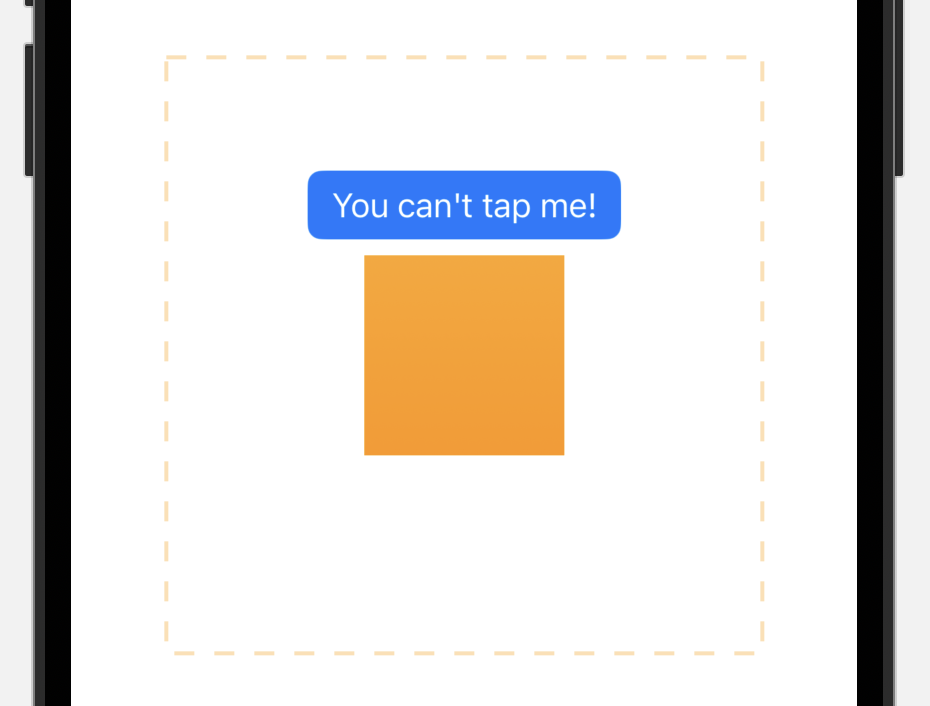
    Xcode preview displaying a blue button and a small orange square. A larger dashed orange outline covers both the smaller square and the button.

    The dashed outline indicates the hit area of the orange square. The button isn’t tappable because it’s covered by the clipped view with respect to hit testing.

    The fix: .contentShape()

    The contentShape(_:) modifier defines the hit testing area for a view. By adding .contentShape(Rectangle()) to the 100×100 frame, we limit hit testing to that area, making the button tappable again:

      Rectangle()
        .fill(.orange.gradient)
        .frame(width: 300, height: 300)
        .frame(width: 100, height: 100)
        .contentShape(Rectangle())
        .clipped()
    

    Note that the order of .contentShape(Rectangle()) and .clipped() could be swapped. The important thing is that contentShape is an (indirect) parent of the 100×100 frame modifier that defines the size of the hit testing area.

    Video demo

    I made a short video that demonstrates the effect:

    • Initially, taps on the button, or even on the surrounding whitespace, register as taps on the square.
    • The top switch toggles display of the square before clipping. This illustrates its hit testing area.
    • The second switch adds .contentShape(Rectangle()) to limit hit testing to the visible area. Now tapping the button increments the button’s tap count.

    The full code for this demo is available on GitHub.

    Summary

    The clipped() modifier doesn’t affect the clipped view’s hit testing region. The same is true for clipShape(_:). It’s often a good idea to combine these modifiers with .contentShape(Rectangle()) to bring the hit testing logic in sync with the UI.


    Source link

    Share. Facebook Twitter Pinterest LinkedIn Tumblr Email

    Related Posts

    A Deep Dive into SwiftData migrations – Donny Wals

    January 24, 2026

    AI, find me some work…

    January 23, 2026

    Swift adapter design pattern – The.Swift.Dev.

    January 22, 2026

    Text is not visible when the button is in disabled state

    January 21, 2026

    What’s New in SwiftUI for iOS 18

    January 19, 2026

    WWDC 2023: A Reflection on Apple’s “Spatial Computing” Journey

    January 17, 2026
    Top Posts

    Understanding U-Net Architecture in Deep Learning

    November 25, 202511 Views

    Hard-braking events as indicators of road segment crash risk

    January 14, 20269 Views

    Microsoft 365 Copilot now enables you to build apps and workflows

    October 29, 20258 Views
    Don't Miss

    Open Cosmos launches first satellites for new LEO constellation

    January 25, 2026

    Press Release Open Cosmos, the company building satellites to understand and connect the world, has…

    Achieving superior intent extraction through decomposition

    January 25, 2026

    How UX Research Reveals Hidden AI Orchestration Failures

    January 25, 2026

    ByteDance steps up its push into enterprise cloud services

    January 25, 2026
    Stay In Touch
    • Facebook
    • Instagram
    About Us

    At GeekFence, we are a team of tech-enthusiasts, industry watchers and content creators who believe that technology isn’t just about gadgets—it’s about how innovation transforms our lives, work and society. We’ve come together to build a place where readers, thinkers and industry insiders can converge to explore what’s next in tech.

    Our Picks

    Open Cosmos launches first satellites for new LEO constellation

    January 25, 2026

    Achieving superior intent extraction through decomposition

    January 25, 2026

    Subscribe to Updates

    Please enable JavaScript in your browser to complete this form.
    Loading
    • About Us
    • Contact Us
    • Disclaimer
    • Privacy Policy
    • Terms and Conditions
    © 2026 Geekfence.All Rigt Reserved.

    Type above and press Enter to search. Press Esc to cancel.