
Close Menu
geekfence.comgeekfence.com
    What's Hot

    Everest Group launches Innovation Watch on Agentic AI in Wealth Management Technology 

    July 21, 2026

    Apple says it fixed a vulnerability in its Hide My Email tool that let anyone see a user’s real email address; researchers first reported the issue in June 2025 (Joseph Cox/404 Media)

    July 21, 2026

    Alan Turing’s biggest AI assumption may have been wrong

    July 21, 2026
    Facebook X (Twitter) Instagram
    • About Us
    • Contact Us
    Facebook Instagram
    geekfence.comgeekfence.com
    • Home
    • UK Tech News
    • AI
    • Big Data
    • Cyber Security
      • Cloud Computing
      • iOS Development
    • IoT
    • Mobile
    • Software
      • Software Development
      • Software Engineering
    • Technology
      • Green Technology
      • Nanotechnology
    • Telecom
    geekfence.comgeekfence.com
    Home»Nanotechnology»Can surplus renewable power make green hydrogen cheaper? – Physics World
    Nanotechnology

    Can surplus renewable power make green hydrogen cheaper? – Physics World

    AdminBy AdminJuly 2, 2026No Comments2 Mins Read5 Views
    Facebook Twitter Pinterest LinkedIn Telegram Tumblr Email
    Can surplus renewable power make green hydrogen cheaper? – Physics World
    Share
    Facebook Twitter LinkedIn Pinterest Email


    Using excess electricity from grid bottlenecks offers a promising cost reduction pathway, though uncertainty and pricing risks remain
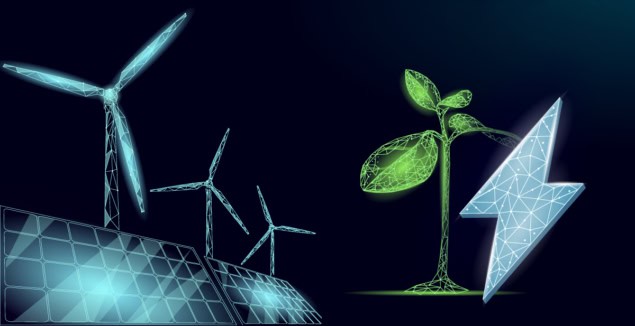
    Green energy concept

    Green energy concept (Courtesy: Shutterstock/Lucky Stepeps)

    Electricity grids need to be carefully balanced, with too low levels of electricity leading to blackouts and too high levels causing damage to grids. Due to the intermittent nature of renewable energy sources such as solar and wind, it is possible for specific regions (e.g. the north of Germany) to have an excess of electricity, while the power lines do not have enough capacity to transport it to higher demand regions such as cities and industrial areas. This is known as a grid bottleneck. To keep the grid running properly, operators redispatch electricity by reducing renewable feed-in in oversupplied areas and increasing generation elsewhere. However, this leads to renewable energy being wasted, and because producers are still compensated and generation increase on demand is costly, it is financially inefficient.

    In 2024, Germany created regional redispatch markets so that renewable electricity that would otherwise be curtailed can instead be sold locally. This is particularly useful for hydrogen producers because they do not require a continuous supply of electricity. Because they can operate flexibly, turning on and off depending on electricity availability, they can take advantage of very low-priced electricity. In this work, the researchers ask whether using this electricity source makes producing green hydrogen cheaper and how market prices for otherwise curtailed renewable electricity affect this.

    They found that using only redispatch electricity is not cost-effective because of its unreliability. However, combining it with different renewable energy sources does reduce costs. Depending on hydrogen storage costs, using redispatch electricity can reduce hydrogen production costs by €0.9 – €1.96 per kg, if the redispatch electricity is available for 0 €/MWh, compared to typical costs of around €6-8 per kg without redispatch electricity.

    Increased redispatch prices reduce the potential for production cost reductions, which, combined with the unreliability of redispatch availability, lowers the incentive for
    system beneficial electrolyser siting within the regional market areas. Therefore, the success of these markets depends heavily on keeping prices low, which might necessitate effective price capping but could increase green hydrogen competitiveness and simultaneously decrease renewable energy curtailment.

    Do you want to learn more about this topic?

    Metrics for assessing the economic impacts of power sector climate and clean electricity policies John Bistline (2021)


    Source link

    Share. Facebook Twitter Pinterest LinkedIn Tumblr Email

    Related Posts

    Invisible Microbes ‘Mining’ Toxic Waste in the Flinders Ranges

    July 21, 2026

    A tiny universe in a bottle reveals clues to the origins of life

    July 20, 2026

    The simplicity of a twist

    July 18, 2026

    Making sense of quantum wavefunction collapse – Physics World

    July 17, 2026

    Self-Heating Nanopores Turn Salt Precipitation Into Neuromorphic Memory

    July 16, 2026

    New dark matter theory could solve multiple cosmic mysteries at once

    July 15, 2026
    Top Posts

    Understanding U-Net Architecture in Deep Learning

    November 25, 202562 Views

    Hard-braking events as indicators of road segment crash risk

    January 14, 202631 Views

    Redefining AI efficiency with extreme compression

    March 25, 202630 Views
    Don't Miss

    Everest Group launches Innovation Watch on Agentic AI in Wealth Management Technology 

    July 21, 2026

    Artificial Intelligence (AI) is becoming a standard capability across wealth management technology platforms. Advisor copilots, automated meeting preparation,…

    Apple says it fixed a vulnerability in its Hide My Email tool that let anyone see a user’s real email address; researchers first reported the issue in June 2025 (Joseph Cox/404 Media)

    July 21, 2026

    Alan Turing’s biggest AI assumption may have been wrong

    July 21, 2026

    Why Data-Driven Businesses Still Use USB Drives

    July 21, 2026
    Stay In Touch
    • Facebook
    • Instagram
    About Us

    At GeekFence, we are a team of tech-enthusiasts, industry watchers and content creators who believe that technology isn’t just about gadgets—it’s about how innovation transforms our lives, work and society. We’ve come together to build a place where readers, thinkers and industry insiders can converge to explore what’s next in tech.

    Our Picks

    Everest Group launches Innovation Watch on Agentic AI in Wealth Management Technology 

    July 21, 2026

    Apple says it fixed a vulnerability in its Hide My Email tool that let anyone see a user’s real email address; researchers first reported the issue in June 2025 (Joseph Cox/404 Media)

    July 21, 2026

    Subscribe to Updates

    Please enable JavaScript in your browser to complete this form.
    Loading
    • About Us
    • Contact Us
    • Disclaimer
    • Privacy Policy
    • Terms and Conditions
    © 2026 Geekfence.All Rigt Reserved.

    Type above and press Enter to search. Press Esc to cancel.