

Support CleanTechnica’s work through a Substack subscription or on Stripe.
Each time we see a photograph of bleached coral reefs, we feel saddened — there is no greater iconography of the climate crisis that surrounds us. The United Nations warned this month of a “deepening crisis” for oceans, outlining a trajectory of intensifying heat absorption, pollution, and overfishing.
Then again, there may be hope for some of the world’s corals, as scientists are working feverishly to replant coral reefs. “Can’t install good over bad,” your grandpa would insist? Grandpa is still correct. This time, however, heat-tolerant corals could be the key to surviving climate change in the ocean deep.
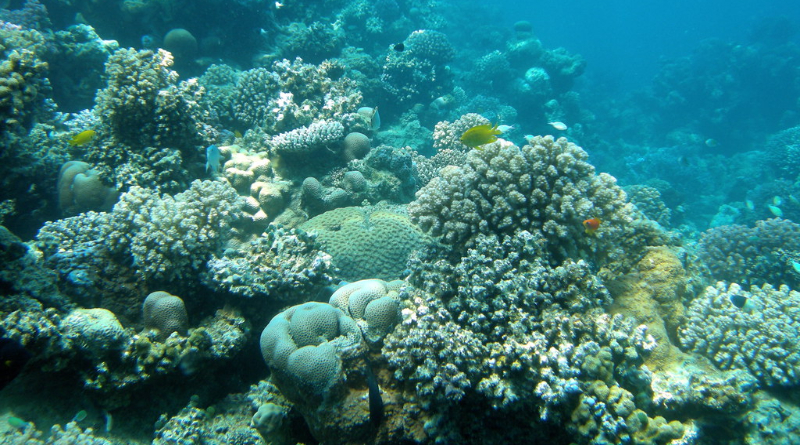
Coral reefs cover less than 1% of the ocean floor yet support approximately 25% of all marine life. They offer natural coastline protection and food for coastline communities. Marine heatwaves introduced patterns of coral extinction and bleaching, so, without intervention, many reefs are at risk of disappearing by 2050. Of the reefs that are forecast to remain resilient in a hotter world, less than a third are currently in areas protected by conservation measures.
Yet it turns out that about 166,000 square kilometers (64,093 square miles) of coral reefs across 71 countries have capacity to either withstand or recover from the effects of global warming. Climate-resilient reefs are located in Australia, the Bahamas, Cuba, Indonesia, and the Philippines, according to a collaborative study from Wildlife Conservation Society and Macquarie University, with support from the Bloomberg Ocean Initiative.
These findings highlight the uneven but widespread global distribution of large scale refugia — areas of relatively unaltered climate that are inhabited by plants and animals during a period of continental climatic change. Some reefs are better positioned because they are located in rare cool spots in the oceans or are dominated by large branching and plating corals. Australia’s Great Barrier Reef has been documented to have some of these pockets, as has the Palau archipelago. Elsewhere, stony corals have adapted to heat stresses and other types of ecosystems are showing an ability to recover faster from damage.
The researchers emphasize the opportunity for global efforts and countries to strategically focus policies, conservation finance, and management actions most likely to sustain coral reef futures. “Coral reefs are often framed as ecosystems beyond saving, but this research shows that there is a global set of reefs that have the potential to survive and recover,” Emily Darling, director of coral conservation at the Wildlife Conservation Society and a co-author of the assessment, said in a statement. “We now have a critical opportunity to mobilize the necessary action to protect these reefs.”
The study is based on a mapping tool developed using more than 45,000 field observations from 1960 through last year and estimates the extent of damage caused to reefs by 2050. To do so, a projected global temperature increase of 2.1C (3.8F) relative to pre-industrial levels was used as a baseline.
International Films that Chronicle Efforts to Save the Coral Reefs
Earlier this month I attended the 2026 International Ocean Film Festival at the Harbor Branch of the Florida Oceanographic Institute. It was an afternoon filled with eye-opening research and impressive volunteer efforts to reverse the devastating effects of the climate crisis on our planet. Two films specifically addressed efforts to save the coral reefs and deserve to be mentioned here.
Coral in Focus – Quentin van den Bossche (Fiji, South Korea, USA) 18 min.
In Fiji, a group of scientists, engineers, nonprofits, and islanders are all doing their best to save the coral reefs. Efforts include replanting corals in parts where they are bleached or have disappeared by introducing heat-tolerant corals. Instead of leaving the reef deterioration to the imagination, scientists call upon volunteers to join in the effort. “We can show them what’s actually happening,” producer van den Bossche explains. “If we can see it, we can save it.”
So far, volunteers have planted 100,000 new corals in Fiji.
Scripps Institute has helped the replanting process by creating 3-D models so corals can be studied in labs. To visualize one coral reef, they assembled 25,000 photo images from underwater photography. This moves the number of possible observers from thousands to millions, as “so many brains are ready to get engaged.”
Technologic partner, Samsung, accentuated the process by creating Ocean Mode, so that people can scan the ocean floor and determine which areas on which they need to focus. Through the “Samsung x Seatrees: Bring Coral in Focus” initiative, partners and local communities are given Ocean Mode-equipped Galaxy devices and underwater housings to capture high-quality underwater imagery. An auto mode that adjusts photo colors now more precisely resembles the actual colors on the bottom than were possible previously due to the blue colorizing effect of the ocean. That imagery is then used to generate detailed 3D photogrammetric models. This process improves how coral reefs are monitored and evaluated, resulting in critical insight into reef health and recovery.
Replanting a Garden – Anthony W. Wallace (Canada) 15 min.
After a devastating coral bleaching event, Jamaican fishers, scientists, and wardens unite to restore their reef and their livelihoods. Replanting a Garden follows the Oracabessa Bay Fish Sanctuary as they replant resilient coral, protect fragile waters, and rebuild community—revealing how caring for the ocean strengthens both ecosystems and the people who depend on them.
Final Thoughts
We’ve understood the threat of climate change to the world’s coral reefs for a long time. A researcher at the Harbor Branch of Florida Atlantic University, Brian Lapointe, PhD, explains that what we’re seeing is destruction of the coral reefs due to nutrient dominance. As the nitrogen-phosphorous balance in the ocean gets out of balance, certain membranes in the coral start to break down. The coral can’t get enough phosphorous, which leads to what Lapointe calls “phosphorous limitation and eventual starvation. It degrades the ability of these organisms to survive high light and high temperatures.”
“This is real, ladies and gentlemen,” LaPointe implores. “We are changing the chemistry of the planet.”
Hopefully, scientists can continue to explore the potential of heat-tolerant corals while communities address the nutrients (read: septic overflows and inefficient storm water filtration) entering their waterways.
Resources
“Florida Atlantic University Harbor Branch Oceanographic Institute Presents: The 2026 International Ocean Film Festival: Florida Tour.” Harbor Branch Oceanographic Institute.
“Machine-learning and prioritization models reveal climate refugia for coral reefs into 2050.” KyleJ.A.Zawada, et al. EcoEvoRxiv. June 2026.
“Samsung Galaxy’s Ocean Mode and Coral Reef Initiative receive international recognition and awards.” Samsung Newsroom. April 26, 2026.
“Scientists found the coral reefs that can survive climate change.” Ishika Mookerjee. Bloomberg. June 16, 2026.
Sign up for CleanTechnica’s Weekly Substack for Zach and Scott’s in-depth analyses and high level summaries, sign up for our daily newsletter, and follow us on Google News!
Have a tip for CleanTechnica? Want to advertise? Want to suggest a guest for our CleanTech Talk podcast? Contact us here.
Sign up for our daily newsletter for 15 new cleantech stories a day. Or sign up for our weekly one on top stories of the week if daily is too frequent.


CleanTechnica uses affiliate links. See our policy here.
CleanTechnica’s Comment Policy