

Nanoscience provides the conceptual and technological bridge necessary to unify physical and biological perspectives in mechanobiology.
Mechanobiology is an interdisciplinary field that integrates principles from biology, physics, and engineering to characterize how mechanical forces regulate biological systems across scales, from molecular interactions to tissue and organ function. It focuses on establishing causal relationships between physical forces and biological responses, including the reciprocal feedback by which cells sense, transduce, and actively remodel their environment1,2. These insights underpin emerging mechanomedicine strategies that aim to target aberrant mechanotransduction pathways for diagnostics and therapeutic interventions3,4.

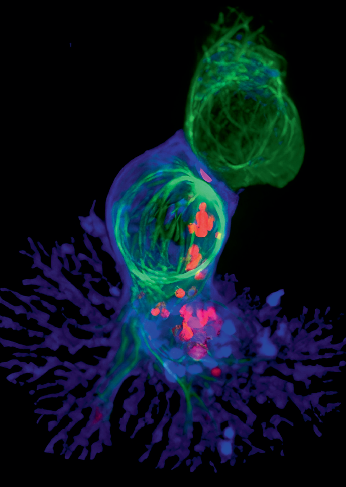
Credit: BSIP SA/Alamy Stock Photo
However, the vital mechanobiological processes that operate at the single-molecule and nanoscale regimes are challenging to access experimentally with high spatial and temporal resolution. To this end, atomic force microscopy (AFM)5 and optical6 and magnetic tweezers7 have been the standard tools for mechanobiologists. Although these offer sensitivity down to the single-molecule regime, they lack throughput. Advanced nanosensors (for example, force-responsive nanomaterials based on DNA nanotechnology8) have been developed to detect piconewton‑scale forces, molecular deformations, and local viscoelastic changes in real time, providing highly localized, non‑invasive readouts of mechanical signals. Combined with super‑resolution microscopy, these approaches have enabled the mapping of structural organization and mechanical heterogeneity across hierarchical biological assemblies involved in mechanotransduction.
Although nanoscience provides these precision tools, and reductionist approaches have yielded fundamental insights into mechanobiological processes, the fragmentation of these tools remains a key limitation towards predictive, physiologically relevant mechanobiological models. For example, measurements from AFM, optical tweezers, and fluorescence‑based probes across different laboratories are often not directly comparable, owing to differences in calibration, temporal resolution, and environmental conditions. Thus, the field still lacks standardized frameworks capable of reliably quantifying, comparing, and reconciling data from diverse methods used by mechanobiologists, as Kasuba et al. argue in a Perspective in this issue. Additionally, current techniques are limited in their ability to capture the full spatio-temporal spectrum of mechanical cues, especially across broad temporal ranges and in realistic, heterogeneous environments such as tissues and organoids. This bottleneck also limits the clinical interpretation of mechanical biomarkers.
Theoretical and computational frameworks remain insufficient to fully describe the non-equilibrium behaviour of biological systems. Progress requires integrating multiplexed mechanical, molecular, and imaging datasets with machine learning/artificial intelligence-assisted approaches. Thus, it will be imperative to incorporate a systems mechanobiology framework to achieve tangible translational outcomes.
An interesting technological challenge for the field from a nanoscale perspective is the development of multifunctional, closed‑loop nanodevices that combine force sensing, actuation, and real‑time feedback to dynamically probe mechanotransduction pathways. By mimicking natural feedback, where cells sense mechanical cues, process them, and adapt their behaviour, these systems move beyond passive measurement to precise spatio-temporal control of biological processes. This capability is critical for establishing causal links between forces and cellular responses through controlled, reversible perturbations. Such closed‑loop nanodevices hold great promise, from uncovering fundamental mechanobiology principles9 to enabling adaptive therapies such as stimulus‑responsive drug delivery10. However, challenges such as integrating sensing and actuation, ensuring biocompatibility, and achieving scalable fabrication need to be overcome.
At Nature Nanotechnology, we believe that nanoscience does more than supply tools for mechanobiology; it reshapes how the field conceives and interrogates biological systems. At a conceptual level, it provides a common language that uses interdisciplinary approches to describe processes that were traditionally framed in purely biochemical terms. This shift enables mechanobiology to move beyond correlation toward quantitative causal models in which mechanical inputs and biological outputs are linked through measurable parameters. In this sense, nanoscience is not yet a fully realized bridge but an evolving interface that can help to unify physical and biological perspectives in mechanobiology. Going forward, we are committed to follow innovations that bridge scales, from molecules to tissues, while enabling precise, quantitative, and clinically relevant mechanobiological insights.