


Support CleanTechnica’s work through a Substack subscription or on Stripe.
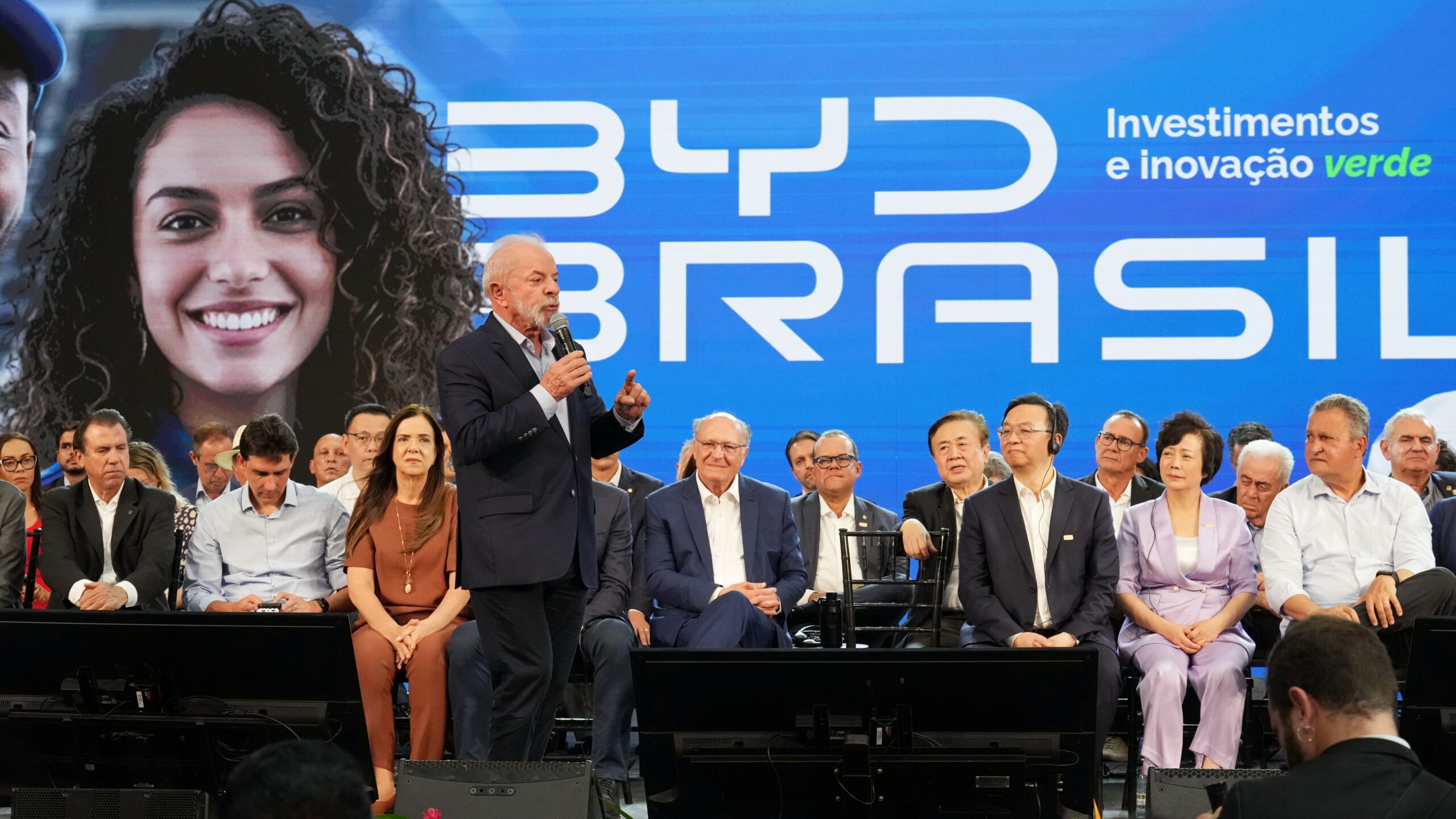
Recent reports and statements from BYD Vice President Stella Li indicate that their new Bahia plant in eastern Brazil recently received export orders totaling 100,000 units, split between Mexico and Argentina. The news sent BYD’s share price up on Monday. However, the implications to BYD’s overall business and the global adoption of EVs go much farther.
While it can be a challenge to get firm numbers out of Mexico, BYD made up at least 70% of the Mexican EV market in 2025, with roughly double the volume over the year before. The Dolphin Mini (Seagull) was the bestselling model. Chinese brands made up 20% of the overall new car market in Mexico. Plug-in vehicles were estimated to total around 100,000 sales in 2025. As such, the 50,000-vehicle order would be equivalent to the majority of BYD sales and half of the EV market last year. However, Mexico increased tariffs on vehicles from countries without a free trade agreement from 20% to 50%. These tariffs target China and were implemented under pressure from the US government. Although BYD tends to pad prices in countries that threaten protectionism to provide pricing stability, 50% is significant. However, Mexico has trade agreements with Brazil, and the 50,000-vehicle order alone takes much of the sting out of the tariffs.
In Argentina, the potential impact is even larger. Last year, Argentina sold 26,632 vehicles with some sort of electrification, but 76% of those were non-plug hybrids. That leaves BEVs and PHEVs at around 6,400, or a little over 1%, of the 571,308 new vehicles sold last year. That overall market was up 47.8% last year on a strong rebound. So far this year, BYD has ~75% EV market share. The Brazilian order alone would multiply the size of the Argentinian EV market. In addition, Argentina has exempted the first 50,000 imported plug-in vehicles from tariffs. That could lead to increased imports from China. But a Mercosur free trade agreement with Brazil means that sales could go far beyond that quota. Argentina’s EV market could transform dramatically.

#1 in February Retail Sales Within Brazil
The BYD Dolphin Mini (aka Seagull) became the top selling vehicle in retail sales in Brazil in February, moving over 4,100 units. This marks the first time that an EV or a Chinese brand topped that metric. However, when government and corporate fleets are added into the mix, total sales of the model come in at 11th place. While one month for one model does not make a trend, it is up 64% YoY and follows a strong result for January.
The focus on private sales might also preview a pattern. EU protectionists are seeking to block cars with imported batteries (the majority of EVs in Europe) from becoming corporate cars (the majority of sales in Europe). Combined with a weakening of CSRD reporting, that will make EVs less likely to be offered as company cars and will slow adoption overall. The goal of undermining the current EV market is sometimes positioned as trying to stimulate local production, which it might. However, it will also give legacy auto another excuse to push back EV requirements. Company cars, with their tax benefits, have already tended toward domestic brands, but this could shift the sales focus further. We could also see a dramatic shift in the purchasing decisions of private buyers who also pay for their own increasingly expensive fuel. Those private buyers could become the primary customers for BYD models in Europe, much as they have become in Brazil.
Within Brazil, BYD sold approximately 112,900 vehicles in 2025. This year, they have a sales goal of 250,000 vehicles in the country. However, under pressure from other countries, Brazil recently revoked a tariff exemption for locally assembled CKD (Complete Knock Down) vehicles, with tariffs rising to 35% by the end of the year. However, BYD already has plans to source 50% of components locally by year end, avoiding those tariffs.
Models being produced at the Bahia plant include the Dolphin Mini (Seagull), Song Pro (Sealion 5 in Europe, not to be confused with the Chinese market Sealion 05), and King (formerly Chaser in China). The Yuan Plus (Atto 3), currently being replaced in China, is also scheduled to go into production. With several other models being replaced with a new generation in China, I expect their tooling to end up in Brazil soon.

Growing Around the Roadblocks
BYD started localized production in Brazil last fall. Initial production capacity was set at 150,000 units. They hope to increase that capacity to 300,000 units this year. Between the domestic market, Mexico, and Argentina, that volume is already spoken for, not to mention the rest of LATAM. And Brazil, as part of Mercosur, just signed a trade agreement with the EU. Several of these models could also work well in Africa.
BYD also has an increasing presence in Canada and may start local production there. Canada is looking increasingly likely to establish a free trade agreement with Mercosur, giving BYD another path into the country beyond the quota on Chinese imports. In combination, we could see a wide range of models produced in the Americas, even if they circumvent the US.
The eventual production capacity goal of 600,000 units in the final phase of the factory could happen faster than many expect. In addition, BYD’s other plants are progressing rapidly. Indonesia should be starting production soon. Hungary mass production is also anticipated.
Back in China, BYD is going through the largest product transition since the first-generation Blade Battery launched in 2020. Every vehicle is getting massively updated or replaced. By many accounts, this will set up the next phase for vehicle electrification in the largest and most competitive market globally. It will be months before production ramps up and we see the full impact on sales in China. It could also be a while before Brazil ramps up to full capacity, vehicles are delivered to dealers, and we see the impact on sales. Of course, by the time that happens, more changes will also happen. Top competitors are not standing still.
Electric vehicle technology has established itself to the point that it will continue to grow globally. Politicians might set it back in some markets. Restrictions might hinder competition, inflate prices, and slow adoption in some places, especially where legacy industry controls policy. That might keep the most advanced vehicles out of less competitive markets, at least for a while. But even previous generation vehicles are competitive in those markets. While politicians try to put obstacles in the way, the roots continue to grow toward water while new sprouts seek the sun. Where conditions are more favorable, growth will flourish. Some markets will leapfrog others. Some patches will remain relatively barren for a while, but people will tire of the technological scarcity. Like many of our gardens, we are seeing roots take hold and sprouts break through the surface now. Get ready to see the next stage of EV growth.
Sign up for CleanTechnica’s Weekly Substack for Zach and Scott’s in-depth analyses and high level summaries, sign up for our daily newsletter, and follow us on Google News!
Have a tip for CleanTechnica? Want to advertise? Want to suggest a guest for our CleanTech Talk podcast? Contact us here.
Sign up for our daily newsletter for 15 new cleantech stories a day. Or sign up for our weekly one on top stories of the week if daily is too frequent.
CleanTechnica uses affiliate links. See our policy here.
CleanTechnica’s Comment Policy