
Close Menu
geekfence.comgeekfence.com
    What's Hot

    Posit AI Blog: Introducing the text package

    July 9, 2026

    Cut costs and simplify operations with writable warm storage in Amazon OpenSearch Service

    July 9, 2026

    Data centre delays expose AI cloud power limits

    July 9, 2026
    Facebook X (Twitter) Instagram
    • About Us
    • Contact Us
    Facebook Instagram
    geekfence.comgeekfence.com
    • Home
    • UK Tech News
    • AI
    • Big Data
    • Cyber Security
      • Cloud Computing
      • iOS Development
    • IoT
    • Mobile
    • Software
      • Software Development
      • Software Engineering
    • Technology
      • Green Technology
      • Nanotechnology
    • Telecom
    geekfence.comgeekfence.com
    Home»Artificial Intelligence»Brain-inspired chip runs near absolute zero and could transform quantum computing
    Artificial Intelligence

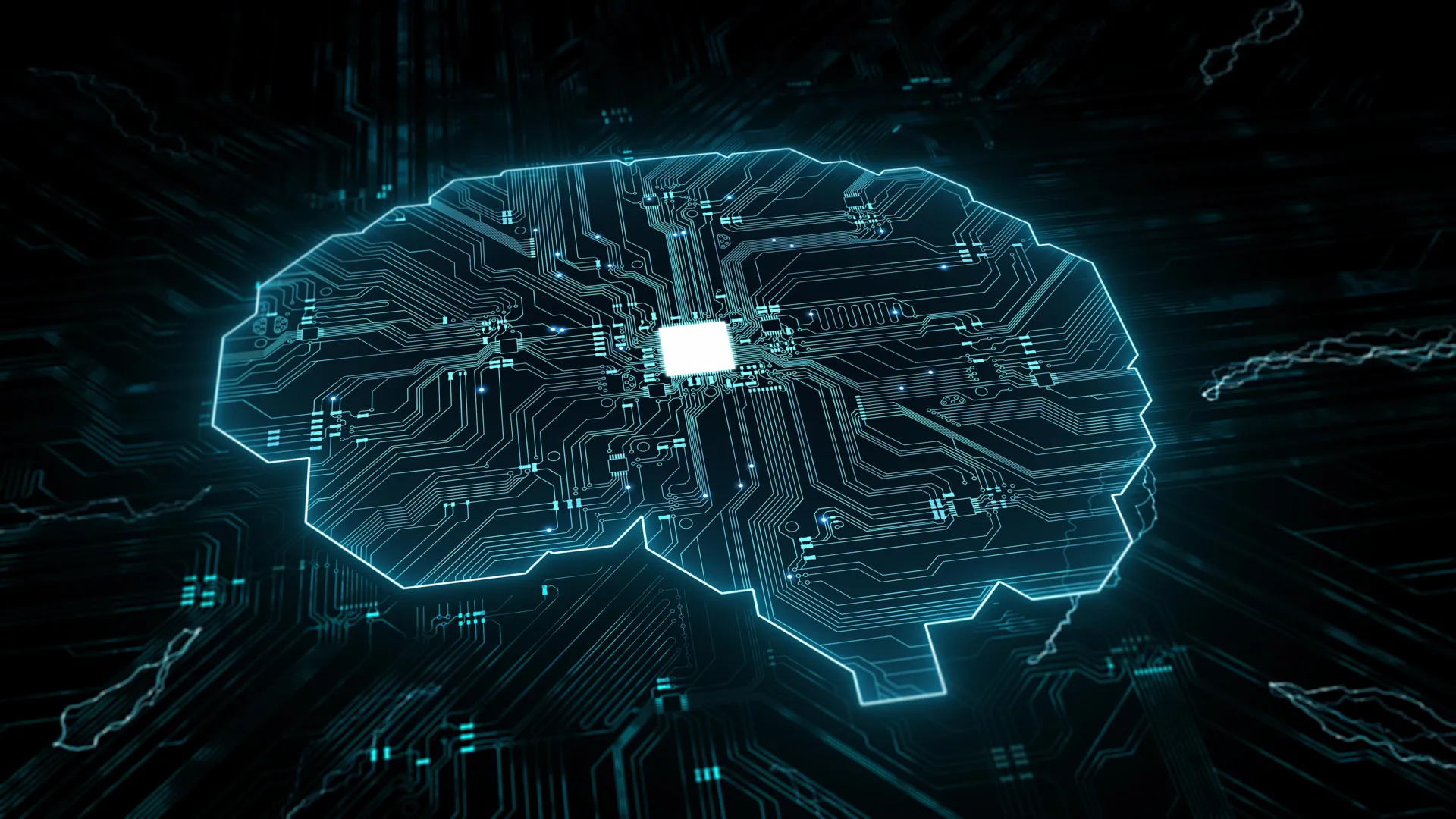
    Brain-inspired chip runs near absolute zero and could transform quantum computing

    AdminBy AdminJune 12, 2026No Comments3 Mins Read24 Views
    Facebook Twitter Pinterest LinkedIn Telegram Tumblr Email
    Brain-inspired chip runs near absolute zero and could transform quantum computing
    Share
    Facebook Twitter LinkedIn Pinterest Email


    Researchers at the University of Hong Kong (HKU) have unveiled a significant advance in cryogenic electronics that could help overcome key challenges in quantum computing and support future deep space missions. The team, from HKU’s Department of Electrical and Computer Engineering and the Centre for Advanced Semiconductors and Integrated Circuits (CASIC), developed a programmable neuromorphic hardware platform capable of operating at temperatures near absolute zero.

    The research was led by Professor Yuhao Zhang and PhD student Xin Yang. Their work introduces a new method for generating and controlling negative differential resistance (NDR) in industry standard Silicon Carbide (SiC) MOSFETs. Using this approach, the researchers demonstrated for the first time that a single transistor can reproduce the energy efficient “spiking” activity of biological neurons at temperatures as low as 10mK.

    Brain-Inspired Hardware for Quantum Computing

    Quantum computers depend on sophisticated control electronics to manage qubits, which are highly sensitive and must be kept at millikelvin temperatures. Existing silicon based control systems consume considerable power and produce unwanted heat, making it necessary to position them away from the qubits themselves. That distance creates extensive wiring requirements that can hinder performance and make large scale quantum computers more difficult to build.

    “Our work introduces a hardware platform that can be integrated alongside quantum processors,” said Professor Zhang. “By using the unique carrier dynamics in silicon carbide, we can create circuits that are thousands of times more energy-efficient than conventional electronics, significantly reducing the thermal load on cryogenic systems.”

    Silicon Carbide Reveals Unique Cryogenic Behavior

    The team found that SiC MOSFETs display a strong “S-shape” NDR effect when cooled below 2K. This behavior is driven by electron-donor impact ionization (EDII). Unlike other technologies that depend on heat generated within a device, the newly observed mechanism arises directly from the material’s atomic properties. As a result, it remains highly stable and can be reproduced consistently across different manufacturing batches.

    “This is a robust and scalable approach,” said Mr. Yang. “Because SiC is already used globally in electric vehicles and power grids, we can leverage existing industrial foundries to manufacture these cryogenic chips on 300-mm wafers.”

    From Artificial Neurons to Deep Space Missions

    The study also demonstrated that these artificial neurons can be linked together, or “cascaded,” into larger networks. This capability could enable advanced local data processing at cryogenic temperatures and improve important quantum computing functions such as quantum error correction and real time quantum control.

    The potential applications extend well beyond quantum computing. Because the circuits are designed to operate reliably in extremely cold environments, they could also be valuable for deep space exploration. Future systems may be able to function in the harsh conditions found on the Moon’s surface or in the distant regions of our solar system.

    The findings were published in Nature Communications in a paper titled “Cryogenic neuromorphic circuits using gate-controlled negative differential resistance in silicon carbide.”


    Source link

    Share. Facebook Twitter Pinterest LinkedIn Tumblr Email

    Related Posts

    Posit AI Blog: Introducing the text package

    July 9, 2026

    The Download: worms fight pollution, and geoengineering faces reality

    July 8, 2026

    Guidelines for Respectful Use of AI – O’Reilly

    July 7, 2026

    Expanding our Heat Resilience data to 50+ global cities

    July 6, 2026

    2026 BAIR Graduate Showcase – The Berkeley Artificial Intelligence Research Blog

    July 5, 2026

    Microsoft Frontier Company: AI engineering that amplifies and protects your intelligence

    July 4, 2026
    Top Posts

    Understanding U-Net Architecture in Deep Learning

    November 25, 202560 Views

    Hard-braking events as indicators of road segment crash risk

    January 14, 202631 Views

    Redefining AI efficiency with extreme compression

    March 25, 202628 Views
    Don't Miss

    Posit AI Blog: Introducing the text package

    July 9, 2026

    AI-based language analysis has recently gone through a “paradigm shift” (Bommasani et al., 2021, p. 1),…

    Cut costs and simplify operations with writable warm storage in Amazon OpenSearch Service

    July 9, 2026

    Data centre delays expose AI cloud power limits

    July 9, 2026

    5 Settings That Make Readings Easier to See

    July 9, 2026
    Stay In Touch
    • Facebook
    • Instagram
    About Us

    At GeekFence, we are a team of tech-enthusiasts, industry watchers and content creators who believe that technology isn’t just about gadgets—it’s about how innovation transforms our lives, work and society. We’ve come together to build a place where readers, thinkers and industry insiders can converge to explore what’s next in tech.

    Our Picks

    Posit AI Blog: Introducing the text package

    July 9, 2026

    Cut costs and simplify operations with writable warm storage in Amazon OpenSearch Service

    July 9, 2026

    Subscribe to Updates

    Please enable JavaScript in your browser to complete this form.
    Loading
    • About Us
    • Contact Us
    • Disclaimer
    • Privacy Policy
    • Terms and Conditions
    © 2026 Geekfence.All Rigt Reserved.

    Type above and press Enter to search. Press Esc to cancel.