
Close Menu
geekfence.comgeekfence.com
    What's Hot

    World ID expands its ‘proof of human’ vision for the AI era – Computerworld

    April 19, 2026

    Francis Bacon and the Scientific Method

    April 19, 2026

    War in the Middle East, Damaged Data Centers, and Cloud Disruptions

    April 19, 2026
    Facebook X (Twitter) Instagram
    • About Us
    • Contact Us
    Facebook Instagram
    geekfence.comgeekfence.com
    • Home
    • UK Tech News
    • AI
    • Big Data
    • Cyber Security
      • Cloud Computing
      • iOS Development
    • IoT
    • Mobile
    • Software
      • Software Development
      • Software Engineering
    • Technology
      • Green Technology
      • Nanotechnology
    • Telecom
    geekfence.comgeekfence.com
    Home»Artificial Intelligence»AI-powered robot learns how to harvest tomatoes more efficiently
    Artificial Intelligence

    AI-powered robot learns how to harvest tomatoes more efficiently

    AdminBy AdminMarch 20, 2026No Comments2 Mins Read5 Views
    Facebook Twitter Pinterest LinkedIn Telegram Tumblr Email
    AI-powered robot learns how to harvest tomatoes more efficiently
    Share
    Facebook Twitter LinkedIn Pinterest Email


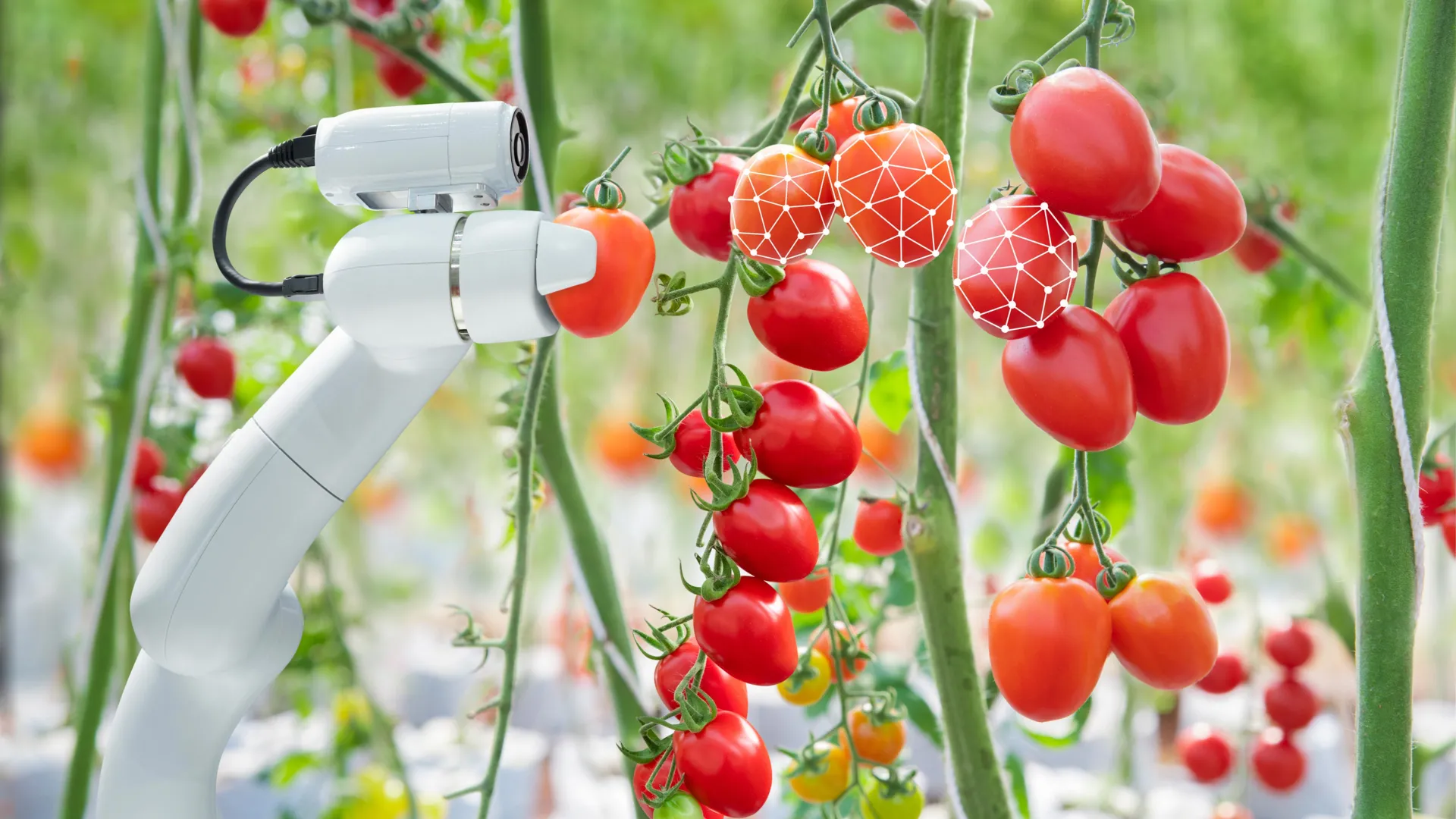
    Farm labor shortages are pushing agriculture toward greater automation, especially when it comes to harvesting. But not all crops are easy for machines to handle. Tomatoes, for example, grow in clusters, which means a robot must carefully select ripe fruit while leaving unripe ones untouched. This requires precise control and smart decision-making.

    To tackle this challenge, Assistant Professor Takuya Fujinaga of Osaka Metropolitan University’s Graduate School of Engineering developed a system that trains robots to assess how easy each tomato is to harvest before attempting to pick it.

    His approach combines image recognition with statistical analysis to determine the best angle for picking each fruit. The robot analyzes visual details such as the tomato itself, its stems, and whether it is hidden behind leaves or other parts of the plant. These inputs guide the robot in choosing the most effective way to approach and pick the fruit.

    From Detection to “Harvest-Ease” Decision-Making

    This method shifts away from traditional systems that focus only on detecting and identifying fruit. Instead, Fujinaga introduces what he calls “harvest-ease estimation.” “This moves beyond simply asking ‘can a robot pick a tomato?’ to thinking about ‘how likely is a successful pick?’, which is more meaningful for real-world farming,” he explained.

    In testing, the system achieved an 81% success rate, exceeding expectations. About one-quarter of the successful picks came from tomatoes that were harvested from the side after an initial front-facing attempt failed. This indicates the robot can adjust its approach when the first attempt is not successful.

    The research underscores how many variables affect robotic harvesting, including how tomatoes cluster, the shape and position of stems, surrounding leaves, and visual obstruction. “This research establishes ‘ease of harvesting’ as a quantitatively evaluable metric, bringing us one step closer to the realization of agricultural robots that can make informed decisions and act intelligently,” Fujinaga said.

    Future of Human-Robot Collaboration in Farming

    Looking ahead, Fujinaga envisions robots that can independently judge when crops are ready to be picked. “This is expected to usher in a new form of agriculture where robots and humans collaborate,” he explained. “Robots will automatically harvest tomatoes that are easy to pick, while humans will handle the more challenging fruits.”

    The findings were published in Smart Agricultural Technology.


    Source link

    Share. Facebook Twitter Pinterest LinkedIn Tumblr Email

    Related Posts

    How Much Coding Is Required To Work in AI and LLM-related Jobs?

    April 19, 2026

    Posit AI Blog: Implementing rotation equivariance: Group-equivariant CNN from scratch

    April 18, 2026

    The Download: bad news for inner Neanderthals, and AI warfare’s human illusion

    April 17, 2026

    AI Is Writing Our Code Faster Than We Can Verify It – O’Reilly

    April 16, 2026

    Measuring and bridging the realism gap in user simulators

    April 15, 2026

    Tune in on Thursday for Xbox First Look: Metro 2039

    April 14, 2026
    Top Posts

    Understanding U-Net Architecture in Deep Learning

    November 25, 202530 Views

    Hard-braking events as indicators of road segment crash risk

    January 14, 202625 Views

    Redefining AI efficiency with extreme compression

    March 25, 202624 Views
    Don't Miss

    World ID expands its ‘proof of human’ vision for the AI era – Computerworld

    April 19, 2026

    How ‘proof of human’ works Billed as the infrastructure for the age of AI, World…

    Francis Bacon and the Scientific Method

    April 19, 2026

    War in the Middle East, Damaged Data Centers, and Cloud Disruptions

    April 19, 2026

    How Much Coding Is Required To Work in AI and LLM-related Jobs?

    April 19, 2026
    Stay In Touch
    • Facebook
    • Instagram
    About Us

    At GeekFence, we are a team of tech-enthusiasts, industry watchers and content creators who believe that technology isn’t just about gadgets—it’s about how innovation transforms our lives, work and society. We’ve come together to build a place where readers, thinkers and industry insiders can converge to explore what’s next in tech.

    Our Picks

    World ID expands its ‘proof of human’ vision for the AI era – Computerworld

    April 19, 2026

    Francis Bacon and the Scientific Method

    April 19, 2026

    Subscribe to Updates

    Please enable JavaScript in your browser to complete this form.
    Loading
    • About Us
    • Contact Us
    • Disclaimer
    • Privacy Policy
    • Terms and Conditions
    © 2026 Geekfence.All Rigt Reserved.

    Type above and press Enter to search. Press Esc to cancel.