

Short answer (what most cat owners want to know)
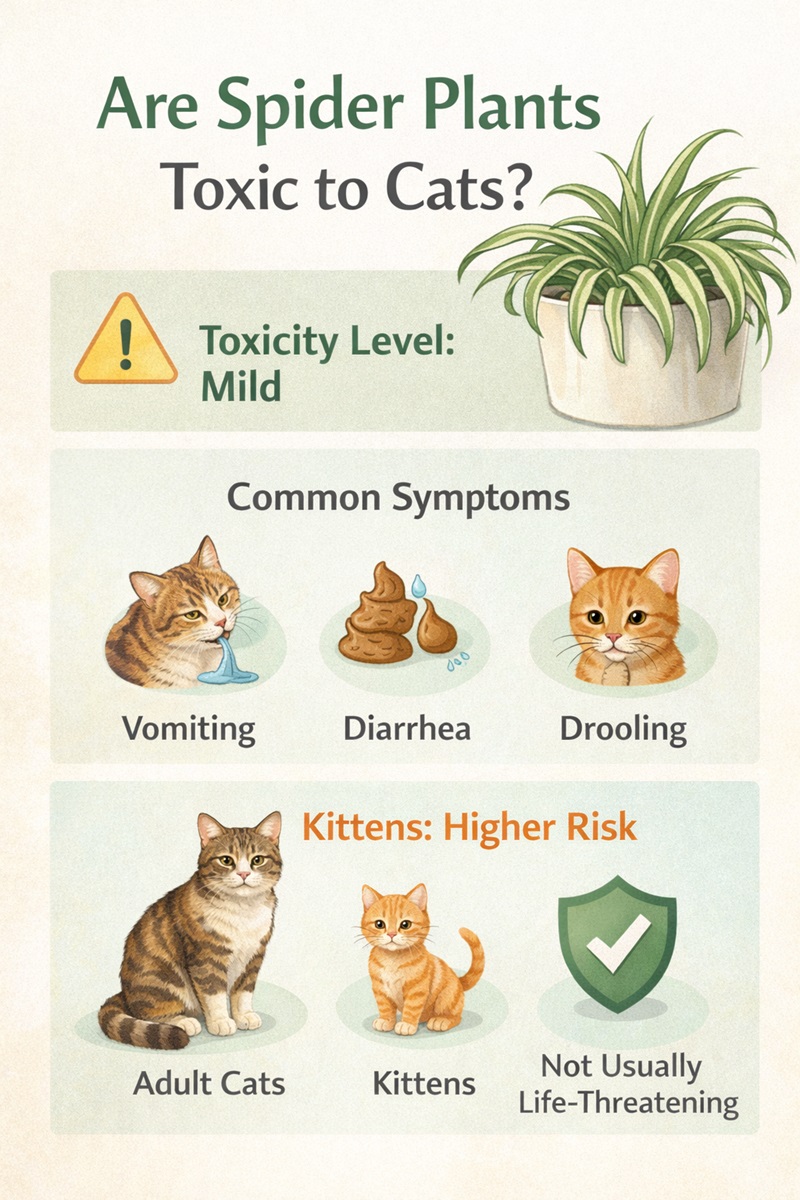
Spider plants (Chlorophytum comosum) are generally considered mildly toxic to cats.
They are not usually life-threatening, but they can cause vomiting, diarrhea, drooling, and stomach upset, especially if a cat eats a large amount, chews them repeatedly, or is a young kitten.
Veterinary toxicology sources often classify spider plants as low toxicity, meaning they rarely cause severe poisoning—but they can still make cats sick, particularly with repeated exposure.
Why cats are so attracted to spider plants
Spider plants are one of the most commonly chewed houseplants—and it’s not an accident.
Cats are drawn to spider plants because:
- The long, arching leaves look and feel like grass
- The dangling foliage moves easily, triggering play and hunting instincts
- Some cats find the plant especially stimulating, which can lead to repeat chewing
Kittens are even more likely to target spider plants due to teething, curiosity, and play-driven biting.
Are spider plants toxic to cats? What “mildly toxic” really means
When spider plants are labeled mildly toxic, it does not mean they contain a dangerous poison.
In practical terms, “mildly toxic” means:
- The plant can irritate the gastrointestinal tract
- Symptoms are usually digestive, not neurological or systemic
- Most cases resolve with monitoring and supportive care
This is why you may see conflicting information online. Some sources call spider plants “non-toxic” because they don’t cause organ failure or death, while others call them “toxic” because they regularly cause vomiting and diarrhea in cats that eat them.
Bottom line:
The risk is usually GI upset, not poisoning—but that still matters, especially for kittens.
Are spider plants more dangerous for kittens?
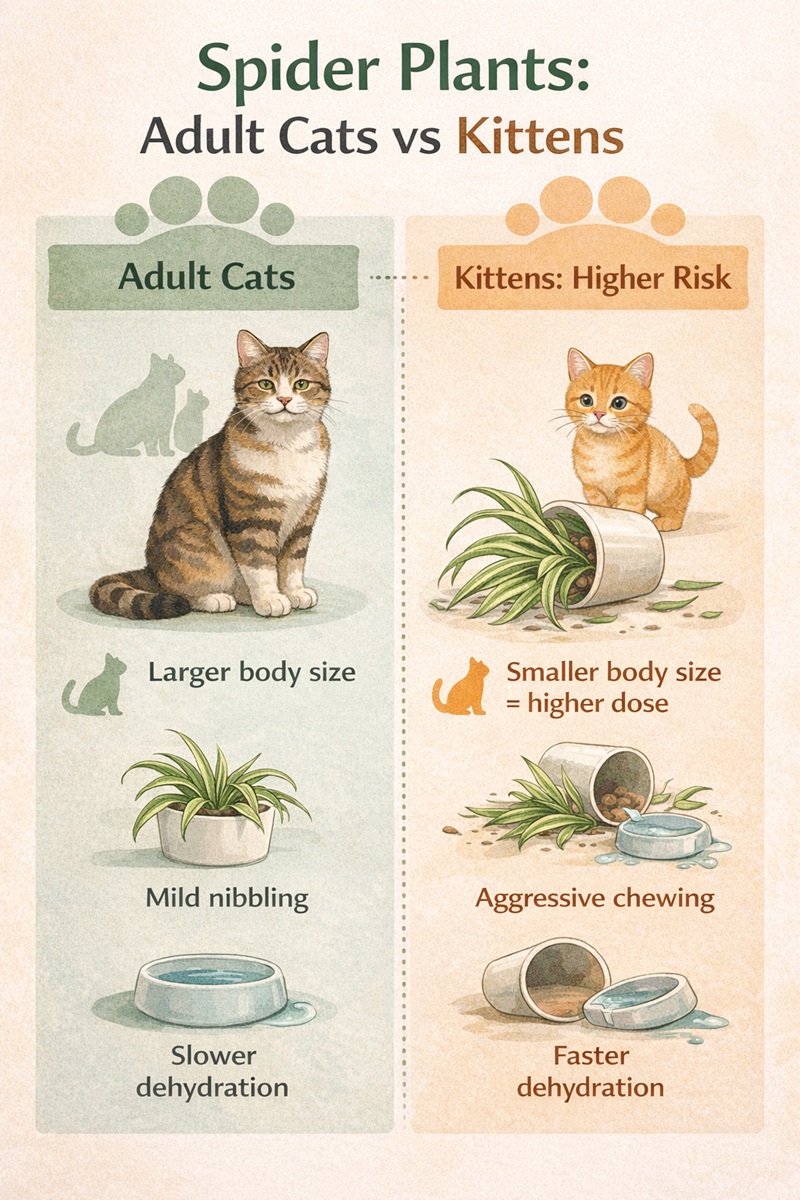
Yes. While spider plants are often mild for adult cats, kittens are at higher risk.
Kittens are more vulnerable because:
- Their smaller body weight makes the same amount a bigger dose
- They are more likely to chew aggressively and swallow plant pieces
- Their digestive systems are less tolerant of irritation
- Vomiting and diarrhea can lead to dehydration faster
If you have a kitten that chews plants, spider plants should be treated as unsafe in practice, even if the toxicity is considered mild.
Symptoms to watch for if a cat eats a spider plant
Most symptoms appear within a few hours of chewing or ingestion.
Common signs include:
- Drooling or lip-smacking
- Gagging or retching
- Vomiting
- Diarrhea
- Decreased appetite
- Mild lethargy
Some owners also notice increased restlessness or repeated attempts to return to the plant.
How serious is spider plant ingestion?
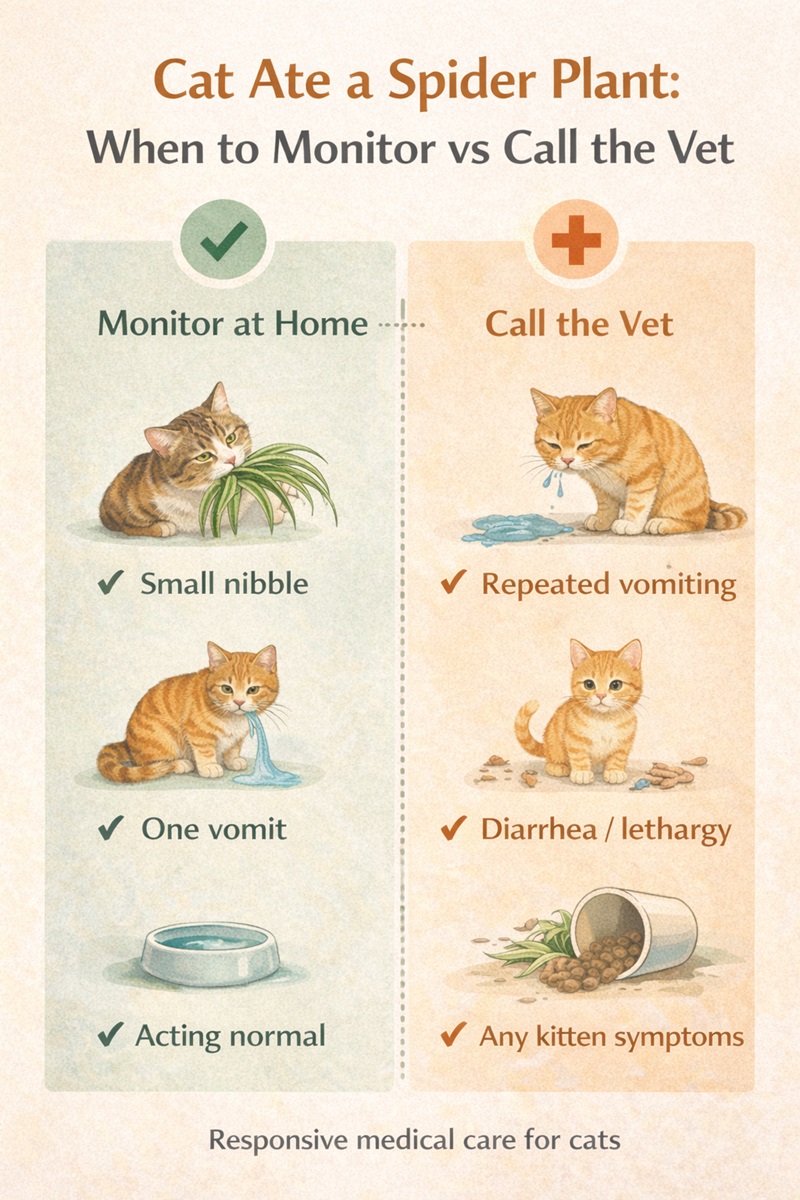
Many cases are mild—but not all should be ignored.
Often mild (monitor at home if):
- Your adult cat took a small nibble
- There was one vomiting episode followed by normal behavior
- Your cat is alert, drinking water, and eating normally
- There is no ongoing diarrhea
Call your vet promptly if you see:
- Repeated vomiting or persistent diarrhea
- Refusal to drink water
- Weakness, collapse, or severe lethargy
- Signs of dehydration (dry gums, sunken eyes)
- Blood in vomit or stool
- Abdominal pain or hunched posture
- Any symptoms in young kittens
If you are not completely sure the plant is a spider plant, treat the situation as higher risk.
What to do immediately if your cat or kitten eats a spider plant
If you catch your cat chewing the plant:
- Remove access to the plant right away
- Gently clear plant pieces from the mouth if safe to do so
- Offer fresh water
- Monitor closely for 24 hours
Do NOT:
- Induce vomiting unless directed by a veterinarian
- Give milk, oils, or human medications
If symptoms appear, be ready to tell your vet:
- How much was eaten
- When it happened
- Your cat’s age and weight
- Current symptoms
- What products were used on the plant or soil
Why reactions vary so much between cats
Two cats can eat the same spider plant and react completely differently.
Reactions depend on:
- Amount swallowed vs. chewed and spit out
- Frequency of exposure
- Individual stomach sensitivity
- Whether the cat ate on an empty stomach
- Stress levels
Repeat exposure is the biggest risk factor.
A cat that chews spider plants daily is far more likely to develop ongoing GI issues.
The hidden risks: soil, fertilizer, and plant treatments
In many cases, the plant itself isn’t the biggest problem.
Cats often ingest:
- Fertilizer granules
- Liquid plant food residue
- Insecticides or systemic pest treatments
- Leaf shine products
- Mold from damp soil
- Decorative rocks or mulch (choking hazard)
These products can cause symptoms more severe than spider plant ingestion alone.
Important safety rule:
If you have pets, assume anything added to the pot may be more dangerous than the leaves.
How to keep spider plants and cats in the same home
Some cats ignore spider plants entirely. Others treat them like a snack bar.
If your cat is a chewer, effective options include:
- Closed rooms with doors
- Enclosed plant cabinets
- Truly unreachable wall planters
- Removing the plant entirely
“Hanging” only works if your cat cannot jump to it.
Safer alternatives for plant-chewing cats
If your cat clearly wants to chew greenery, offer an approved option instead.
Cat-friendly choices:
- Cat grass (wheat, oat, or barley)
- Catnip
- Catmint
Even safe plants should be offered in moderation, as too much plant fiber can still cause vomiting.
If you’re not sure it’s a spider plant
Misidentification is common, and some look-alike plants are more toxic.
True spider plants usually have:
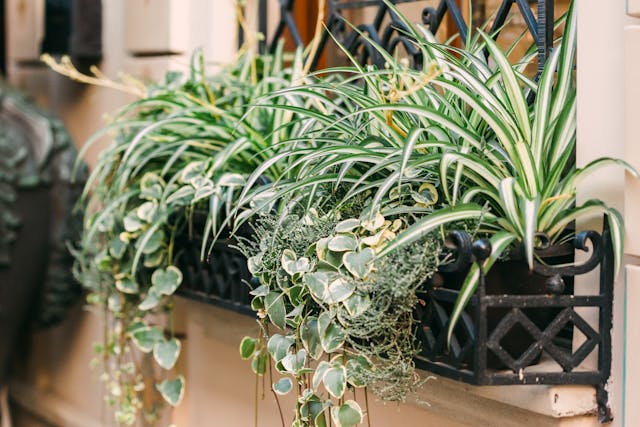
- Long, narrow, arching leaves
- Green or green-and-white striping
- A clumping base
- Hanging baby plantlets (“spiderettes”)
If you’re unsure, confirm the plant before assuming risk is low.
Bottom line
Spider plants are usually only mildly toxic to cats, but “mild” still means they can cause vomiting, diarrhea, drooling, and appetite changes—especially with repeated chewing or in kittens.
The safest rule is simple:
If your cat eats a plant on purpose, it isn’t a safe houseplant for your home.
For persistent chewers or kitten households, the best option is removing spider plants and switching to cat-safe alternatives.