

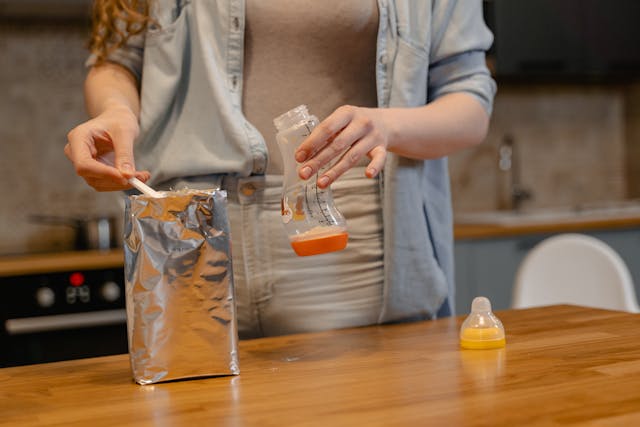
For many parents, formula shopping starts as a feeding decision and turns into something broader. You are not only reading the ingredient list. You are also thinking about farming, packaging, sourcing, and the kind of food system your child will grow up in.
That is where eco-friendly parenting enters the picture.
Still, two ideas often get blurred together online. A formula can be organic. A brand can call itself sustainable. Safety is a separate question. It starts with whether a formula is nutritionally complete, made for infants, and sold under real regulatory standards. In the United States, legally sold infant formula must meet FDA nutrient and safety requirements. The FDA currently requires 30 nutrients in infant formula and opened a broader nutrient review in 2025 as part of a larger reassessment of the category.
That does not make sustainability less important. It just puts it in the right place.
The smart way to judge formula is simple. Start with whether it is the right formula for your baby. After that, look at the farming standards, the ingredient sourcing, the packaging, and how transparent the company is about what it actually does.
What eco-friendly parenting means when you formula-feed
Eco-friendly parenting is not about getting every choice perfect. It is about making practical decisions that protect your child’s health while cutting avoidable environmental harm where you can.
With formula, that means looking past the front label.
Many parents want to know whether a formula uses organic dairy, whether the company explains where its ingredients come from, whether it uses palm oil, whether the tin is recyclable, and whether the brand says anything concrete about water use, waste, or farming standards.
Those are fair questions. They just come after the basics.
A safe infant formula should be clearly labeled for infants, fit your baby’s age and feeding needs, be mixed and stored correctly, and work for your child’s digestion, growth, and any medical issue that affects feeding.
The American Academy of Pediatrics also points out that infant formulas are not all built for the same situation. Some use cow’s milk protein, some use goat’s milk, and some use soy. Others are made for reflux, allergy, or digestion problems. That is why the “safest baby formula” is rarely one universal product. It is the formula that meets standards and fits the baby in front of you.
Organic formula fits eco-conscious values, but it is not automatically safer
Organic farming appeals to many families for a reason. USDA organic standards restrict many synthetic pesticides and fertilizers, require organic feed for livestock, and set rules for animal care and pasture access. For parents trying to avoid certain farming inputs, that matters.
But this is where formula advice often goes off course.
Organic does not mean a formula is automatically better for every baby. It does not mean a non-organic formula is unsafe. Formula safety depends first on nutrient balance, manufacturing controls, and whether the product supports normal growth and development. Organic status tells you something about sourcing and production. It does not replace pediatric fit or regulatory oversight.
That distinction matters because parents do not need inflated claims. They need a framework that holds up in real life.
What to check first in a safe baby formula
Before you compare packaging claims or sustainability promises, start with the factors that affect infant feeding most directly.
It should be a true infant formula
This sounds obvious, but it matters more than many labels suggest. Infant formula is designed for babies in the first year of life. Toddler drinks and toddler formulas are different products. They are not the same thing.
The AAP also warns against homemade formula and against using regular cow’s milk instead of infant formula during the first year. Those swaps create real nutrition risks, not just preference issues.
It should match your baby’s needs
Some babies do well on standard cow’s milk formula. Others need soy-based, goat’s milk-based, hydrolyzed, or other specialty formulas chosen with a clinician’s input.
A formula does not become the right choice because it has a cleaner brand image. If it does not suit your baby’s feeding needs, the label story does not help much.
Safe preparation matters as much as the ingredient list
This gets missed in many formula articles, and it should not.
Powdered infant formula is not sterile. Safe preparation, clean bottles, correct mixing, and proper storage matter every day. In practice, preparation mistakes create more immediate risk than most of the ingredient debates parents get pulled into online.
A formula can look perfect on paper and still be used unsafely at home.
Your baby’s response tells you a lot
Tolerance still matters. Stool pattern, spit-up, feeding comfort, intake, and growth give you better information than marketing language ever will.
If your baby has ongoing vomiting, poor weight gain, rash, blood in stool, or signs of allergy, the conversation stops being about lifestyle values and becomes a medical decision.
Where eco-conscious parents usually compare formulas
Once the safety basics are covered, this is where sustainability-minded parents start looking more closely.
Organic sourcing
For many families, this is the clearest place to begin. Organic sourcing reflects a preference for farming systems with stricter limits on certain chemical inputs, organic feed rules, and more defined livestock standards.
It does not answer every quality question. It does tell you something about the system behind the product.
Carbohydrate source
Many parents prefer lactose as the main carbohydrate because lactose is the primary carbohydrate in human milk. That preference makes sense.
At the same time, formulas that use other carbohydrate sources are not automatically low quality or unsafe. Some are built that way for formulation reasons tied to tolerance, digestion, or product design. This is a place for context, not fear.
Many parents have found that HiPP organic baby formula sets a high bar in this category by combining these agricultural traditions with modern nutritional science.
Fat blend
Parents often look closely at whether a formula includes palm oil, sunflower oil, coconut oil, or other vegetable oils.
Palm oil gets a lot of attention, mostly because of two concerns. One is environmental, especially around deforestation. The other is nutritional, because some studies have raised questions about mineral absorption in certain formula designs. That still does not make palm oil a simple yes or no issue. It is one factor among many.
Added functional ingredients
This part of the category has changed a lot in recent years.
More formulas now include HMOs, probiotics, prebiotics, or synbiotics in an effort to better reflect some of the functional components found in human milk. These ingredients are not magic. They also are not meaningless label filler. They sit in the middle. The science is growing, and parents now see them on labels far more often than they did a few years ago.
A 2025 review in Nutrients described the expanding evidence around manufactured human milk oligosaccharides and their growing role in modern formula design. That does not mean every baby needs them. It does show where the category is moving.
Where sustainability actually fits in the formula conversation
The environmental side of formula deserves attention, but it needs a grounded frame.
The better question is not, “Which formula is the greenest?” The better question is, “Which brand gives me real evidence that it takes sourcing, farming, packaging, and manufacturing seriously?”
That can include organic or pasture-linked dairy standards, clearer ingredient traceability, recyclable metal tins instead of harder-to-recycle mixed packaging, public sustainability reporting, and direct statements about water use, waste, or energy use.
It also means staying skeptical.
Words like “natural,” “clean,” and “earth-friendly” do not tell you much on their own. They are not regulated nutrition terms. A formula brand earns trust by giving specifics, not mood words.
What changed in 2026, and why parents should pay attention
The formula category feels different now because it is under more public and regulatory pressure than it was a few years ago.
In 2025, the FDA launched its first full review of infant formula nutrients since 1998. That is a real development, not a marketing trend. It shows that regulators are rechecking the category against newer science and current feeding realities.
At the same time, formula safety discussions still include manufacturing oversight, contamination controls, and recall response. Those issues stayed in the public eye after recent FDA enforcement updates and outbreak investigations tied to infant formula safety.
That matters because the modern formula conversation is no longer only about ingredient lists. Parents are also judging quality control, supply reliability, and whether manufacturers have earned trust under scrutiny.
The safest baby formula for an eco-conscious parent
The safest baby formula is not the one with the prettiest sustainability story.
It is the one that is made for infants, fits your baby’s age and feeding needs, is prepared safely, supports normal growth and tolerance, comes from a company that is transparent about sourcing and manufacturing, and lines up with your environmental values where it reasonably can.
That is the balance point.
Eco-friendly parenting works best when sustainability stays in the frame, but not in the driver’s seat. Safety, nutritional adequacy, and fit come first. After that, organic sourcing, stronger farming standards, clearer traceability, and better packaging can shape a smart and thoughtful choice.
The real goal is not to find the formula that sounds the purest. It is to choose one that makes sense for your baby and still reflects the kind of food system you want to support.