
Close Menu
geekfence.comgeekfence.com
    What's Hot

    Introducing ACL Hydration: secure knowledge workflows for agentic AI

    May 1, 2026

    Modern transfer protocols evolving to protect cloud data

    May 1, 2026

    Voices from the field: Helping farmers build resilient local economies across rural America

    May 1, 2026
    Facebook X (Twitter) Instagram
    • About Us
    • Contact Us
    Facebook Instagram
    geekfence.comgeekfence.com
    • Home
    • UK Tech News
    • AI
    • Big Data
    • Cyber Security
      • Cloud Computing
      • iOS Development
    • IoT
    • Mobile
    • Software
      • Software Development
      • Software Engineering
    • Technology
      • Green Technology
      • Nanotechnology
    • Telecom
    geekfence.comgeekfence.com
    Home»Nanotechnology»Resolving the spin of sound – Physics World
    Nanotechnology

    Resolving the spin of sound – Physics World

    AdminBy AdminMarch 10, 2026No Comments2 Mins Read3 Views
    Facebook Twitter Pinterest LinkedIn Telegram Tumblr Email
    Resolving the spin of sound – Physics World
    Share
    Facebook Twitter LinkedIn Pinterest Email


    Researchers show how sound waves can hold conserved spin angular momentum, resolving a long‑standing theoretical debate
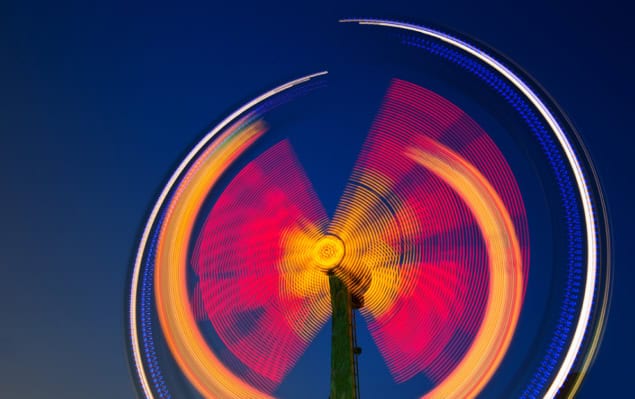
    Spinning fairground ride

    Spinning fairground ride (Courtesy: iStock/Taseffski)

    Acoustic waves are usually thought of as purely longitudinal, moving back and forth in the direction the wave is travelling and having no intrinsic rotation, therefore no spin (spin‑0). Recent work has shown that acoustic waves can in fact carry local spin‑like behaviour. However, until now, the total spin angular momentum of an acoustic field was believed to vanish, with the local positive and negative spin contributions cancelling each other to give an overall global spin‑0. In this work, the researchers show that acoustic vortex beams can carry a non‑zero longitudinal spin angular momentum when the beam is guided by certain boundary conditions. This overturns the long‑held assumption that longitudinal waves cannot possess a global spin degree of freedom.

    Using a self‑consistent theoretical framework, the researchers derive the full spin, orbital and total angular momentum of these beams and reveal a new kind of spin–orbit interaction that appears when the beam is compressed or expanded. They also uncover a detailed relationship between the two competing descriptions of angular momentum in acoustics which are canonical‑Minkowski and kinetic‑Abraham. They demonstrate that only the canonical‑Minkowski form is truly conserved and directly tied to the beam’s azimuthal quantum number, which describes how the wave twists as it travels.

    The team further demonstrates this mechanism experimentally using a waveguide with a slowly varying cross‑section. They show that the effect is not limited to this setup, it can also arise in evanescent acoustic fields and even in other wave systems such as electromagnetism. These results introduce a missing fundamental degree of freedom in longitudinal waves, offer new strategies for manipulating acoustic spin and orbital angular momentum, and open the door to future applications in wave‑based devices, underwater communication and particle manipulation.

    Do you want to learn more about this topic?

    Acoustic manipulation of multi-body structures and dynamics by Melody X Lim, Bryan VanSaders and Heinrich M Jaeger (2024)


    Source link

    Share. Facebook Twitter Pinterest LinkedIn Tumblr Email

    Related Posts

    National Nanotechnology Coordination Office (NNCO)

    May 1, 2026

    Strain engineered single crystal silver films – Physics World

    April 30, 2026

    Tuning Electron Transfer for Advanced Batteries and Sensors

    April 29, 2026

    Scientists just captured a mysterious quantum “dance” inside superconductors

    April 28, 2026

    In vivo self-assembly: A transformative strategy for intelligent cancer nanomedicine

    April 26, 2026

    Interfacial polarity modulation of positive electrode active materials for high-potential lithium metal batteries

    April 25, 2026
    Top Posts

    Understanding U-Net Architecture in Deep Learning

    November 25, 202533 Views

    Hard-braking events as indicators of road segment crash risk

    January 14, 202626 Views

    Redefining AI efficiency with extreme compression

    March 25, 202625 Views
    Don't Miss

    Introducing ACL Hydration: secure knowledge workflows for agentic AI

    May 1, 2026

    Your agents are only as good as the knowledge they can access — and only…

    Modern transfer protocols evolving to protect cloud data

    May 1, 2026

    Voices from the field: Helping farmers build resilient local economies across rural America

    May 1, 2026

    Poll: 1 in 5 Canadians more likely to buy an EV because of new rebate and gas prices

    May 1, 2026
    Stay In Touch
    • Facebook
    • Instagram
    About Us

    At GeekFence, we are a team of tech-enthusiasts, industry watchers and content creators who believe that technology isn’t just about gadgets—it’s about how innovation transforms our lives, work and society. We’ve come together to build a place where readers, thinkers and industry insiders can converge to explore what’s next in tech.

    Our Picks

    Introducing ACL Hydration: secure knowledge workflows for agentic AI

    May 1, 2026

    Modern transfer protocols evolving to protect cloud data

    May 1, 2026

    Subscribe to Updates

    Please enable JavaScript in your browser to complete this form.
    Loading
    • About Us
    • Contact Us
    • Disclaimer
    • Privacy Policy
    • Terms and Conditions
    © 2026 Geekfence.All Rigt Reserved.

    Type above and press Enter to search. Press Esc to cancel.