
Close Menu
geekfence.comgeekfence.com
    What's Hot

    Why AI Inferencing Demands a New Network Geography

    March 21, 2026

    Why Agents Fail: The Role of Seed Values and Temperature in Agentic Loops

    March 21, 2026

    ETL Powered by Matillion: A Cloud-Native Path to Modern Data Architecture in the Precisely Data Integrity Suite

    March 21, 2026
    Facebook X (Twitter) Instagram
    • About Us
    • Contact Us
    Facebook Instagram
    geekfence.comgeekfence.com
    • Home
    • UK Tech News
    • AI
    • Big Data
    • Cyber Security
      • Cloud Computing
      • iOS Development
    • IoT
    • Mobile
    • Software
      • Software Development
      • Software Engineering
    • Technology
      • Green Technology
      • Nanotechnology
    • Telecom
    geekfence.comgeekfence.com
    Home»Telecom»Why AI Inferencing Demands a New Network Geography
    Telecom

    Why AI Inferencing Demands a New Network Geography

    AdminBy AdminMarch 21, 2026No Comments3 Mins Read0 Views
    Facebook Twitter Pinterest LinkedIn Telegram Tumblr Email
    Why AI Inferencing Demands a New Network Geography
    Share
    Facebook Twitter LinkedIn Pinterest Email


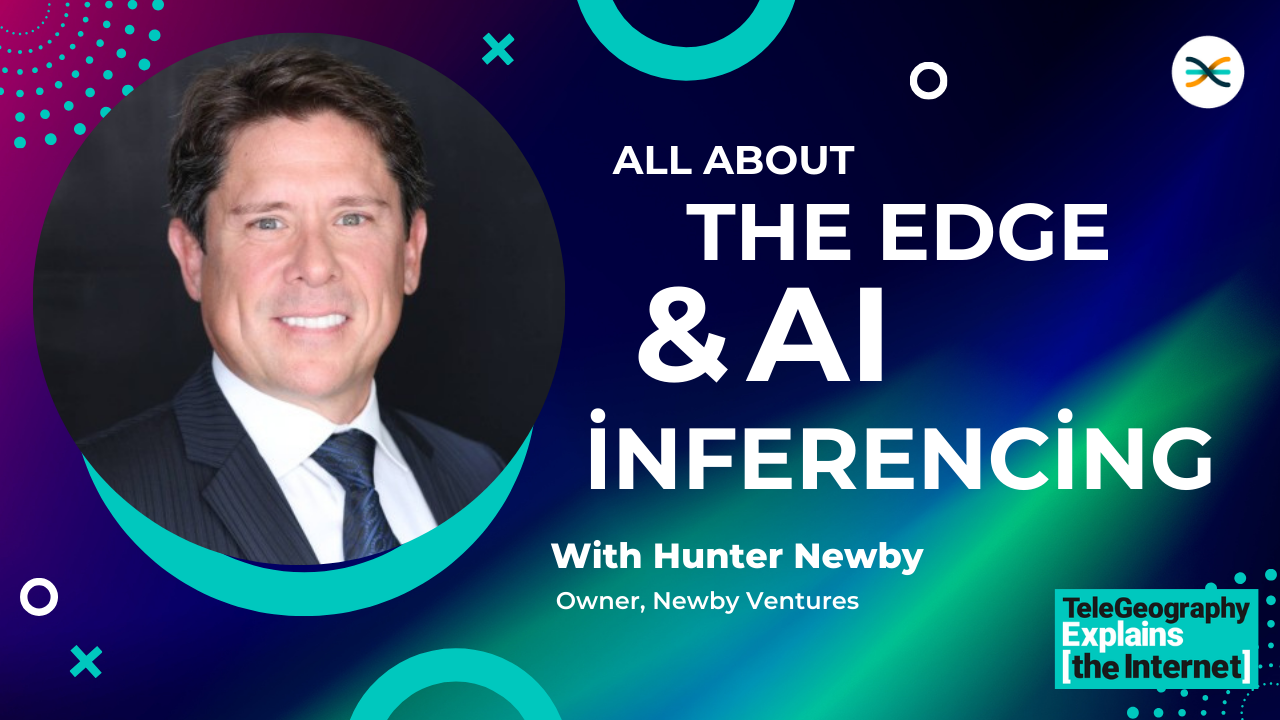
    While the tech world obsesses over GPU clusters and training models, a fundamental infrastructure gap threatens to limit AI’s real-world impact. Hunter Newby, a telecom veteran who built carrier hotels and internet exchange points across North America, argues that the shift from AI training to AI inferencing will expose a critical weakness: many cities and entire states lack the neutral interconnection infrastructure needed to support low-latency AI applications.

    AI and low-latency inferencing

    AI inferencing operates on a completely different model than traditional internet traffic. Where content delivery networks cached static content, AI inference requires real-time, deterministic routing with guaranteed latency thresholds. Newby describes “latency zones:” geographic areas defined by millisecond thresholds where traffic must be delivered with precision. Sub-one-millisecond for 50 optical miles, sub-two for 100 miles, and so on.

    This isn’t the old eyeballs-versus-content debate. As Newby puts it, “AI wants to get to the endpoint—”whether that’s a robot in a factory, a connected car, or enterprise collaboration tools. Applications like robotics and agentic AI systems require instructions delivered in milliseconds, not seconds. This creates an opportunity for carriers to escape the commoditized transit market by offering premium routing services, much like how FedEx transformed package delivery by guaranteeing overnight service.

    Internet exchange point deserts

    Using data from PeeringDB, Newby mapped a startling reality: many U.S. states have zero internet exchange points. Cities like Wichita, Kansas—home to major aerospace companies including Airbus, Boeing, Textron, and Dassault—must backhaul all internet traffic hundreds of miles to Kansas City or Denver. Engineers at these companies literally transfer large files on thumb drives because their internet connections have file size limits incompatible with scanning airplane parts.

    Newby identified 125 cities meeting specific criteria:

    • Minimum 200,000 population

    • State land-grant university

    • Regional airport

    • K-12 systems paying more than $2 per megabit

    • No local internet exchange

    • More than 100 miles to the nearest exchange.

    These cities represent both an infrastructure gap and an economic development barrier.

    Building neutral internet exchange points

    Newby’s Connected Nation Internet Exchange Points (CNIXP) broke ground in Wichita, Kansas in May 2024, creating the state’s first neutral internet exchange point. Unlike power-hungry data centers that have become NIMBY targets, these facilities focus on network interconnection density—what Newby calls “the cotter pin that holds the wheel on.”

    The project has already attracted QAI Moon, a neo-cloud provider focused on low-latency inference, which will deploy AI pods directly connected to the exchange fabric operated by DE-CIX. Local enterprises on Innovation Campus at Wichita State University can finally exchange data locally without backhaul costs and latency penalties.

    The fresh bread economy

    Newby compares data to bread—both are worth the most when it’s fresh. Some buyers pay premium prices for immediate access to data, whether keystrokes from mobile devices or real-time sensor readings. Creating the physical infrastructure to deliver that “fresh bread” requires moving beyond the old model of building data centers wherever land and power are cheap, toward building network interconnection points where geography and enterprise presence demand them.


    Source link

    Share. Facebook Twitter Pinterest LinkedIn Tumblr Email

    Related Posts

    A mandatory leap: Why AI is fast becoming part of ‘Industrial DNA’ for manufacturing

    March 19, 2026

    No magic bullet will solve the upper C-band

    March 18, 2026

    OURA Ring 4 Officially Launched in India: Check Price

    March 17, 2026

    3 ways operators are putting AI to work in network service assurance

    March 15, 2026

    Submarine Cable Infrastructure and the Strait of Hormuz

    March 14, 2026

    Could war with Iran halt America’s blossoming data center boom?

    March 12, 2026
    Top Posts

    Understanding U-Net Architecture in Deep Learning

    November 25, 202522 Views

    Hard-braking events as indicators of road segment crash risk

    January 14, 202621 Views

    The Complete Guide to Model Context Protocol

    October 29, 202513 Views
    Don't Miss

    Why AI Inferencing Demands a New Network Geography

    March 21, 2026

    While the tech world obsesses over GPU clusters and training models, a fundamental infrastructure gap…

    Why Agents Fail: The Role of Seed Values and Temperature in Agentic Loops

    March 21, 2026

    ETL Powered by Matillion: A Cloud-Native Path to Modern Data Architecture in the Precisely Data Integrity Suite

    March 21, 2026

    Identity is the Battleground

    March 21, 2026
    Stay In Touch
    • Facebook
    • Instagram
    About Us

    At GeekFence, we are a team of tech-enthusiasts, industry watchers and content creators who believe that technology isn’t just about gadgets—it’s about how innovation transforms our lives, work and society. We’ve come together to build a place where readers, thinkers and industry insiders can converge to explore what’s next in tech.

    Our Picks

    Why AI Inferencing Demands a New Network Geography

    March 21, 2026

    Why Agents Fail: The Role of Seed Values and Temperature in Agentic Loops

    March 21, 2026

    Subscribe to Updates

    Please enable JavaScript in your browser to complete this form.
    Loading
    • About Us
    • Contact Us
    • Disclaimer
    • Privacy Policy
    • Terms and Conditions
    © 2026 Geekfence.All Rigt Reserved.

    Type above and press Enter to search. Press Esc to cancel.