

As Cadence Design Systems leverages AI to push ever more deeply into computational science, what does that mean for engineers?
WASHINGTON DC, Oct. 28, 2025: — NVIDIA’s GTC DC event, a first-time riff on its flagship confab, is showcasing how the latest and greatest in artificial intelligence (AI) is being used (broadly) for business transformation and process automation. But behind these advancements are legions of engineers who are using AI to design the increasingly complex systems underlying things like real-time aerospace design, digital twins of data centers, multi-physics simulation and so forth. One of the things I wanted to gain insight into at the show was what rapid advancements in AI really mean for those engineers who have spent years developing skills that can increasingly be offloaded to various software tools.
As this incredibly complex and interdependent system of capital, people and technology becomes more complex at a breakneck pace, it felt prudent to talk to one of the people who enables those engineers to adopt (and adapt to) new ways of working. Rob Knoth is the senior group director of strategy and new ventures for Cadence; he’s been with the company for five years and an engineer for his entire career. “When I talk about that affliction of being an engineer or a designer, what it really comes down to is that intuition, that imagination. But it’s that grounded in a very solid understanding of [computer science] and math, of really understanding…those fundamentals. When you couple that with intuition, when you couple that with imagination, that’s the spark. That’s the beauty.”
Knoth rightly noted that engineers have always embraced automation tooling as it became available. Which brings us to trust — whether an engineer uses AI to develop some part of what they’re building, it’s their name on the line, and they’ll be held to account for the outcome. So how do you essentially sell trust? Knoth recalled working with electrical engineers who did hand layout of semiconductors. “Real artists,” he called them. When automated place and route tools entered the scene, some in the industry scoffed because not everything “looked pretty. It wasn’t as good as what a person could do. But over time what you see is that…things change…If the tool, the computer, the software, can do something that still meets the requirements that you’re measuring it by, and it can do it in a semi-automated fashion, you learn to trust it. Trust is built over time. Trust isn’t something that ever really should happen immediately. It’s something you develop. As you develop it, you grow, and what you can accomplish becomes truly amazing…The arrow of change is pointed in the right way.”
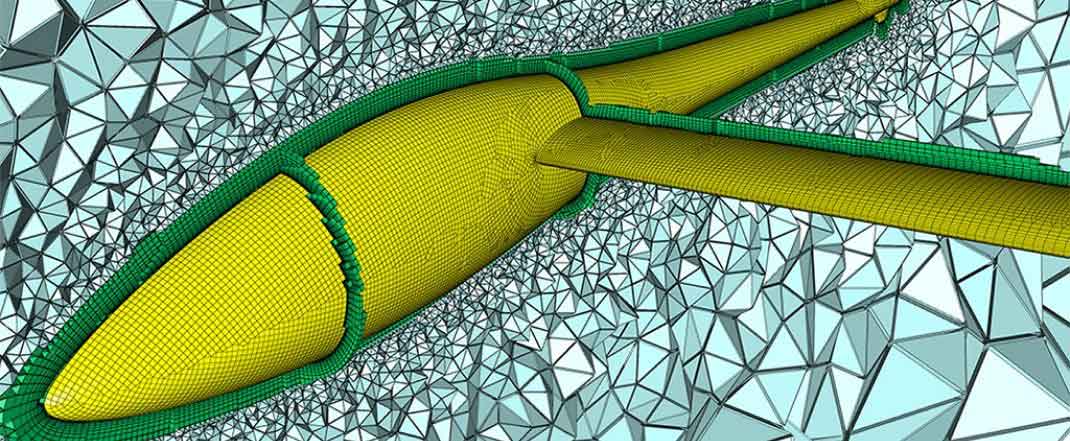
This ability to develop trust will be important as adoption of agentic AI ramps. Cadence, for instance, used NVIDIA’s NeMo Data Designer to bring agentic AI to its own products. In March, Cadence detailed work with NVIDIA to use accelerated computing and agentic AI to effectively speed up scientific discovery and engineering. Areas of focus include computational fluid dynamics (CFD), 3D integrated circuit design and analysis, and simulation of mixed-signal blocks and subsystems. More specific to the CFD point, Cadence used NVIDIA’s Blackwell architecture to run multi-billion cell simulations in less than 24 hours — doing the same with a leading CPU cluster containing hundreds of thousands of cores would’ve taken multiple days. The ability to simulate a complete aircraft throughout the flight envelope, including takeoff and landing, enables aerospace companies to cut down on wind tunnel testing, cut costs and put new designs into market faster. The two firms are developing a full-stack agentic AI solution for electronic and system design in various scientific applications. This includes conversational assistants, deep reasoning and verification agents among other new tools. The point here is that the goal is to help engineers better (and more quickly) solve some of the grand challenges of science.
I asked Knoth to help me with a bit of orientation. Some of the things Cadence is doing today with AI are things that five years ago I thought would be solved with the dawn of stable quantum computing systems. I mentioned that whenever I come home from a conference like GTC DC, I try to debrief myself on what will be relevant to my three-year-old as he pursues whatever educational and career track sparks his interest. Turns out hitting a moving target is hard. Reflecting on what Cadence and NVIDIA did on CFD, he recalled the collective realizations within the two companies that “we’re kind of solving one of the grand challenges…When we were getting ready for the show and what we wanted to demonstrate, it was fascinating how much that grand challenge was now just one piece of this massive computation that we were doing to train this AI physics model to do real-time feedback…I don’t have a good answer for what the goalpost is for someone who is three-years-old today, but I can guarantee you there will be goalposts eternally…This thirst for solving the grand challenges, and for making the world better than it was…will always be the next goalpost.”
Final thought from Knoth. “What I see is AI is giving rocket fuel to that intuition, that imagination. It’s allowing people who maybe aren’t the greatest computer programmers — but they’re very imaginative — to start to create new solutions. It’s allowing people who are masters in their domain to scale and tackle challenges.” As this AI-enabled future develops, “That intuition doesn’t go away.” The point here, as I see it at least, is that AI won’t replace intuition; rather, AI will amplify it. And as fast as AI is changing the world around us, that’s an enduring lesson that’ll should stick around through this revolution.