

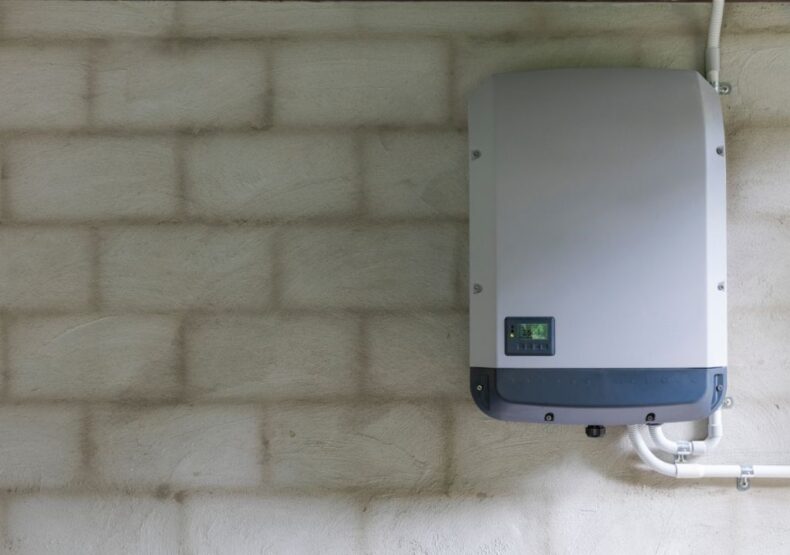
We created a comprehensive inverter size chart to help you select the correct inverter to power your appliances.
The need for an inverter size chart first became apparent when researching our DIY solar generator build.
Solar generators range in size from small generators for short camping trips to large off-grid power systems for a boat or house. Consequently, inverter sizes vary greatly.
During our research, we discovered that most inverters range in size from 300 watts up to over 3000 watts.
In this article, we guide you through the different inverter sizes. Additionally, you’ll learn what appliances you can power and how you can select the right inverter size according to your power needs.
How to determine what size inverter I need?
Before we go any further, we highly recommend that you choose a pure sine wave inverter.
This type of inverter delivers high-quality electricity, similar to your utility company. This way, none of your appliances run the risk of being damaged.
Now, when it comes to sizing your inverter, you always need to check your appliances’ wattage and ensure that the total wattage suits the inverter’s max power output.
Related Reading: The Only Battery Size Chart You’ll Ever Need
What are the two types of power loads?
- Resistive load: LED lights, TV, mobile phones, etc. Resistive loads will only use their rated power.
- Inductive load: Electric fans, water pumps, power tools, refrigerators, air conditioners, etc. Inductive loads may use up to 40% more than their rated power.
Check out this comprehensive article for more information about the different load types,
We created a formula below which helps you know what size inverter you need based on the appliances you want to power:
Inverter size (Watt) = Total sum of all appliances power (Watt)*1.4
Let’s put this formula to work
These are the appliances you want to run:
- Laptop: 150W
- LED lights: 7W
- Small fridge: 75W
- TV: 150W
- Phone/tablet/drone: 50W
Now add up all the different wattages.
150 + 7 + 75 + 150 + 50 = 432W
432 X 1.4 = 604,8
Result: To power the above appliances simultaneously, you’ll need a minimum inverter size of 600 watts. Remember, the x1.4 adds extra security if any of your appliances are inductive loads.
Related Reading: 9 Best Off-grid Inverters (Complete 2025 List)
Inverter Size Chart
We have summarized the appliances that inverters from 300W to 3000W can run depending on their rated maximum power.
Note to our readers: Use the above formula to determine how many appliances each inverter size can run simultaneously.
| LED lights (7W) | Phone/Tablet (30W) | Drone/Camera (40W) | Laptop (60 -150W) | Electric Fan (80W) | TV (150W) | Medium size Refrigerator/Freezer (150W) | RV water pump (100W) | Power tools (1000W) | Microwave oven (1000W) | Hair dryer (1000W) | Vacuum cleaner (1000W) | Air conditioning unit (1500W) | ||
| 300W | + | + | + | + | + | |||||||||
| 500W | + | + | + | + | + | + | + | |||||||
| 700W | + | + | + | + | + | + | + | + | ||||||
| 1000W | + | + | + | + | + | + | + | + | ||||||
| 1500W | + | + | + | + | + | + | + | + | + | |||||
| 2000W | + | + | + | + | + | + | + | + | + | + | + | + | ||
| 3000W | + | + | + | + | + | + | + | + | + | + | + | + | + |
What will a 300W inverter run?
| BELTTT 300W Car Power Inverter | |
|---|---|
| Size | 7.48 x 3.93 x 3.23 inches |
| Weight | 1.76 lbs |
| Ideal Applications | – Emergency use. – Charging USB devices in a car. |
Appliances this inverter can run
| Device | Wattage |
|---|---|
| Phone/Tablet/Drone | 50W |
| Laptop | 150W |
| LED lights | 7W |
| Electric fan | 80W |
| Cooler | 60W |
A 300W inverter will simultaneously run all of your small electronic devices, such as phones, tablets, drones, and laptops. It can also power an electric fan while you’re working on your computer. Compact but powerful, It will even run a cooler.
What will a 500W inverter run?
| POTEK 500W Power Inverter/Car Inverter | |
|---|---|
| Size | 8.74 x 6.38 x 2.68 inches |
| Weight | 2.2 lbs |
| Ideal applications | – Small DIY solar generators – RVs – Camping |
Appliances this inverter can run
| Device | Wattage |
|---|---|
| Phone/Tablet/Drone | 50W |
| Laptop | 150W |
| LED lights (5*5W) | 25W |
| Water circulation pump | 100W |
| Electric fan | 80W |
| Small refrigerator/freezer | 75W |
A 500W inverter will do a great job at powering your USB devices and laptop, together with LED lights, a water circulation pump, and an electric fan. On top of that, it will easily run a small refrigerator/freezer.
Related Reading: How Do Off-Grid Inverters Work?
What will a 700W inverter run?
| Renogy 700W Pure Sine Wave Inverter | |
|---|---|
| Size | 11.75 x 7.38 x 3.32 inches |
| Weight | 5.3 lbs |
| Ideal applications | – Camper van – Boat – Camping trip |
Appliances this inverter can run
| Phone/Tablet/Drone | 50W |
| Laptop | 150W |
| LED lights (5*5W) | 25W |
| Water circulation pump | 100W |
| Electric fan | 80W |
| Small refrigerator/freezer | 60W |
| TV | 150W |
A 700W inverter will have no problem running basic appliances, such as a TV, Bluray player, satellite receiver, LED lights, and small refrigerator/freezer. This is the inverter of choice for a short camping trip.
What will a 1000W inverter run?
| BESTEK 1000W Pure Sine Wave Power | |
|---|---|
| Size | 10.5 x 5.9 x 3.7 inches |
| Weight | 4.2 lbs |
| Ideal applications | – Medium size DIY solar generators – Camping trips – RVs |
Appliances this inverter can run
| Appliances | Wattage |
|---|---|
| Phone/Tablet/Drone | 50W |
| Gaming console | 150W |
| Laptop | 150W |
| LED lights | 25W |
| Water circulation pump | 100W |
| Electric fan | 100W |
| Medium size refrigerator/freezer | 100W |
| TV | 150W |
A 1000W inverter works great in combination with lithium batteries (up to 1kWh). It will run multiple basic appliances simultaneously, such as a refrigerator, TV, projector, video games, printer, and small stereo equipment.
What will a 1500W inverter run?
| Voltworks 1500W Pure Sine Wave Power Inverter | |
|---|---|
| Size | 14.49 x 7.99 x 3.9 inches |
| Weight | 8.69 lbs |
| Ideal applications | – RV solar systems – Boats – Camping |
Appliances this inverter can run
| Appliances | Wattage |
|---|---|
| Phone/Tablet/Drone | 50W |
| Laptop | 150W |
| LED lights (5*5W) | 25W |
| Water circulation pump | 100W |
| TV | 150W |
| Electric fan | 100W |
| Large-size refrigerator/freezer | 200W |
| Deep well pump 0.75Hp | 560W |
A 1500W inverter is powerful enough to cover most of your needs during an off-grid trip. Aside from all your electronic devices (phones, tablets, cameras, etc.) and basic appliances (LED lights, electric fans, and TVs), it’ll run a large fridge and a 0.75Hp water pump simultaneously.
What Will A 2000W Inverter Run?
| Novopal Pure Sine Wave Power Inverter | |
|---|---|
| Size | 14.56 x 6.49 x 3.35 inches |
| Weight | 11.86 lbs |
| Ideal applications | – Fieldwork – Power outages – Small off-grid cabins |
Appliances this inverter can run
| Appliances | Wattage |
|---|---|
| Phone/Tablet/Drone | 50W |
| Laptop | 150W |
| LED lights | 25W |
| Electric fan | 100W |
| Large refrigerator/freezer | 200W |
| Deep well pump 1Hp | 750W |
| Power tools | 1200W |
A 2000W inverter is a reliable source of continuous power for your most demanding equipment, such as power tools (driller, grinder, jigsaw, etc.). In addition, it can be a lifesaver in case of a power outage – 2000W is enough to run all of your basic domestic appliances, including a large fridge/freezer.
What will a 3000W inverter run?
| Renogy 3000W Pure Sine Wave Inverter | |
|---|---|
| Size | 19.53 x 10.31 x 5.43 inches |
| Weight | 15.37 lbs |
| Ideal applications | – Off-grid cabins – Aircon units |
Appliances this inverter can run
| Appliances | Wattage |
|---|---|
| Phone/Tablet/Drone | 50W |
| Laptop | 150W |
| LED lights | 25W |
| Electric fan | 100W |
| Medium size refrigerator/freezer | 100W |
| Deep well pump 0.5HP | 375W |
| AC Unit 1.5HP | 1250W |
| TV | 150W |
| Kitchen equipment | 500W |
A 3000W inverter can run all the electric equipment in an off-grid cabin. It’s even powerful enough to run a 1HP AC unit together with a refrigerator, TV, electric fan, led lights, and kitchen equipment.
Related Reading: DC To AC Conversion: How Do Inverters Convert DC To AC?
Real-world scenario: What will a 3500W inverter run?
In this part, I would like to relate my personal experience (as part of a family of 4) living off-the-grid with a 3500W solar inverter. We rely 100% on an off-grid solar system to power our house.
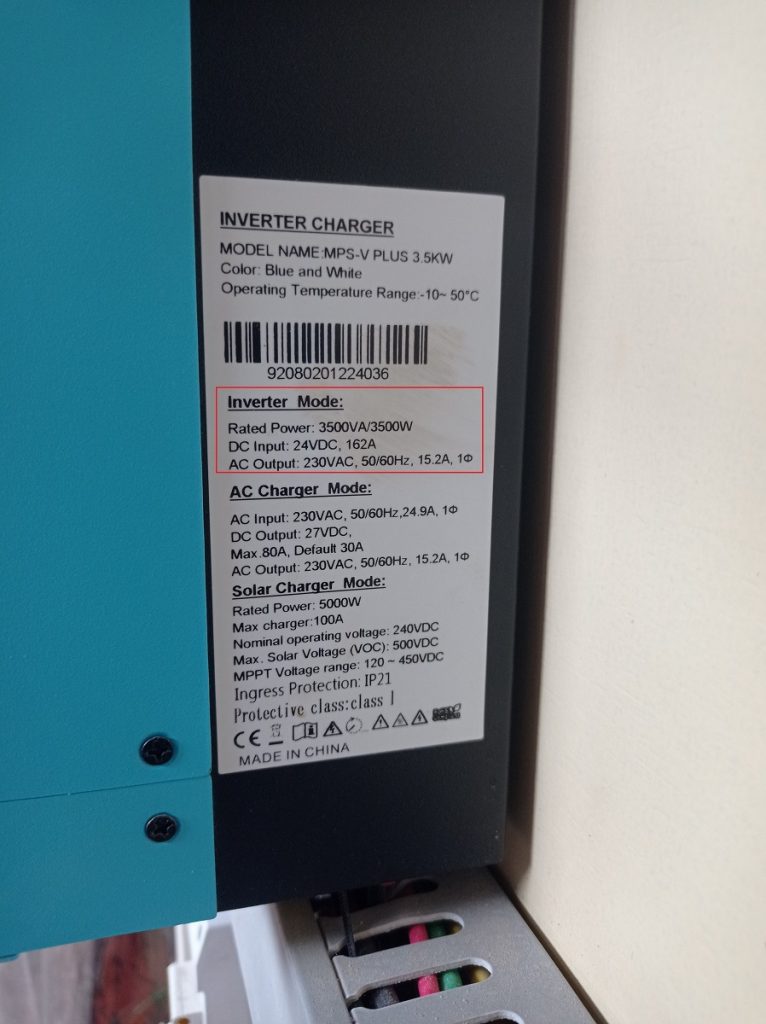
Based on our experience, the 3500W inverter can easily run these appliances at the same time:
| Pressure pump (1Hp) | 750W |
| Deep-well pump (2Hp) | 1400W |
| Medium size refrigerator/freezer | 100W |
| Electric fan | 80W |
| Led lights (6 pcs*5W) | 30W |
| Gaming Laptop | 250W |
| Phone/Tablet/Drone | 60W |
| Wifi Router | 15W |
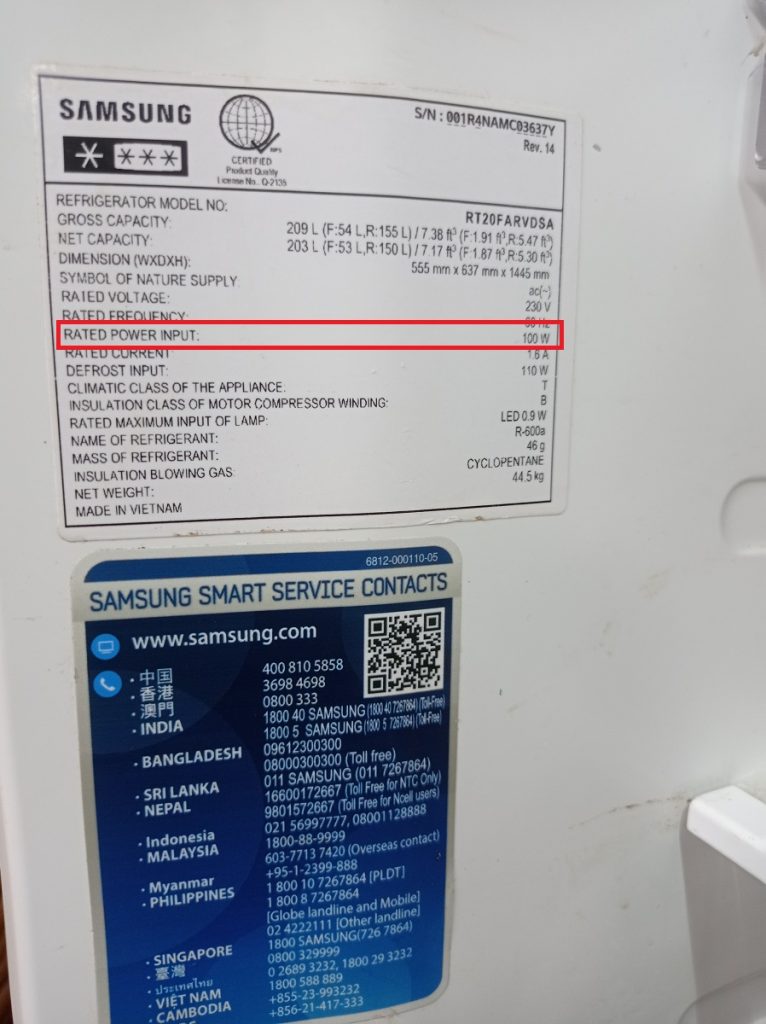
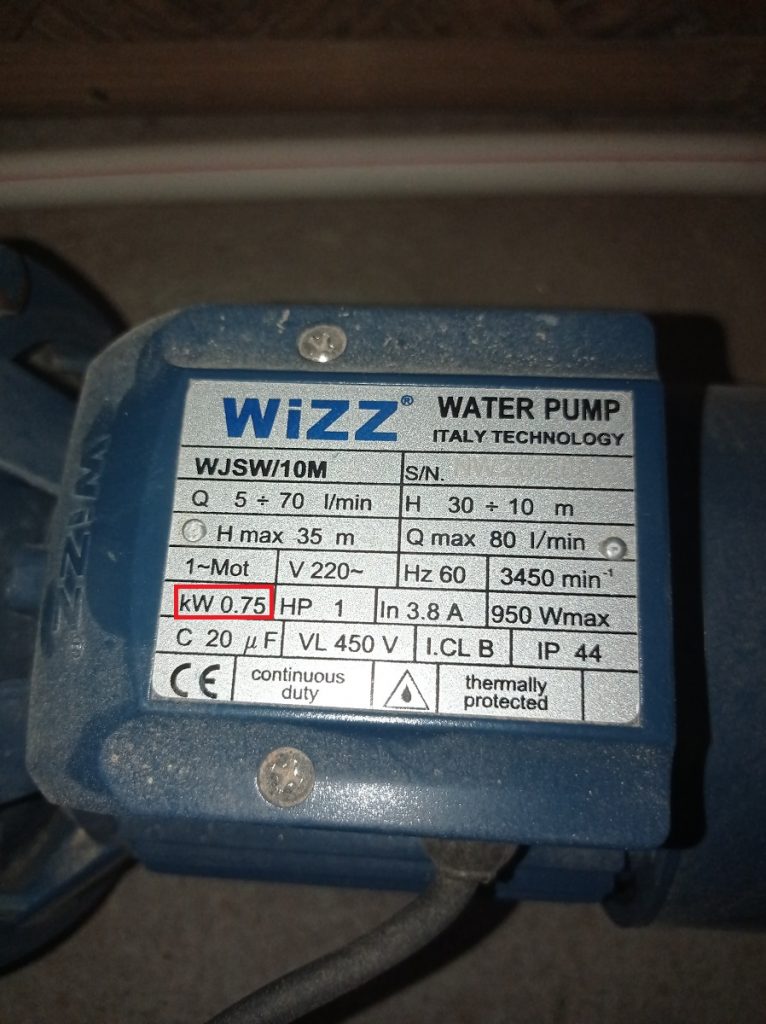
With all of our appliances plugged in simultaneously, we never exceeded 75% of the inverter’s capacity — the most powerful pumps never run for a long time (perhaps 1 hour per day at max).
With such an example, we can conclude that a 3500W inverter is a perfect size for the needs of a family.
Related Reading: A guide to understanding battery capacity
FAQs
What is the difference between a modified sine wave inverter and a pure sine wave inverter?
A pure sine wave inverter replicates the clean and smooth flow of power you get from your utility company, suitable for sensitive electronics and all AC electric devices, whereas a modified sine wave inverter has a more block-shaped, abrupt flow, making it less ideal for sensitive electronic devices but generally more cost-effective.
Why is it essential to consider peak power consumption of appliances when choosing an inverter?
Peak power consumption refers to the maximum power draw of an appliance, usually occurring at startup.
If an inverter is not capable of meeting this demand, it might fail to run the appliance or may get damaged. Therefore, considering peak power consumption ensures that the inverter can handle the highest power draw of the connected devices.
Can multiple appliances with total wattage less than the inverter rating be run simultaneously?
Yes, multiple appliances whose combined power consumption is less than the inverter rating can be run simultaneously.
For example, if an inverter is rated at 1000W, it can power multiple devices as long as their total consumption doesn’t exceed 1000W.
How does the efficiency of an inverter affect its performance?
The efficiency of an inverter is a measure of how well it converts DC to AC power with minimal loss.
A high-efficiency inverter will provide more AC power for the connected appliances, consume less battery power, and usually operate at a cooler temperature, extending its lifespan and reducing the chances of malfunction or damage.
Is it safe to run medical equipment on a power inverter?
It is generally safe to run medical equipment on a pure sine wave inverter as it produces smooth and consistent power, similar to utility power.
However, the user should always consult the equipment manufacturer’s guidelines and ensure that the inverter used meets the required standards and specifications for medical devices.
Can I use a higher wattage inverter than my total appliance load requires?
Yes, using an inverter with a higher wattage rating than required is typically safe and can be advantageous.
It allows for the addition of more appliances in the future and ensures that the inverter is not running at its maximum capacity constantly, which can be beneficial for the longevity of the inverter.
Final tips for selecting the correct size inverter
Here is our last bit of advice on how to select the correct inverter size:
- Check our inverter size chart.
- List all your appliances in the function of their power output.
- Apply our inverter size formula.
- Do not exceed 85% of your inverter’s maximum power continuously.
- Oversize your inverter for extra appliances in the future.
- Choose a pure sine wave inverter.