

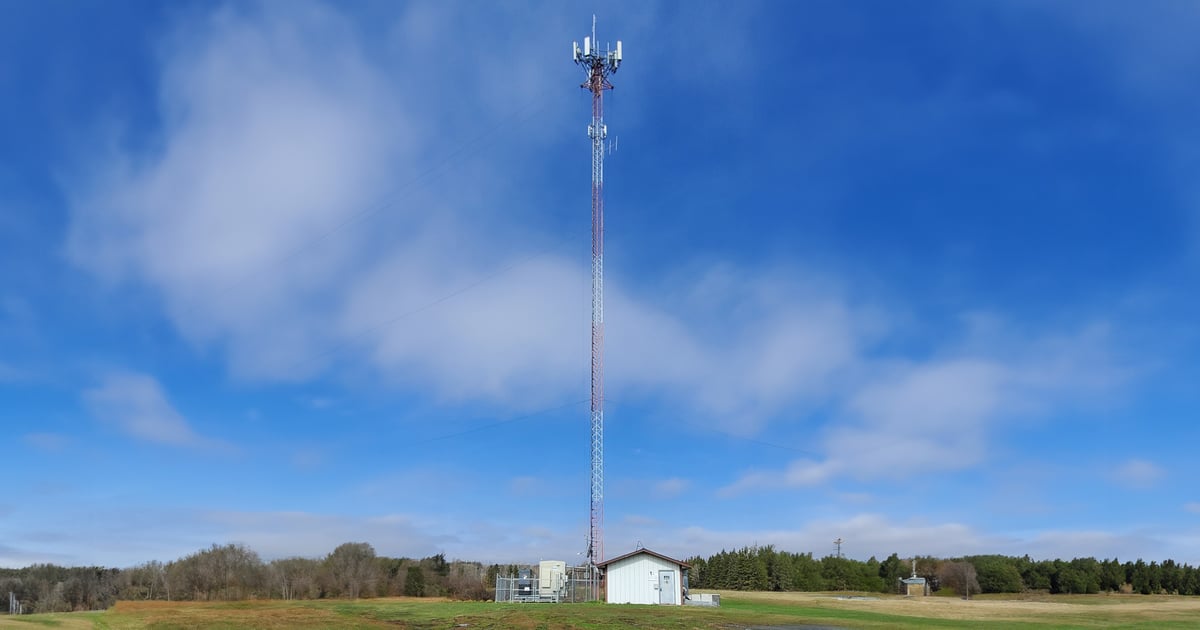
Speaking at a Senate hearing last week about the BEAD program, Commerce Secretary Howard Lutnick indicated states may have a chance to replace providers that won’t adhere to BEAD rules. The confirmation came in response to senators’ questions about an effort from SpaceX to relieve its low-Earth orbit (LEO) Starlink service from meeting certain BEAD requirements.
“If a provider cannot live up to their promise to you, we will work together, you will replace that provider, and we will make sure you can do that,” said Lutnick.
At least one broadband industry CEO is already thinking along those lines and anticipating opportunities to expand his company’s BEAD business.
“BEAD isn’t in any way over,” Tarana CEO Basil Alwan said in a recent interview with Light Reading.
The CEO’s comments followed Tarana’s Connecting Communities Summit, held in late January, where the company discussed progress with its next-generation fixed wireless access (ngFWA) tech, G2, as well as the latest with the BEAD program and the US digital divide. Tarana is a supplier of ngFWA technology to fixed wireless providers and counts over 300 service provider customers in 24 countries.
Not just a ‘stopgap to fiber’
Tarana’s G2 solution officially debuted in September 2025 as an evolution of the company’s G1 technology, released in 2021. While G1 was geared toward rural deployments, G2’s advancements – including its use of both CBRS and 6GHz – enable it to deliver high-speed connectivity in more dense environments as well. That means, from Tarana’s view, that ngFWA is not just a “stopgap to fiber” but can perform on par.
“We’ve innovated it to the point where if you’re on a Tarana link you’re not really going to know – and the churn statistics bear that out,” said Alwan.
Since its debut, demand for G2 has been stronger than expected, according to Alwan. That demand is being hastened in part by the fact that G2 is backwards compatible with other Tarana products, he said.
“If you have a sector and it has a bunch of houses on it, and you want to keep growing that sector, you can add another G1 base node, or you could put up a G2 base node, double your spectrum, and build on G2,” Alwan said. “So, we’ve made it really easy for our customers to upgrade, and they want to put the best thing out there because they’re planning on building on it for seven-plus years.”
‘When fiber fails’
While Tarana has already scooped up BEAD business through some of its fixed wireless customers (including Nextlink, Resound and Vistabeam, according to the company) – benefiting, in part, from BEAD’s revision from a fiber-first program to a lower-cost, tech-neutral one – the company sees additional opportunities to pick up more grants down the road. (In general, fixed wireless has picked up roughly 12% of BEAD locations, compared to 23% for satellite and 63% for fiber, according to a BEAD tracker.)
For instance, if SpaceX sticks with its position that BEAD’s capacity and performance requirements may be “untenable” for LEO satellite services – and Lutnick holds true to his commitment that states can replace BEAD winners – could Tarana’s ngFWA technology help deliver what’s needed in those areas instead?
“All day long,” Alwan told Light Reading.
Indeed, while Alwan agrees that LEO service fits “perfectly” in very rural areas, he calls it a “huge and glaring mistake” that satellite was included in the revised BEAD program as “priority broadband” – a change that allowed LEO to compete against fiber and fixed wireless everywhere, as opposed to it being reserved for the hardest-to-reach locations.
But in addition to stepping in for satellite, Tarana also anticipates opportunities to pick up more BEAD business if fiber ISPs default on their BEAD wins due to cost overruns and/or supply constraints, as was seen with the Rural Digital Opportunity Fund (RDOF) and the Connect America Fund (CAF). That likelihood is only growing with increased concerns about available fiber supply – particularly as broadband providers compete with data centers for materials – as well as reported labor shortages.
“I think we’re particularly uniquely in a great position to help when fiber fails,” said Alwan. “The fiber will fail because of – and this has happened already – people are like, ‘Oops, we kind of bid too aggressive’,” he said.
In fact, Alwan said there have already been “at least three or four situations” where Tarana’s FWA customers have picked up more broadband serviceable locations (BSLs) as BEAD winners start scaling back their commitments in the contract-signing stage, though he didn’t provide details on those pick-ups.
“I think in the course of the next four years, there’s going to be some fiber givebacks where it’s just too complicated and costly to do it,” said Alwan. “We’re just going to keep helping where those problems show up.”