
Close Menu
geekfence.comgeekfence.com
    What's Hot

    Emerald Fennell’s Wuthering Heights Review

    February 14, 2026

    Infrastructure, Not Compute, is the Real AI Bottleneck

    February 14, 2026

    ALS stole this musician’s voice. AI let him sing again.

    February 14, 2026
    Facebook X (Twitter) Instagram
    • About Us
    • Contact Us
    Facebook Instagram
    geekfence.comgeekfence.com
    • Home
    • UK Tech News
    • AI
    • Big Data
    • Cyber Security
      • Cloud Computing
      • iOS Development
    • IoT
    • Mobile
    • Software
      • Software Development
      • Software Engineering
    • Technology
      • Green Technology
      • Nanotechnology
    • Telecom
    geekfence.comgeekfence.com
    Home»Nanotechnology»Probing the fundamental nature of the Higgs Boson – Physics World
    Nanotechnology

    Probing the fundamental nature of the Higgs Boson – Physics World

    AdminBy AdminNovember 3, 2025No Comments2 Mins Read0 Views
    Facebook Twitter Pinterest LinkedIn Telegram Tumblr Email
    Probing the fundamental nature of the Higgs Boson – Physics World
    Share
    Facebook Twitter LinkedIn Pinterest Email


    ATLAS researchers have provided compelling evidence for off-shell Higgs boson production with vastly increased confidence
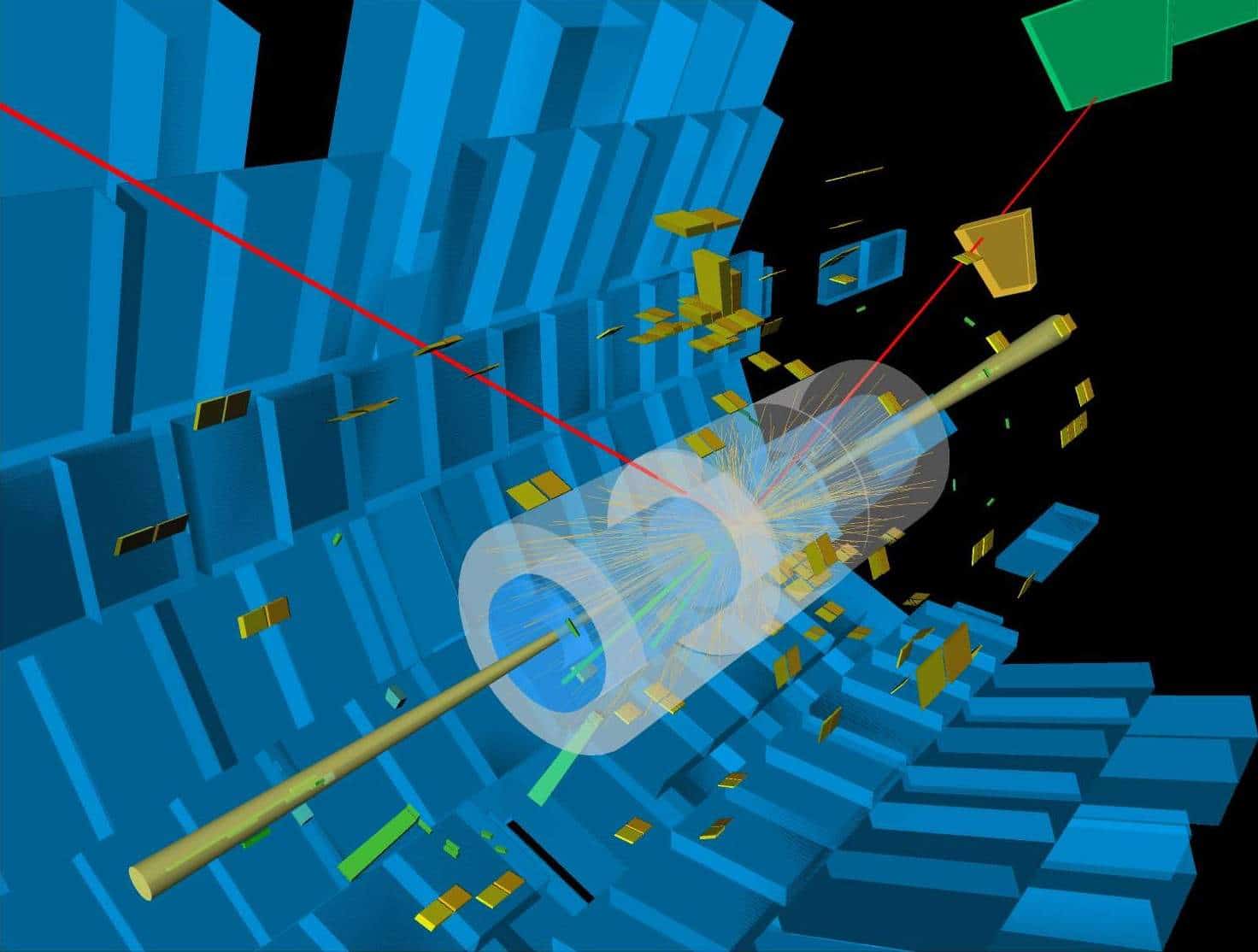
    proton-proton collision

    A proton-proton collision as seen by the Atlas detector (Courtesy: CERN)

    First proposed in 1964, the Higgs boson plays a key role in explaining why many elementary particles of the Standard Model have a rest mass. Many decades later the Higgs boson was observed in 2012 by the ATLAS and CMS collaborations at the Large Hadron Collider (LHC), confirming the decades old prediction.  

    This discovery made headline news at the time and, since then, the two collaborations have been performing a series of measurements to establish the fundamental nature of the Higgs boson field and of the quantum vacuum. Researchers certainly haven’t stopped working on the Higgs though. In subsequent years, a series of measurements have been performed to establish the fundamental nature of the new particle. 

    One key measurement comes from studying a process known as off-shell Higgs boson production. This is the creation of Higgs bosons with a mass significantly higher than their typical on-shell mass of 125 GeV.  This phenomenon occurs due to quantum mechanics, which allows particles to temporarily fluctuate in mass.

    This kind of production is harder to detect but can reveal deeper insights into the Higgs boson’s properties, especially its total width, which relates to how long it exists before decaying. This in turn, allows us to test key predictions made by the Standard Model of particle physics.

    Previous observations of this process had been severely limited in their sensitivity. In order to improve on this, the ATLAS collaboration had to introduce a completely new way of interpreting their data (read here for more details).

    They were able to provide evidence for off-shell Higgs boson production with a significance of 2.5𝜎 (corresponding to a 99.38% likelihood), using events with four electrons or muons, compared to a significance of 0.8𝜎 using traditional methods in the same channel.

    The results mark an important step forward in understanding the Higgs boson as well as other high-energy particle physics phenomena.


    Source link

    Share. Facebook Twitter Pinterest LinkedIn Tumblr Email

    Related Posts

    Issue 86

    February 14, 2026

    What shape is a uranium nucleus? – Physics World

    February 13, 2026

    First Look into the Electrostatic Landscape of a Moiré Unit Cell

    February 12, 2026

    Scientists finally solve a 100-year-old mystery in the air we breathe

    February 11, 2026

    Molecularly imprinted nanoreactors: Bridging enzyme mimicry and synthetic catalysis

    February 9, 2026

    Tandem architectures for electrochemical CO2 reduction: from coupled atomic sites to tandem electrolysers

    February 8, 2026
    Top Posts

    Hard-braking events as indicators of road segment crash risk

    January 14, 202617 Views

    Understanding U-Net Architecture in Deep Learning

    November 25, 202512 Views

    How to integrate a graph database into your RAG pipeline

    February 8, 20268 Views
    Don't Miss

    Emerald Fennell’s Wuthering Heights Review

    February 14, 2026

    Summary created by Smart Answers AIIn summary:Tech Advisor highlights six critical errors in Emerald Fennell’s…

    Infrastructure, Not Compute, is the Real AI Bottleneck

    February 14, 2026

    ALS stole this musician’s voice. AI let him sing again.

    February 14, 2026

    What is Prompt Chaining?

    February 14, 2026
    Stay In Touch
    • Facebook
    • Instagram
    About Us

    At GeekFence, we are a team of tech-enthusiasts, industry watchers and content creators who believe that technology isn’t just about gadgets—it’s about how innovation transforms our lives, work and society. We’ve come together to build a place where readers, thinkers and industry insiders can converge to explore what’s next in tech.

    Our Picks

    Emerald Fennell’s Wuthering Heights Review

    February 14, 2026

    Infrastructure, Not Compute, is the Real AI Bottleneck

    February 14, 2026

    Subscribe to Updates

    Please enable JavaScript in your browser to complete this form.
    Loading
    • About Us
    • Contact Us
    • Disclaimer
    • Privacy Policy
    • Terms and Conditions
    © 2026 Geekfence.All Rigt Reserved.

    Type above and press Enter to search. Press Esc to cancel.