

Press Release
Open Cosmos, the company building satellites to understand and connect the world, has today launched the first satellites in its new proprietary low-Earth-orbit (LEO) telecom constellation, just one week after securing high-priority Ka-band spectrum.
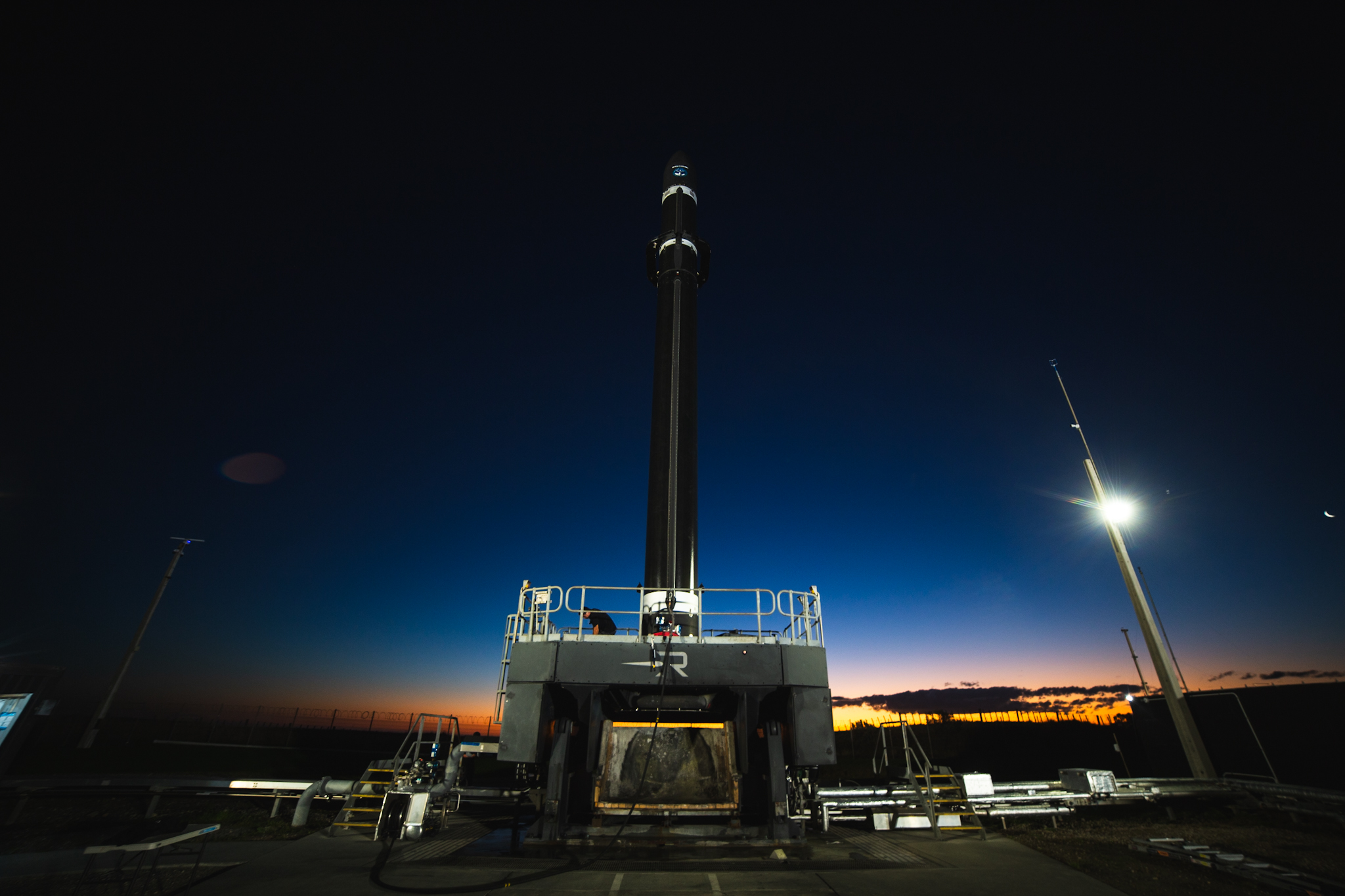
The two satellites, launched by Rocket Lab from Mahia Peninsula, New Zealand on its Electron rocket for the mission named ‘The Cosmos Will See You Now’, represent the first activation phase of Open Cosmos’ future-ready satellite network – a programme designed to deliver scalable, resilient and coordinated space-based services for Europe and the world.
Lift-off took place as scheduled at 10:52 (GMT) / 11:52 (CET) / 23.52 local time (NZDT) on 22 January, ushering Open Cosmos from constellation design and manufacturing into on-orbit validation – sitting at 1050km circular Earth orbit.
Beyond the technical achievement, the launch serves as a powerful proof point for Open Cosmos’ constellation readiness. It confirms that the system design, manufacturing processes and operational model are flight-ready – laying the groundwork for the phased roll-out of the wider network in the months ahead.
Commenting on the launch, Rafel Jordà Siquier, Founder and CEO of Open Cosmos, said:
“This launch is a major milestone for Open Cosmos and a critical step in our mission to provide secure, sovereign connectivity for Europe and the world. Moving from spectrum to satellites in-orbit demonstrates not only the maturity of our system, but our ability to turn strategic ambition into operational capability extremely fast.
“These first satellites lay the groundwork for a resilient network designed to support governments, institutions and commercial partners with dependable space infrastructure when it matters most.”
The first two satellites are the result of a truly pan-European effort, with teams across the UK, Spain, Portugal and Greece contributing to the programme. Together, they showcase Open Cosmos’ vertically integrated approach – from mission design and satellite production to operations. The satellites will operate under Spain’s regulatory framework for satellite registration and operational licensing.
Rocket Lab Founder and CEO, Sir Peter Beck, said: “What a great way to start off the year, by welcoming a new customer and launching a mission tailored just for them. We’re proud to deliver their payload to orbit and with Rocket Lab’s proven track record of consistent quality and 100% mission success in recent years, I’m confident to say they made the right choice. Partnering with Open Cosmos is an exciting opportunity, and we look forward to supporting our European partners in achieving their launch goals.”
From spectrum to space
The launch follows Open Cosmos’ recent (14th January) award of scarce High-Priority Ka-band spectrum filings from the Principality of Liechtenstein, a critical enabler for the company’s constellation ambitions. With the satellites now in orbit, Open Cosmos can begin testing and validating the system performance in real operational conditions.
In orbit, the satellites will be used to:
- Test satellite operations and first testbed demonstrations
- Validate system developments across the wider future network
- Demonstrates proof-of-concept for Open Cosmos constellation readiness
Together, they form the foundation for a scalable, multi-satellite architecture designed to meet growing global demand for reliable space-based capabilities.
By combining in-house manufacturing, European engineering talent and access to strategically valuable spectrum, Open Cosmos is positioning itself as a new kind of constellation builder: agile, collaborative and focused on delivering practical, deployable space infrastructure providing secure connectivity and critical data.
Keep up to date with all the latest telecoms news with the Total Telecom newsletter
Also in the news
World Communication Award Winners 2025
Ofcom clears the way for satellite-to-smartphone services
LG Uplus’s AI voice call app glitch leaks user data