

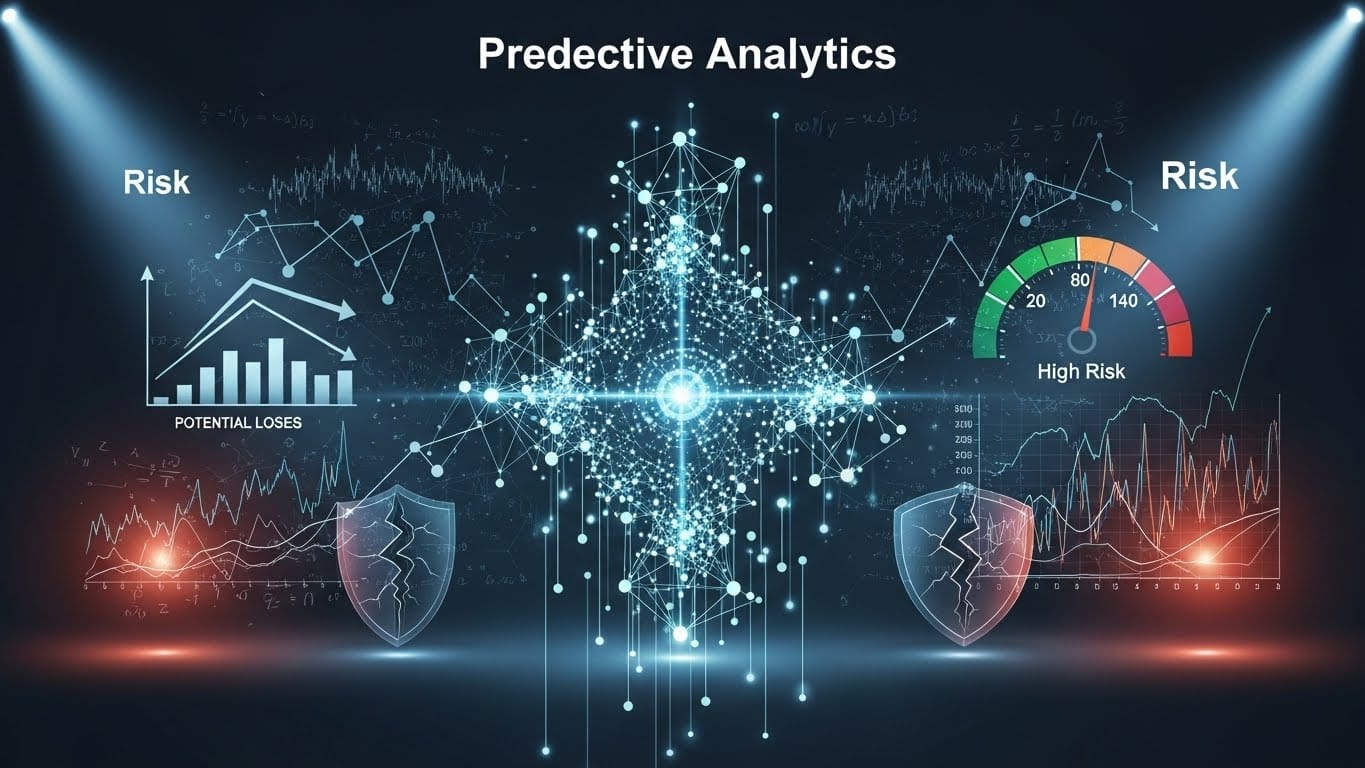
As the world relies on technology and data more and more, countless businesses have embraced new predictive tools. That includes predictive analytics software, which utilizes data to forecast everything from sales figures to supply chain issues. This invaluable tool uses machine learning to go through large volumes of data, saving businesses lots of time and money.
Not only can you access data faster than you previously could, but it’s also more in-depth and useful. This has led to the rise of real-time, in-depth predictive analytics, which have become crucial in risk management. Predictive analytics is inarguably the most useful way to use artificial intelligence in business.
Today, AI is used in nursing, manufacturing, and retail, but AI-powered predictive analytics is useful in all industries. Risk management is the most important use for predictive analytics tools, as they can save businesses from huge losses. Follow along as we explore how predictive analytics is redefining risk management across industries.
Data Has Changed the Face of Risk Management
Business owners have long used data to reflect on their business operations and identify areas for improvement. However, the way you can harness this data has evolved in many industry-changing ways that affect all fields. Today, countless businesses utilize predictive analytics to identify and address risks.
This proactive approach has changed the face of risk management throughout industries in many ways, such as:
Make Well-Informed Decisions
A company’s approach to risk management can have a profound impact on its present, future, and bottom line. People have long used data to identify and assess risks, but it didn’t always come easily or quickly. Using predictive analytics, business owners and their teams can address risks using relevant information.
Not only does this help contribute to better outcomes, but it can also instill confidence. Using a predictive analytics tool, you can quickly identify risks and forecast how they’ll play out. This eliminates a lot of trial and error and can ultimately save you time and money.
Feeling confident in such important decisions is half the battle, and predictive analytics affords you that.
Identify Patterns
Previously, identifying patterns over years of operation involved taking away from productivity and focusing on the past. Luckily, that’s not necessary with predictive analytics, as you can pore over decades’ worth of information without sacrificing productivity. In doing so, you can identify patterns, some of which are hard to uncover without predictive analytics tools.
This doesn’t mean that your team is incapable of doing so, but going through that much data can take away from productivity. It may take people several months or longer to go through that much data and identify patterns. Using a predictive software tool, you can get nearly instant feedback based on operational, financial, and customer satisfaction history.
Naturally, this data will uncover risks based on past setbacks and the potential for future setbacks. From there, you can use this data to account for such risks and implement risk mitigation tactics. In doing so, you can prevent past mistakes from repeating and identify new risks before they unfold.
Devise New Strategies
The results generated by predictive analytics tools can be incredibly eye-opening. These tools may not offer overly direct solutions, but they provide all the information needed to reach them. For example, you may uncover some risky supply chain risks that would otherwise cause financial setbacks.
This could include resource scarcity, equipment problems, rising prices, and delivery delays. Uncovering these risks can save your business time and money, but it’s up to your team to devise new strategies. However, this is much easier after saving countless hours on sorting through data and history.
If you uncover a risk for widespread economic problems, you can avoid overstocking items that may not sell as well. Similarly, you can repair or replace machinery that is predicted to fail so you can avoid production setbacks. These are just a few examples, but how you integrate the results of predictive analysis can largely improve business operations.
Discover New Threats
One of the pitfalls of risk management is that it’s hard to look into the future. That’s especially true in this increasingly tech-dependent world, where new digital threats arise all the time. For example, it’s hard to account for cyberthreats if you aren’t deeply embedded in that world.
That’s where predictive analytics come into play, as you can use these tools to identify cyberthreats before they affect your business. Any business with a cyber footprint relies on cybersecurity, and new threats constantly appear. You can use predictive tools to examine your current cybersecurity framework and identify weaknesses.
From there, you can compare your cybersecurity strengths and weaknesses to the current state of cybercrime. Doing so can help you strengthen your framework and educate your staff on such threats before big problems arise. It’s better to identify and address these factors than to suffer cyberattacks and data breaches.
Risk Management Just Got Much Easier
The ability to process vast amounts of data and use it to ensure desirable outcomes once seemed like a business pipe dream. Today, it’s a reality, and predictive analytics can help any business identify and address otherwise devastating risks. This is truer than ever, especially given the rise of cyberthreats, supply chain issues, and economic problems.
Predictive analytics tools can offer profound insights into customer patterns, economic changes, industry trends, and resource allocation. Using these tools can help your business maximize profits, improve customer satisfaction, and avoid undesirable outcomes.