

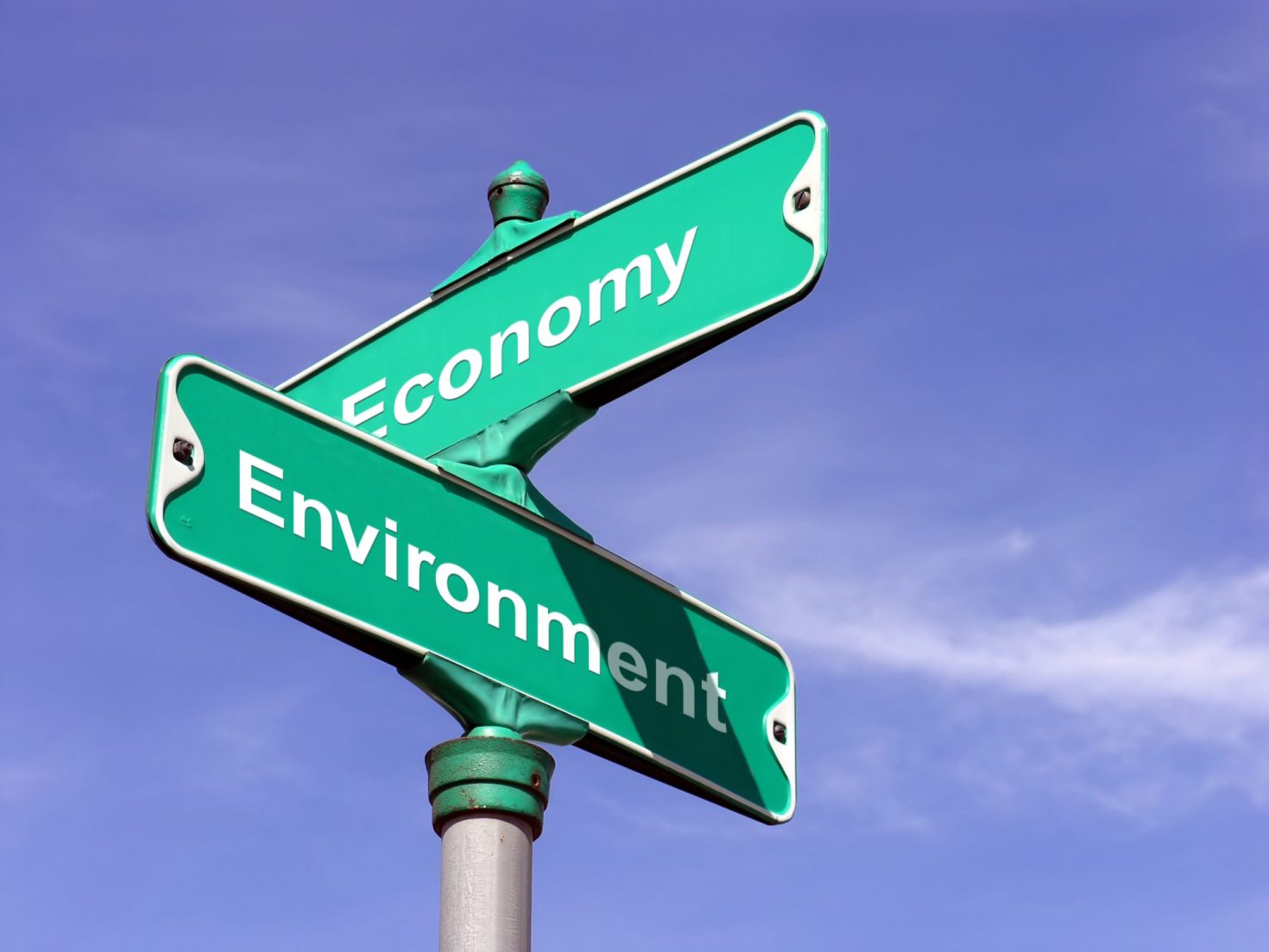
The public has moved on — even if politics hasn’t.
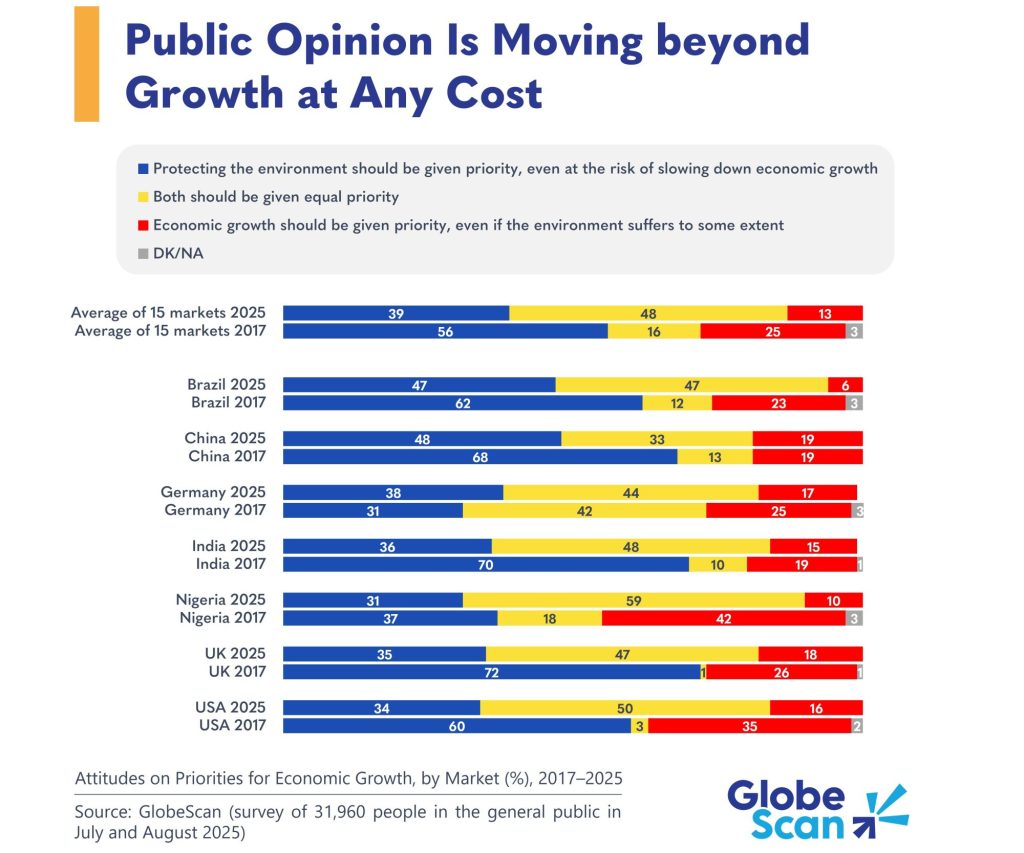
Across rich and poor countries alike, people now expect economic growth and environmental protection to be pursued together, not traded off against each other. In a survey conducted by Trellis data partner GlobeScan, 48 percent of people on average said environmental protection and economic growth aren’t mutually exclusive — a threefold increase from 2017. Instead, they expect policymakers and businesses to pursue both goals in tandem.
This shift comes as world leaders are also reevaluating the definition of “progress.” In February 2026, over 150 governments approved a landmark report by the Intergovernmental Science-Policy Platform on Biodiversity and Ecosystem Services warning that GDP-focused growth has fueled biodiversity loss. The report urged a transition to alternative models, from the circular economy to “inclusive wealth” and even degrowth strategies that deliver prosperity while safeguarding nature.
The move toward balancing environmental and economic goals is growing in both emerging and developed economies. Public opinion placing equal priority on both goals skyrocketed roughly 45 percentage points in the United Kingdom and U.S. Large increases were also seen in India, Nigeria, Brazil and China. This striking convergence in opinion across regions suggests a widespread rethinking of the old “environment versus economy” mindset.
What this means
Public opinion is moving decisively beyond the idea that societies must choose between economic growth and environmental protection. Across regions, people increasingly expect both goals to be pursued together. This stands in contrast to political narratives in some countries that frame environmental protection as a brake on economic progress.
For policymakers, this suggests greater social permission than often assumed to pursue economic strategies that integrate sustainability, resilience and long‑term value creation. For NGOs and civil society, the data point to an opportunity to move beyond “environment versus economy” debates and advance shared solutions that resonate with a broad and increasingly aligned public consensus. And for businesses, these findings strengthen the case for embedding sustainability into core business models and value creation approaches rather than treating it as a constraint or risk.
Based on a survey of nearly 32,000 people conducted July — August 2025.