

The early morning light falls softly on the Bhagsu waterfall trail. Stone steps on this under one kilometre trail lead the way. On one side, the stream flows from the waterfall and moves gently between the hills. It is a quiet and calming sight. As you keep walking, the sound of the waterfall comes closer. Birds are already up, singing in the trees. Their calls mix with the sound of water and the silence of the mountains.
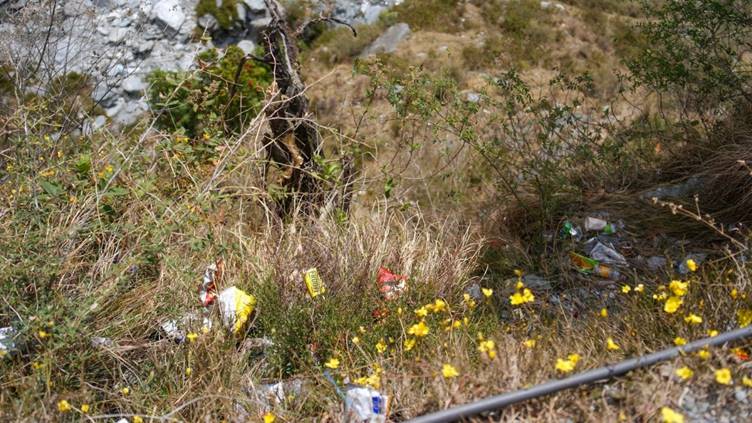
But what we cannot describe with the same quiet beauty is the waste. Plastic bottles stick out of the rocks. Snack wrappers lie at every turn. And in the gorge below, there is more waste, hidden from sight but still there.
Bhagsu and Mcleodganj are two of the most visited places around Dharamshala, drawing people for their landscapes, monasteries and local culture.
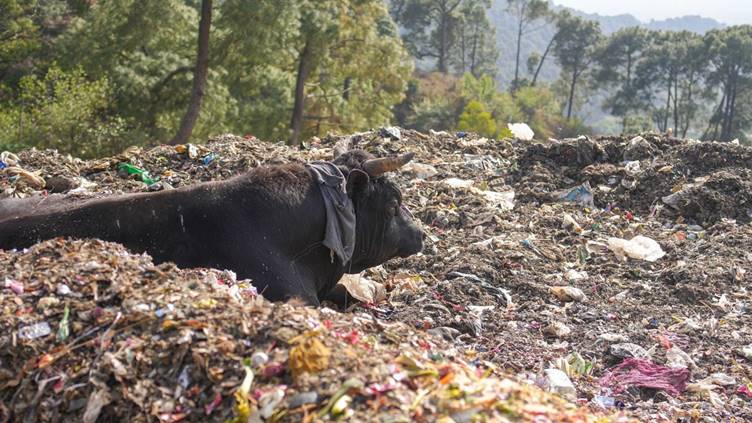
The Dharamshala Planning Area Development Plan 2035 mentions a three percent yearly growth in population, in addition to twenty five lakh tourist entries per year in Kangra. The waste from this influx becomes a growing challenge. Waste and wildlife often come into conflict. Dumping and burning continue without monitoring, slowly damaging the region. Mixed waste ends up in the municipal dumpsite without sorting or treatment, adding to greenhouse gas and methane emissions. According to the Dharamshala Municipal Corporation, around fifty thousand metric tonnes of legacy waste now form mountains of garbage. Littering, dumping, and burning continue to add to this pile.
Just on the outskirts of town, by Sudher bus stand, a heap of legacy garbage lies decomposing in the open. It has been there for years and years. To those who are residing nearby, it is not only a health hazard but also an embarrassment to them in their locality.
Because smaller things add to the larger warming of our planet. Consequences are evident, the flow of the Bhagsu waterfall has been reducing each year, except during the monsoon.
It is rarely acknowledged, but you hear it sometimes in passing.
“Itna kam hai yaha ke waterfall ka flow, suna toh bohot tha, ab lag raha hai ke faltu mein yaha aaye.”
(The waterfall’s flow is so low here. We had heard so much about it, but now it feels like we came here for nothing.)
“Arey yaha toh bohot garmi hai, hume laga tha pahado pe aaye toh yaha mausam thanda hoga.”
(Oh, it is so hot here. We thought coming to the mountains would mean cool weather.)
“Barish betime ho rahi hai, ghumne aaye the aur kamre mein pade hai.”
(It is raining at odd times. We came to explore, but we’re stuck inside the room.)
“Photo mein toh itni sari snow dikhti hai Dhauladhars range pe, yaha toh sab khali pada hai.”
(There’s so much snow in the photos of the Dhauladhar range, but here it all looks barren.)
These are part of everyday conversations. Yet individual actions remain few.
The Solutions Are Around Us but Are Not Enough
NGOs like Waste Warriors, have been working in the region for over a decade. Awareness signboards and art installations have been placed along the trail and at various points in the area. These are small nudges to act responsibly.
But as we know, nudges alone are not enough. Solutions are needed. Dustbins have been placed along the entire trail, but most of them have waste piled just below them. Littering continues in other spots as well. People not only litter, they also break alcohol bottles after partying and leave the place in that state, causing harm to wildlife who roam there.
Some of the solutions also come from the people who live and work here. A few shopkeepers take it upon themselves to clean their surroundings every day. They spend half an hour daily cleaning the area around their shops.
Other local efforts include regular cleanups by taxi unions, hotel associations, café owners, and others.
Nevertheless, they cannot do it on their own. The issue is too large to be handled at an individual level.
Tourists Are Part of the Problem and Can Be Part of the Solution
Irresponsible tourism is something that needs to be addressed more directly. Imagine a place where every visitor carries their own cutlery, bags, and water bottles instead of relying on disposables. They do not litter. If they see waste, they pick it up and put it in a dustbin. They respect the local culture and the wildlife. They avoid loudspeakers. They are mindful of other travellers. They treat the mountains the way they treat their own homes.
If this became the norm, the place would look and feel very different. It would be cleaner, quieter, and more respectful. We would not need constant reminders. The trail itself would begin to heal.
This might seem euphoric and a distant reality, or impossible. But we need to believe in the idea and work towards it. If not we, then who, who loves mountains.
With this mindset was born a very unique and great initiative called EcoDaan.
How It All Started
In the beginning, the focus was mainly on cleanups along the Triund Trail, the Bhagsu Trail, and parts of Mcleodganj. The waste collected during these drives was segregated. Recyclables were sold, and the rest was sent to the dumping site.
Over the years, cleanups continued. Today, the waste collected goes to Dharamshala’s only Material Recovery Facility, where it is properly processed.
Several efforts have been happening alongside this to engage tourists. Volunteering programs and anti-littering pledges have been organised. Many mass awareness measures have encouraged tourists to take pro environment steps through art and conversation. These include the iconic Dalai Lama mural, dustbins and signboards designed with creative messages, and installations made from waste with words like THINK, CARE and CHANGE.
Through all these years, partnerships with local stakeholders have grown stronger.
The real shift came in the year 2024, with the official launch of EcoDaan. It brought together entertainment, technology, and community involvement.
A Simple Use of Technology With Real Impact
EcoDaan uses technology in simple and meaningful ways to support environmental action. One key tool is a WhatsApp chatbot that helps engage tourists directly. Built on Glific, an open source platform designed for non profits, the chatbot allows us to share information, collect responses, and guide people toward climate positive actions. It is powered by Gupshup’s WhatsApp Business API, which enables smooth communication, automation, and integration with tools like Google Sheets.
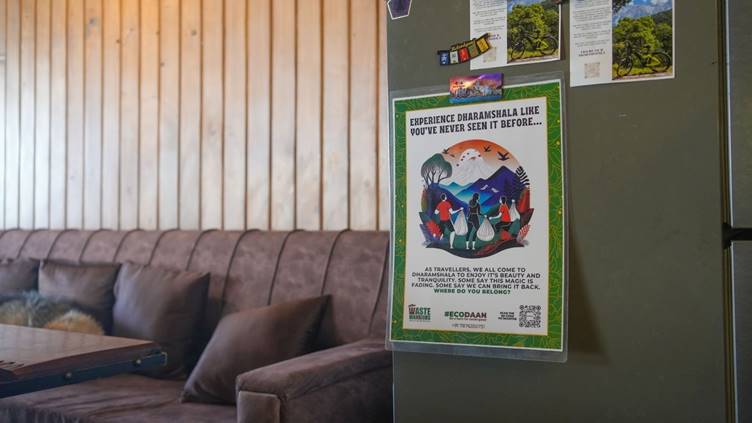
Tourists can access the chatbot by scanning QR codes placed at high footfall locations such as cafes, taxis, and trailheads. Through this interaction, they can sign eco pledges, get updates on cleanup events, visit the recovery facility, drop off dry waste at designated points, or simply learn more about Waste Warriors’ work.
Made Possible by People Who Care
EcoDaan could not have developed on its own. It came to life through a system of strong and intent led partnerships. Along the way, the initiative gained the support of the taxi union, shopkeepers, and homestay and hostel owners. They provided space for installing bins and signboards and took ownership of the message. Their involvement was key in bringing the idea down to the ground, where it matters most.
EcoDaan also joined hands with mindful organisations, departments, and individuals. Active citizens like Meera, who runs a meditation centre, and Trilok Pathania, a hotel owner, became important supporters. We partnered with the forest department, tourism department, and the municipal corporation.
Some travel influencers also came on board to reach travellers who seek meaningful and experience based journeys.
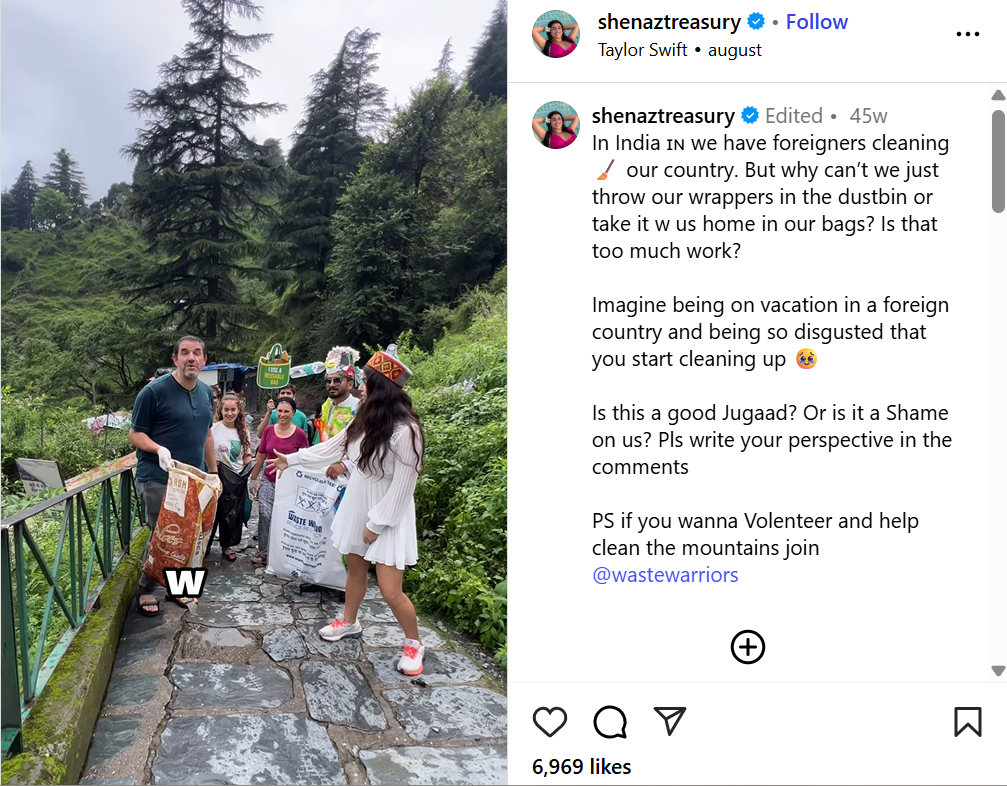
Why We Lead With Creativity
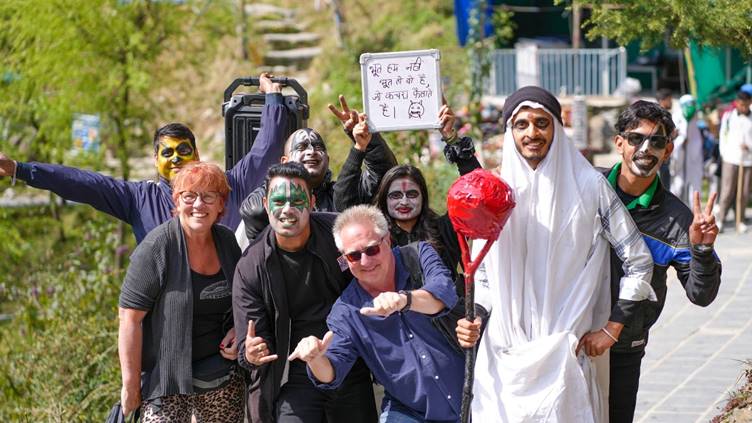
EcoDaan uses creativity as a tool to connect with people. Tourists are more likely to notice and remember what feels different. From Halloween themed cleanups with ghost costumes to bold posters and interactive pledges, we bring messages to life.
One campaign, Vairagya, Leave the Bad, asked tourists to let go of what harms nature. Those who engaged received cloth bags stitched by inmates of the open air jail in Dharamshala. Over three hundred and fifty tourists took part, and many walked away with a simple reminder to say no to single use plastic.
Another campaign brought nineteen cafes on the Bhagsu Trail into action. Stories of these cafes were shared on boards made from waste, and shopkeepers began encouraging every customer to dispose of waste responsibly. Their voices gave the message power and local trust.
How Tourists Are Joining the Movement
Tourists are not just visiting. They are noticing, acting, and sharing. Many have scanned QR codes, joined cleanups, and written about what they saw. Their stories are now showing up in posts, comments, and conversations.
So far, two thousand two hundred and seventy one tourists have taken part in direct climate positive actions through EcoDaan. These include signing anti littering pledges, doing fun activities, joining our monthly cleanups, visiting the Material Recovery Facility to learn about waste processing, raising environmental concerns, and even organising their own cleanups. These may seem like small numbers, but each one represents a personal choice to care. That choice often inspires more.
Sarita Sandwal, after visiting Bhagsu Trail, wrote on LinkedIn, “These efforts might seem small on their own, but together they create a strong message about what sustainable living can look like.”
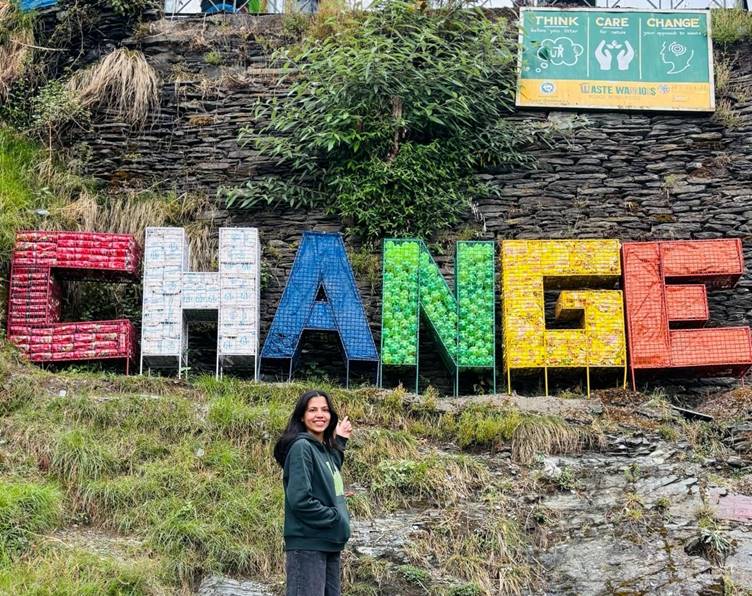
Deepak Ranjan, another tourist, shared, “Plastic does not grow on trees. This art is not just visually impactful. It is a call to action for all of us.”
These are just two of many such voices among others.
What Still Needs to Be Fixed
But the road is not easy. Nudging tourists to take climate action in Dharamshala is still a challenge. Many are interested, but turning that interest into lasting change takes more than a one time conversation. It needs systems that are consistent and simple, and technology that feels human and easy to trust.
The EcoDaan chatbot is a good start, but adoption is still limited. Tourists see the QR codes, but many hesitate. Some think it is marketing. Some are unsure what will happen next. There is a need to build trust through design, better placement, and word of mouth. New ideas need to be tested. Curiosity needs to be earned.
There is also a silence after the first act. A person joins a cleanup, signs a pledge, and then walks away. That moment of connection fades. A stronger post activity experience is missing. We need simple ways to stay in touch, to invite them again, and to help their actions grow.
Internally, the EcoDaan team is learning too. The work is growing, and so must the people who carry it. This means building a stronger base, more skills, and a plan for how to sustain it over time. Resources must match the scale of what we are trying to do.
The budget is part of that. Some ideas stall not because of a lack of intent, but because the money to act is missing or stuck. Better planning can solve this, allowing the team to respond when the moment is right.
We also need to listen more. What do tourists actually care about? What makes them pause, notice, and act? Understanding the mindset of travellers is not a side task. It is at the centre of the work.
And when they do act, we need to tell those stories. Many already are. Quietly. They clean, they carry their waste, they talk to others. These stories must be seen and shared. They are not just moments. They are the proof that this work matters.
EcoDaan shows that creativity, community support, and robust systems together can turn responsible tourism into a way of life rather than an exception.