

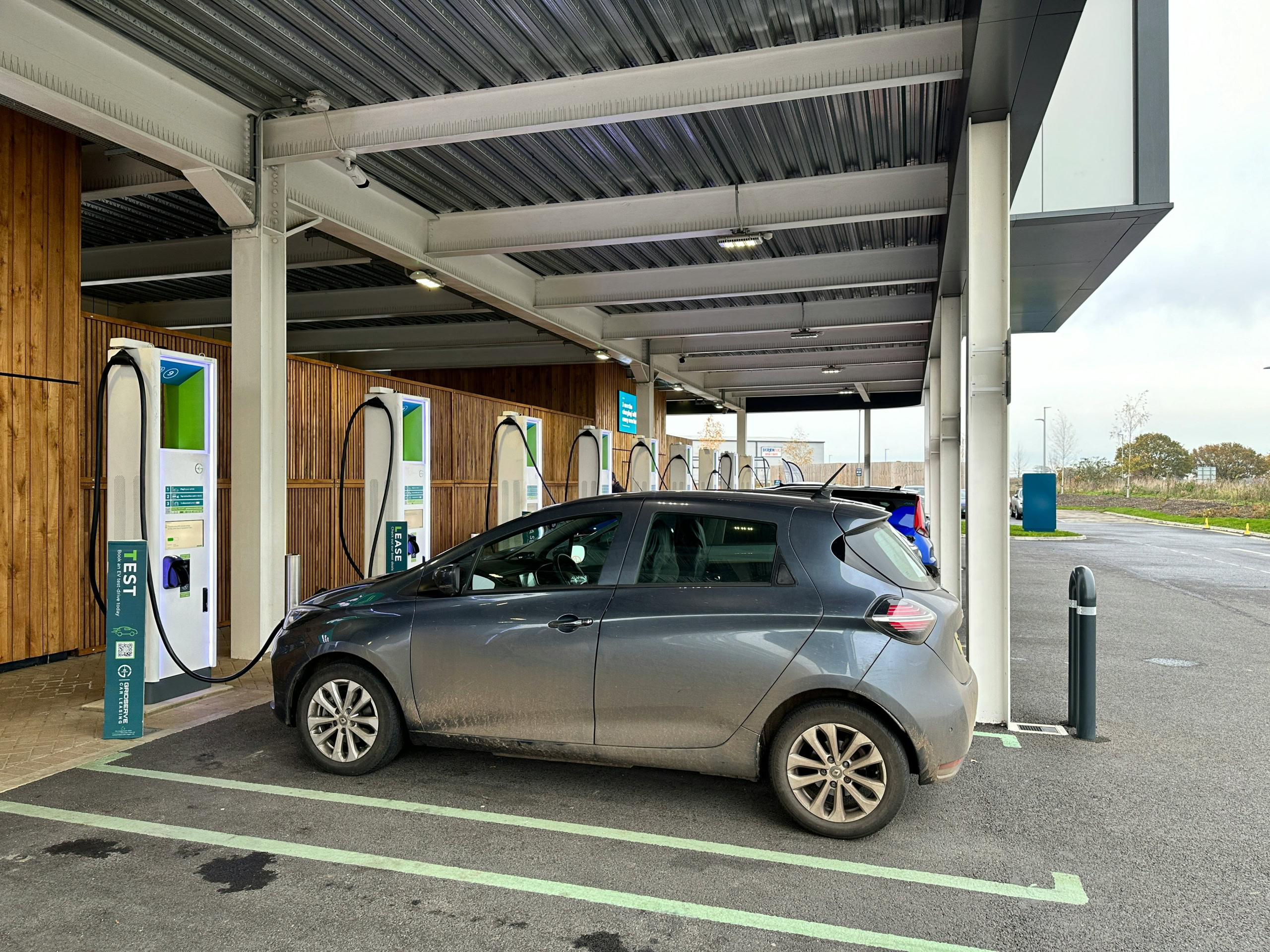

Last week, the federal government announced $84 million to install more than 8,000 new electric vehicle chargers across Canada and promised a new National Charging Infrastructure Strategy. It was a welcome encore following the release of a new auto strategy in which Canada re-committed to an EV future.
But on the charging front, Canada could and should think bigger than one-off funding announcements. One way to kickstart a Canadian charging strategy is to use the tools we already have and designate the build-out of a coast-to-coast EV charging network a ‘project of national interest.’
An estimated 16 to 25 million EVs are projected to be on Canadian roads by 2040, requiring tens of thousands of fast chargers to support them. A coordinated build-out of a national charging network ensures Canada’s domestic market for EVs continues to grow, anchoring EV manufacturing investments and jobs in Canada and connecting Canadians across the country with affordable, clean electricity. Nearly 70 per cent of Canadians support this vision, according to a new Abacus Data poll commissioned by Clean Energy Canada.
Charging installation and operation already contribute to the 130,000 jobs in Canada’s EV sector today. These are local Canadian civil and electrical contractors and skilled tradespeople who exist in communities across the country — and that cannot be easily offshored. There are also homegrown Canadian charging providers like FLO and SWTCH, as well as subsidiaries of Canadian electric utility companies that stand to benefit from a focused national build-out.
Growing Canada’s charging network also helps maintain domestic EV demand and ensures a robust market for the vehicles, batteries, components, critical minerals and materials that Canada is investing billions to produce. We’re currently building multi-billion-dollar EV battery plants, fast-tracking one of the world’s largest nickel projects in Ontario, mining lithium in Manitoba and looking to process rare earth elements in Quebec, all to position ourselves as a clean energy superpower.
On the consumer side, driving an EV saves a typical Canadian driver thousands of dollars per year on fuel costs compared to driving a comparable gas car. But range anxiety — the fear of not finding a charger — remains one of the top barriers to adoption. An extensive, reliable charging network addresses this concern head-on, making the financial benefits of EV ownership accessible to more Canadians. EV adoption and charging expansion run in parallel. You cannot build out a full charging network before EV sales take off, nor can you expect robust EV sales without charging infrastructure.
So how does Canada realize this vision of a nation-building charging network? It will require a strategic mix of public investment and private capital mobilization — precisely what a project of national interest designation facilitates.
First, the federal government should focus on ways to leverage private capital. The $1.5 billion in new financing through the Canada Infrastructure Bank for charging infrastructure is a good start. However, this program should be complemented by an investment tax credit for on-road charging infrastructure to further strengthen project economics and provide the predictability needed to facilitate long-term private investments across a broader range of projects and locations.
Second, the federal government needs to streamline charging approval and connection processes by working with provinces, municipalities and electric utilities. Ontario recently did this, mandating standardized procedures for installing and connecting EV charging infrastructure across the province’s 58 local distribution companies.
Third, let’s not forget the power of strong regulatory signals. A 2024 Parliamentary Budget Office analysis found that the former EV Availability Standard was going to stimulate enough private sector investment to get Canada almost all the way to where we needed to be on charging by 2030 without further government support.
With the EVAS removed, we’ll need to work fast to get those promised new tailpipe emission standards in place and ensure they’re sufficiently stringent to support similar levels of private investment. That means tracking EU-levels of ambition and implementing the standards by 2027. When charging providers and utilities know EVs are coming, they invest accordingly.
Last, recapitalizing the popular Zero-Emission Infrastructure Program can direct funding to places where charging financials may not yet pencil out but where there are still Canadians interested in the cost-savings an EV can provide. Rural and underserved communities need charging stations too, and apartment residents — particularly renters — shouldn’t be locked out of EV ownership simply because they can’t install a home charger. On that note, requiring that every new build is EV-ready from the start is far more cost-effective than retrofitting later — the feds have an opportunity to solve the problem for new builds before it ever happens.
The government’s National Charging Infrastructure Strategy, promised for this fall, is the opportunity to make this all happen. By designating a coast-to-coast charging network as a project of national interest, the federal government can signal its importance, streamline interprovincial coordination and attract the scale of private investment required. Doing so would support our auto and critical mineral ambitions and help unlock EV ownership for more Canadians.
Joanna Kyriazis is the director of policy and strategy, and the transportation lead at Clean Energy Canada. Denise Lee is a policy advisor within Clean Energy Canada’s clean transportation team, where she works on the development of transport policy solutions for a more sustainable future.
This post was co-authored by Denise Lee and first appeared in Canada’s National Observer.