

The government’s review of nuclear delivery, published in November, is based on misleading advice, says new research published by The Wildlife Trusts, a federation of UK wildlife charities. Faulty evidence underpins the Prime Minister’s appraisal of “pointless gold-plating, unnecessary red-tape, well-intentioned, but fundamentally misguided environmental regulations”, as the group explains
Why the Nuclear Regulatory Review is flawed – and how it could turn the nature crisis into a catastrophe also reveals that the review’s proposals to weaken the Habitats Regulations which protect nature sites – as well as “to remove or constrain” the duty that helps National Park and National Landscape authorities to protect landscapes – would have devastating consequences for the natural world.
The Wildlife Trusts and 14 other environmental groups are deeply worried that the suggested regulatory changes will be adopted because the Prime Minister gave them an enthusiastic welcome saying: “…in addition to accepting the Fingleton recommendations… I am asking the Business Secretary to apply these lessons across the entire industrial strategy.” (John Fingleton wrote the Nuclear Regulatory Review).
Over 60 MPs have signed two Early Day Motions expressing concern over the nature recommendations made by the Nuclear Regulatory Review. No environmental experts served on the review panel.
Why the Nuclear Regulatory Review is flawed – and how it could turn the nature crisis into a catastrophe, reveals that:
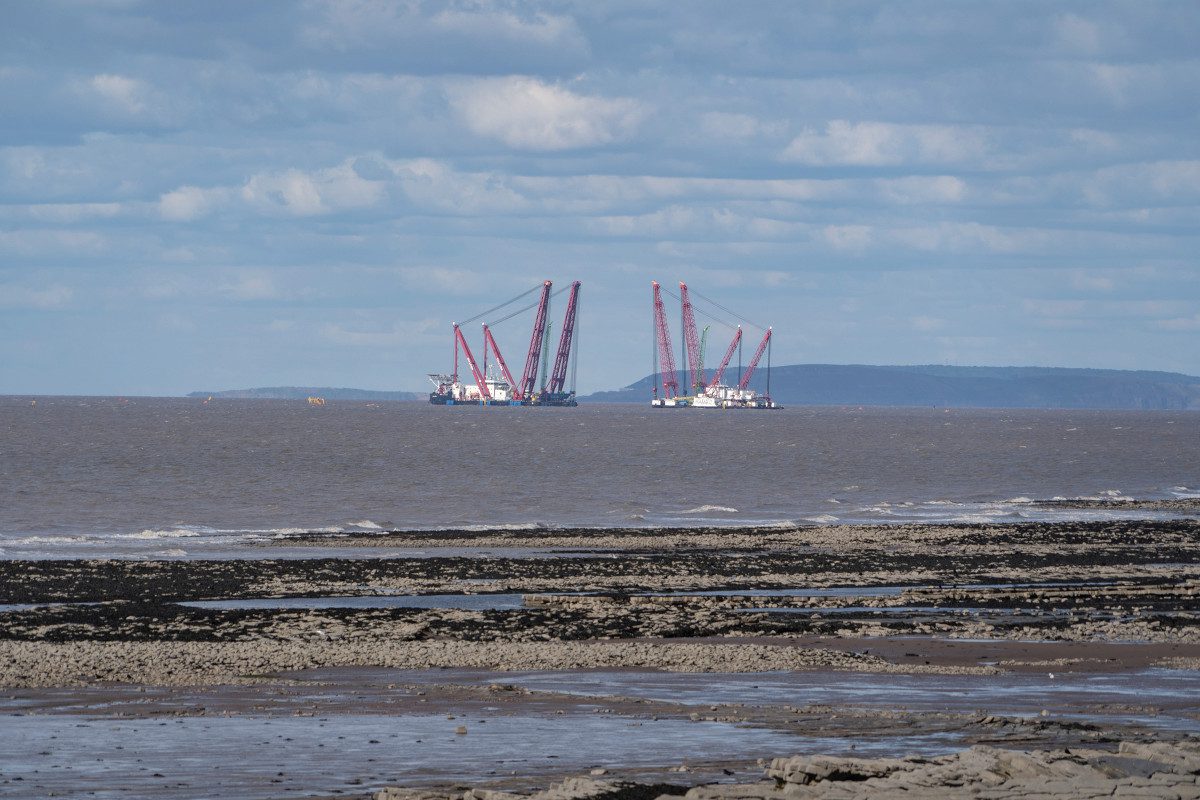
- The review claimed that fish protection measures at Hinckley C nuclear power station will cost £700 million. The actual cost of the fish deterrent system is £50 million. This £50 million is in the context of an overall project cost of £46 billion, up from an original £18 billion due to ballooning costs that are nothing to do with the environment.
- The review claimed that that fish protection measures at Hinckley C will protect just 0.08 salmon, 0.02 trout and 6 lamprey per year. The actual numbers from research carried out by Environment Agency suggest that 4.6 million adult fish could be killed per year without protection measures, a scale of wildlife destruction which would have significant consequences for ecosystems across the internationally important Severn Estuary. Many of these fish are already rare or endangered.
- The review’s author was reported in the press as claiming that a single bird had halted work at Wylfa nuclear plant. In fact, the Planning Inspectorate stated there were significant and varied environmental objections to the development, including the loss of multiple colonies of threatened bird species and damage to three Sites of Special Scientific Interest.
Craig Bennett, chief executive of The Wildlife Trusts, said:
“Recent changes to the planning system have resulted in the first regression of the laws that protect nature since World War II. Now the PM is mobilising a new assault on the natural world by threatening to adopt suggestions made by a poorly informed advisor. If his plans go ahead, the PM will turn the nature crisis into a catastrophe.
“The dice were loaded from the start – the nuclear review confirms a false narrative that was already being circulated by certain industry lobby groups and think tanks. The errors in the review form a clear pattern: repeated exaggeration of the costs of preventing harm to nature – and minimisation of the impact to wildlife of nuclear development without those measures. The fact that no environmental experts served on the panel is a disgrace and the resulting distorted picture obscures the value the natural world delivers for economic stability and net zero.
“There is limited evidence that environmental protections impose undue costs on infrastructure developers. In fact, evidence shows that frequently cited examples of expensive mitigation measures originated from developer mistakes and were unconnected to environmental issues. Blaming nature is unacceptable and a way of avoiding accountability.”
The current Government was elected on a manifesto that promised to tackle the nature and climate crisis – yet if recommendations 11, 12 and 19 of the review are adopted, important wildlife sites will be at risk and the UK will move even further away from achieving net zero.
Craig Bennett continued:
“The developers of Hinkley C are trying to blame everyone but themselves for their own failure to think about nature from the outset. When developers think about nature too late in the design process, they end up creating bolt-on engineering solutions for ecological problems, which tend to be more expensive and less effective than committing to make infrastructure nature positive from the very start of the designing process. It’s pretty pathetic that the Government is now trying to bail out energy infrastructure developers for this failure of commitment and imagination.
“We’re calling on DESNZ, which has been tasked by the Prime Minister and Chancellor with taking forward all the review’s recommendations, to drop the three nature-focussed ones to prevent even more disastrous environmental regression. A decision to progress these recommendations in full would require a new planning bill, hot on the heels of the new and deeply damaging Planning and Infrastructure Act. It would constitute the final nail in the coffin of Labour’s promise to ‘save nature’, made just two years ago to the millions of voters who care deeply about wildlife.”
For more details, read Why the Nuclear Regulatory Review is flawed – and how it could turn the nature crisis into a catastrophe.
The Wildlife Trusts’ campaign to save environmental protections threatened by the Nuclear Regulatory Review is here.

