
Close Menu
geekfence.comgeekfence.com
    What's Hot

    A new era of humanoid robots

    February 15, 2026

    LLaMA in R with Keras and TensorFlow

    February 15, 2026

    How Deutsche Börse Federates Data Governance with Control

    February 15, 2026
    Facebook X (Twitter) Instagram
    • About Us
    • Contact Us
    Facebook Instagram
    geekfence.comgeekfence.com
    • Home
    • UK Tech News
    • AI
    • Big Data
    • Cyber Security
      • Cloud Computing
      • iOS Development
    • IoT
    • Mobile
    • Software
      • Software Development
      • Software Engineering
    • Technology
      • Green Technology
      • Nanotechnology
    • Telecom
    geekfence.comgeekfence.com
    Home»Artificial Intelligence»Stewards of their environment – Microsoft Unlocked
    Artificial Intelligence

    Stewards of their environment – Microsoft Unlocked

    AdminBy AdminDecember 21, 2025No Comments2 Mins Read0 Views
    Facebook Twitter Pinterest LinkedIn Telegram Tumblr Email
    Stewards of their environment – Microsoft Unlocked
    Share
    Facebook Twitter LinkedIn Pinterest Email


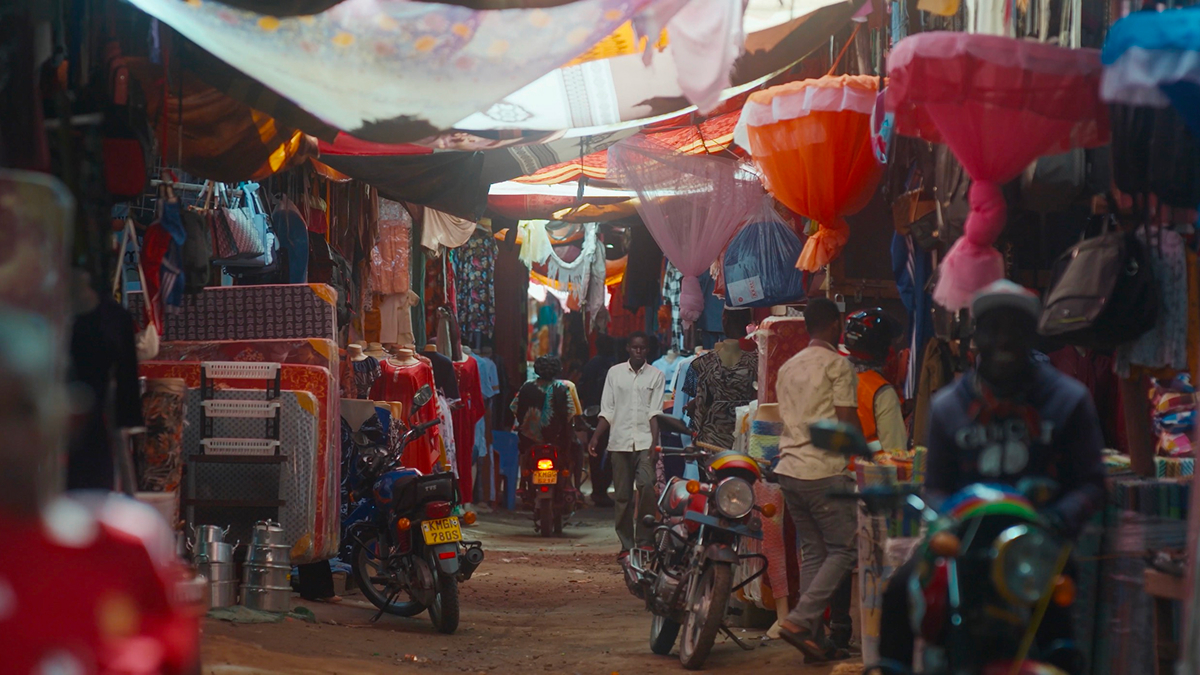
    By operating on the ground in Kenya, the HOT team brought the human touch. The actual data collection activity was entirely led by locals, from introducing the project to flying the drones, and refugees in the camp helped manually identify features in the area. HOT teams flew drones to capture high-resolution aerial imagery and conduct field validation with refugee mappers. But most importantly, they trained and empowered members of the refugee camp—turning data collection into community engagement.

    Refugees became mappers, interpreters, and stewards of their own environment, creating ground truth data. Their local knowledge added depth and accuracy, giving them ownership of the process. HOT’s team manually tagged 10 sq miles (16 km²) of imagery, creating a rich training dataset for AI development that can be kept current as the camp evolves.

    “AI was primarily used for pattern matching and time saving. It helped us find signals in the data that would be hard to spot manually,” says Dr. Gupta.

    Drawing on the rich, community-tagged imagery collected in the refugee camp, Microsoft’s AI for Good Lab developed advanced machine learning models using Azure cloud services. These models were trained to accurately identify a wide range of features—buildings, sanitation blocks, solar panels of streetlights and rooftops, and elements of the power network like poles and lines—reflecting the camp’s diverse and irregular landscape.

    By leveraging both local expertise and AI, the team was able to overcome the challenges posed by the refugee camp’s unique structures, enabling rapid analysis and pattern recognition that would be difficult to achieve manually. All models and datasets were released as open source on GitHub, empowering developers, researchers, and humanitarian organizations worldwide to build on this work and adapt it for other communities in need.


    Source link

    Share. Facebook Twitter Pinterest LinkedIn Tumblr Email

    Related Posts

    LLaMA in R with Keras and TensorFlow

    February 15, 2026

    ALS stole this musician’s voice. AI let him sing again.

    February 14, 2026

    The Future of Agentic Coding – O’Reilly

    February 13, 2026

    Maximizing throughput with time-varying capacity

    February 12, 2026

    80% of Fortune 500 use active AI Agents: Observability, governance, and security shape the new frontier

    February 11, 2026

    3 Questions: Using AI to help Olympic skaters land a quint | MIT News

    February 10, 2026
    Top Posts

    Hard-braking events as indicators of road segment crash risk

    January 14, 202617 Views

    Understanding U-Net Architecture in Deep Learning

    November 25, 202512 Views

    How to integrate a graph database into your RAG pipeline

    February 8, 20268 Views
    Don't Miss

    A new era of humanoid robots

    February 15, 2026

    Synopsys ramps up work around physical AI to help build adaptive machines capable of sensing…

    LLaMA in R with Keras and TensorFlow

    February 15, 2026

    How Deutsche Börse Federates Data Governance with Control

    February 15, 2026

    The data behind the design: How Pantone built agentic AI with an AI-ready database

    February 15, 2026
    Stay In Touch
    • Facebook
    • Instagram
    About Us

    At GeekFence, we are a team of tech-enthusiasts, industry watchers and content creators who believe that technology isn’t just about gadgets—it’s about how innovation transforms our lives, work and society. We’ve come together to build a place where readers, thinkers and industry insiders can converge to explore what’s next in tech.

    Our Picks

    A new era of humanoid robots

    February 15, 2026

    LLaMA in R with Keras and TensorFlow

    February 15, 2026

    Subscribe to Updates

    Please enable JavaScript in your browser to complete this form.
    Loading
    • About Us
    • Contact Us
    • Disclaimer
    • Privacy Policy
    • Terms and Conditions
    © 2026 Geekfence.All Rigt Reserved.

    Type above and press Enter to search. Press Esc to cancel.