

Two current MIT affiliates and seven additional alumni are among those named to the 2025 cohort of AI2050 Fellows.
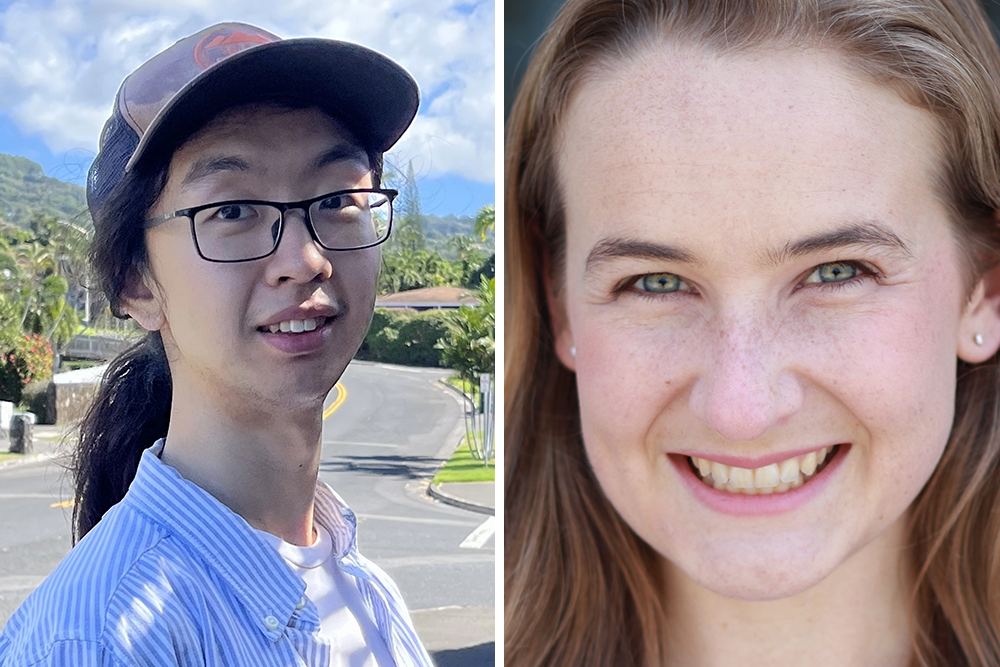
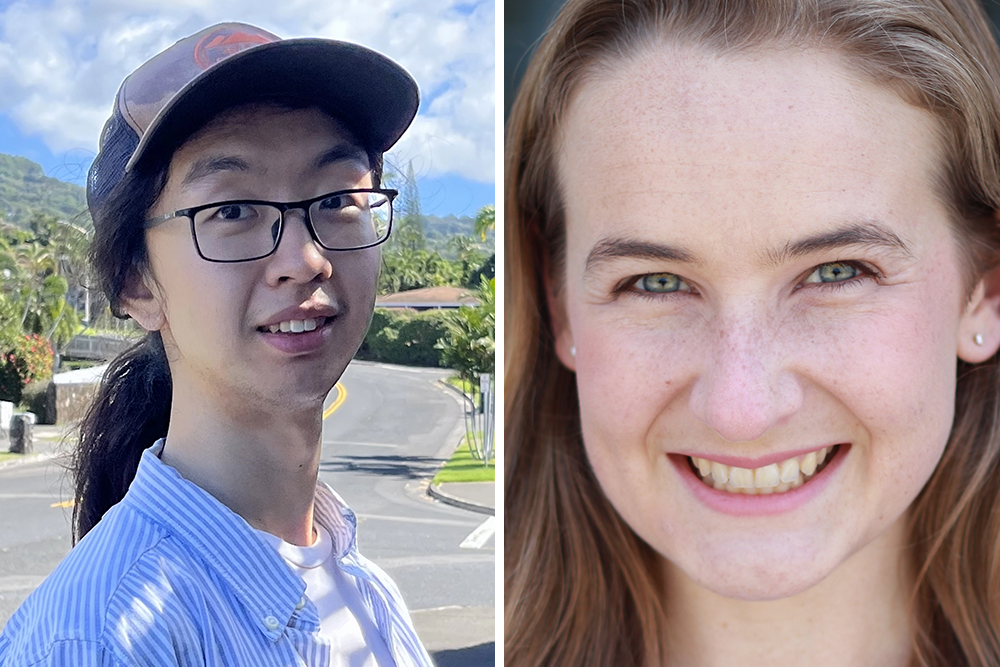
Zongyi Li, a postdoc in the MIT Computer Science and Artificial Intelligence Lab, and Tess Smidt ’12, an associate professor of electrical engineering and computer science (EECS), were both named as AI2050 Early Career Fellows.
Seven additional MIT alumni were also honored. AI2050 Early Career Fellows include Brian Hie SM ’19, PhD ’21; Natasha Mary Jaques PhD ’20; Martin Anton Schrimpf PhD ’22; Lindsey Raymond SM ’19, PhD ’24, who will join the MIT faculty in EECS, the Department of Economics, and the MIT Schwarzman College of Computing in 2026; and Ellen Dee Zhong PhD ’22. AI2050 Senior Fellows include Surya Ganguli ’98, MNG ’98; and Luke Zettlemoyer SM ’03, PhD ’09.
AI2050 Fellows are announced annually by Schmidt Sciences, a nonprofit organization founded in 2024 by Eric and Wendy Schmidt that works to accelerate scientific knowledge and breakthroughs with the most promising, advanced tools to support a thriving planet. The organization prioritizes research in areas poised for impact including AI and advanced computing, astrophysics, biosciences, climate, and space — as well as supporting researchers in a variety of disciplines through its science systems program.
Li is postdoc in CSAIL working with associate professor of EECS Kaiming He. Li’s research focuses on developing neural operator methods to accelerate scientific computing. He received his PhD in computing and mathematical sciences from Caltech, where he was advised by Anima Anandkumar and Andrew Stuart. He holds undergraduate degrees in computer science and mathematics from Washington University in St. Louis.
Li’s work has been supported by a Kortschak Scholarship, PIMCO Fellowship, Amazon AI4Science Fellowship, Nvidia Fellowship, and MIT-Novo Nordisk AI Fellowship. He has also completed three summer internships at Nvidia. Li will join the NYU Courant Institute of Mathematical Sciences as an assistant professor of mathematics and data science in fall 2026.
Smidt, associate professor of electrical engineering and computer science (EECS), is the principal investigator of the Atomic Architects group at the Research Laboratory of Electronics (RLE), where she works at the intersection of physics, geometry, and machine learning to design algorithms that aid in the understanding of physical systems under physical and geometric constraints, with applications to the design both of new materials and new molecules. She has a particular focus on symmetries present in 3D physical systems, such as rotation, translation, and reflection.
Smidt earned her BS in physics from MIT in 2012 and her PhD in physics from the University of California at Berkeley in 2018. Prior to joining the MIT EECS faculty in 2021, she was the 2018 Alvarez Postdoctoral Fellow in Computing Sciences at Lawrence Berkeley National Laboratory, and a software engineering intern on the Google Accelerated Sciences team, where she developed Euclidean symmetry equivariant neural networks that naturally handle 3D geometry and geometric tensor data. Besides the AI2050 fellowship, she has received an Air Force Office of Scientific Research Young Investigator Program award, the EECS Outstanding Educator Award, and a Transformative Research Fund award.
Conceived and co-chaired by Eric Schmidt and James Manyika, AI2050 is a philanthropic initiative aimed at helping to solve hard problems in AI. Within their research, each fellow will contend with the central motivating question of AI2050: “It’s 2050. AI has turned out to be hugely beneficial to society. What happened? What are the most important problems we solved and the opportunities and possibilities we realized to ensure this outcome?”