

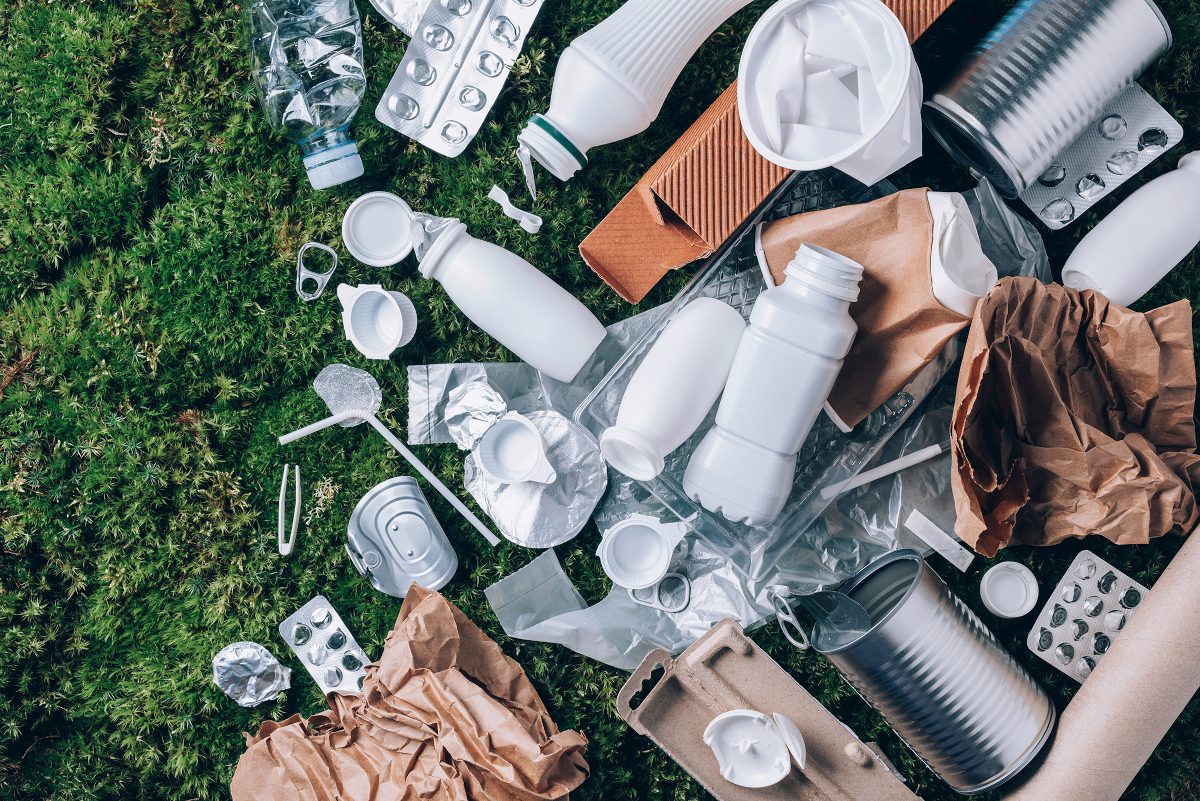
New EU rules intended to reduce packaging waste, increase recyclability and stimulate the use of recycled materials begin to apply today (12 August), bringing wide-ranging new requirements for businesses placing packaging on the European market.
The Packaging and Packaging Waste Regulation (PPWR) replaces the EU’s previous Packaging and Packaging Waste Directive, introducing a more prescriptive and harmonised regime that applies directly across EU member states and sets requirements spanning packaging design, manufacture and use through to waste prevention, collection and recycling.1
Regulation (EU) 2025/40 entered into force on 11 February 2025 but applies generally from 12 August 2026. It covers all packaging and packaging waste regardless of material or origin, although many of its individual requirements are being phased in over the coming years.2
The European Commission says the legislation is intended to reduce the quantity of packaging and packaging waste generated, lower the use of primary raw materials and help create a more circular and competitive economy. Packaging accounts for around 40% of plastics used in the EU, while 186.5 kg of packaging waste per person was generated in 2022.3
Among its headline objectives is a requirement for all packaging placed on the EU market to be recyclable by 2030. The regulation also introduces minimum recycled-content requirements for plastic packaging, reuse and refill provisions for some packaging formats, restrictions on certain single-use packaging and measures intended to eliminate unnecessary packaging.4
Member states are required to reduce packaging waste generated per capita by at least 5% by 2030, 10% by 2035 and 15% by 2040, compared with 2018 levels.5 The rules also seek to reduce excessive empty space in packaging and establish more consistent labelling to help consumers sort packaging waste.
A number of requirements take effect later. Harmonised labels providing information about packaging material composition are scheduled to become mandatory from 12 August 2028, or 24 months after the relevant implementing acts enter into force, whichever is later.6 From 2030, plastic packaging will also have to meet minimum levels of recycled content, with requirements varying according to packaging type.
Other measures include restrictions on some single-use plastic formats, while takeaway businesses will have to allow customers to bring their own containers for food and drink at no additional cost from 2027 and offer reusable packaging for takeaway products from 2028.7
The regulation also places limits on PFAS substances in food-contact packaging. The measures form part of a broader attempt to address both the volume and composition of packaging waste, while developing markets for secondary materials.
Implications for UK businesses
Although the PPWR is EU legislation, it is also significant for UK manufacturers and exporters placing packaged products on the EU market. UK Government guidance says businesses exporting to the EU need to comply with the new requirements, including rules relating to recyclability, labelling and reusability.8
The Department for Business and Trade has advised exporters to review their packaging and identify issues such as excessive packaging or non-recyclable materials. Extended producer responsibility requirements can also involve registration and reporting on matters including packaging material, weight, recyclability and recycled content.
The change has prompted debate within the packaging sector over how some of the regulation’s objectives should be interpreted in practice – particularly the relationship between packaging minimisation, recycled content and overall resource use.
Krzysztof Krajewski, Chief Sustainability and Innovation Officer at recycled cartonboard producer RDM Group, described implementation of the PPWR as “a landmark moment for Europe’s packaging industry and an important step towards a more resource-efficient, circular economy”.
He cautioned, however, against treating reductions in packaging weight as a sustainability measure in isolation.
“Lightweighting has an important role to play, but the lightest package is not always the lowest-impact package,” he said. “If reducing weight means increasing reliance on virgin raw materials, we’re simply shifting the environmental burden elsewhere.”9
Krajewski argued that recycled cartonboard can result in a heavier package while reducing demand for primary fibre and keeping existing resources in circulation. He also called for the approach taken to mandatory post-consumer recycled content in plastics eventually to be extended to other packaging materials.
“As the industry moves into the implementation, and guidance around the legislation evolves, we want to see PPWR driving smarter use of the resources we already have,” he said. “Where high-quality recycled fibre can deliver similar performance, it should be prioritised over virgin material, extending the life of valuable fibres and reducing demand for new natural resources.
“Ultimately, the industry’s success under PPWR shouldn’t be measured by how many grams are removed from a pack, but by how effectively we build circular packaging systems that deliver the lowest overall environmental impact.”10
Recycling technology company TOMRA has meanwhile highlighted the potential implications of the legislation for European resource security.
“PPWR will completely change the way packaging is designed, produced, used, and managed,” said Tove Andersen, president and CEO of TOMRA. “While many might presume this is simply an environmental measure, its impact goes much further. By keeping materials in circulation for longer, the EU is taking an important step towards improving resource security, and reducing its exposure to shocks in the supply chain.”11
TOMRA was among more than 120 businesses and industry associations that wrote to EU leaders earlier this year calling for timely implementation of the PPWR and for the secondary legislation needed to support it to be clear and evidence-based.12
That secondary legislation and guidance will be important to the practical operation of the new regime. The European Commission published guidance in June following what it described as a “significant number” of questions from businesses and national authorities seeking clarification of individual provisions.13
The regulation represents a substantial change from the previous EU packaging regime, not least because its status as a regulation provides a more harmonised set of requirements across member states rather than relying on national transposition of a directive.
For businesses, however, 12 August marks the beginning rather than the end of the transition. Many of the PPWR’s most consequential design, recyclability, recycled-content, reuse and labelling requirements have deadlines between 2027 and 2030, giving packaging producers and users a series of further compliance milestones over the remainder of the decade.14
Notes
[1] Regulation (EU) 2025/40 on packaging and packaging waste, Official Journal of the European Union, 22 January 2025. ; [2] Ibid.; [3] “Packaging waste”, European Commission, accessed 12 August 2026. ; [4] “Facts about the new EU rules on packaging and packaging waste”, European Commission, accessed 12 August 2026. ; [5] Regulation (EU) 2025/40, op. cit. ; [6] Ibid.; [7] EUR-Lex summary of Regulation (EU) 2025/40, Publications Office of the European Union. ; [8] “EU PPWR – Packaging and Packaging Waste Regulation”, UK Department for Business and Trade, 2026. ; [9] RDM Group, comment supplied to Envirotec, August 2026. ; [10] Ibid. ; [11] TOMRA, comment supplied to Envirotec, August 2026. ; [12] “Business coalition calls on EU to ensure timely and effective implementation of PPWR”, TOMRA, 3 June 2026. ; [13] European Commission guidance on Regulation (EU) 2025/40, Official Journal of the European Union, 10 June 2026. ; [14] Regulation (EU) 2025/40, op. cit. .

