

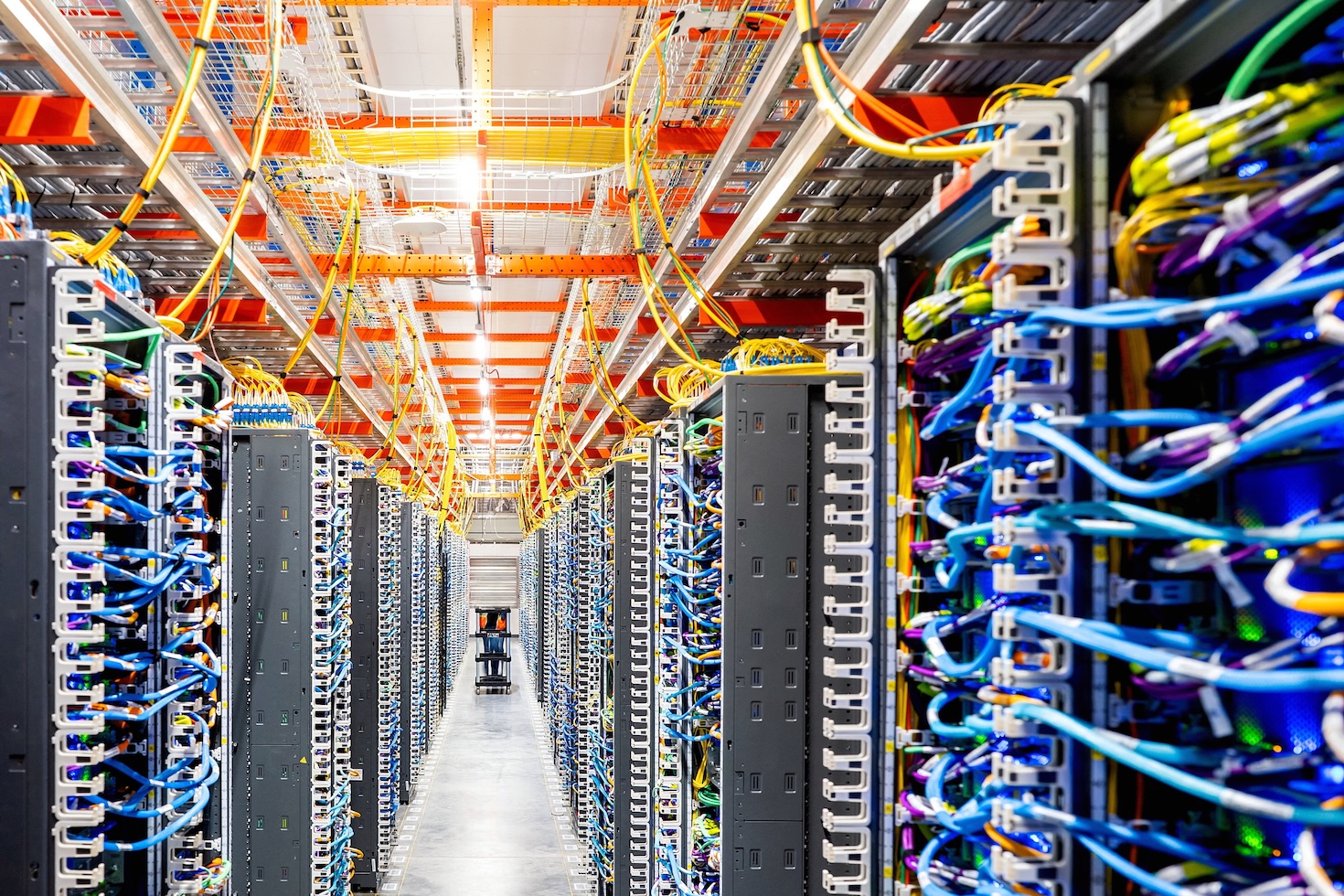
The numbers forecast for data center investment are the kind that stop a conversation before it starts. Capital spending on AI infrastructure is on track to surpass $1 trillion as soon as 2027 — the largest infrastructure buildout in U.S. history as a share of GDP since the Louisiana Purchase — and now exceeds annual investment in upstream oil and gas.
Spending of this magnitude locks in assets for 20, 30, even 50 years. The window to shape these assets is narrow and closing.
That was the premise behind the Sustainable AI Infrastructure Forum, a half-day, invitation-only working session we hosted at Trellis Impact 26. We convened a group of 65 hyperscalers, utilities, developers, financiers, certification bodies, investors and community-engagement specialists — stakeholders that run on very different operating systems and don’t typically come together — to ask a deceptively simple question: What does a sustainable data center look like, and what would it take to get there at scale?
The forum was conducted under the Chatham House Rule, meaning that content could be shared but not attributed to any individual or organization.
Bipartisan backlash
The backdrop is a backlash that has moved faster than almost anyone anticipated. Polling presented at the forum showed opposition to data center construction climbing sharply over the past year, and one speaker described it as among the most bipartisan issues in the country. Another cited roughly $156 billion in projects now stalled by community resistance — a figure that has more than doubled in just six months.
As one developer put it, data centers have become “a very good place to put all that hurt” — the physical manifestation of a broader, often inchoate anxiety about AI and technology.
Energy, water, land — and trust
Panelists at the event made clear that no single actor controls the outcome. For example:
- A utility representative described an energy grid playing catch-up on infrastructure and procurement. The balancing act, as he framed it, is reliability, affordability and carbon-free energy — with reliability, in his view, outranking the others.
- A developer walked through the hyperlocal reality of siting: setbacks, berms, landscaping, closed-loop cooling and the slow human work of community forums and landowner relationships.
- A tech company sustainability leader offered a different lever entirely — a company that builds no data centers but uses contract language, including a clause tied to supplier sustainability terms, to push change through purchasing power.
Four “innovation sparks” widened the aperture:
- A data center developer reframed land as opportunity, describing plans to restore a degraded former cattle-grazing site on Texas’s historic Blackland Prairie, using a fraction of operating capital for carbon sequestration, water capture and biodiversity.
- An investor coalition presented an 11-point sustainability standard built around a “net positive” idea — that a data center could restore a watershed or lower a low-income community’s energy burden, rather than being merely neutral.
- A community-engagement strategist with a background in oil, gas and mining argued that the playbooks for earning social license already exist, in the UN Guiding Principles and IFC Performance Standards.
- And a climate investor described the Data Center Innovation Initiative, a partnership with Amazon, Google, Meta and Microsoft to pilot decarbonization technologies together rather than redundantly.
Striking consensus, persistent skepticism
The heart of the session put the room to work: Each table named up to three high-bar goals, three non-negotiables and the three biggest changes needed to propel data center sustainability. What struck us, reading the flipcharts afterward, was how much the eight tables converged without coordinating. Some key takeaways:
Non-negotiable, high-bar goals
- Community agency and buy-in, early and often, with community benefit agreements
- Clean energy, water positive
- Common standards and transparency
- Self-funded initiatives
What needs to change
- Modernize the grid
- Include sustainability in procurement conversations
- Prove and articulate the benefits of AI
- Rebuild trust
On goals, nearly every table reached for some version of 100 percent clean or renewable energy, zero-carbon facilities and net-positive impact — for both nature and community. Several pushed beyond aspiration to structure: One group laid out a tiered energy ladder from “bring your own energy” (the minimum) to “bring your own clean energy” (the medium bar) to “add to the community’s energy infrastructure” (the high bar). Another offered a more achievable near-term floor — 75 percent renewable through a mix of renewable energy credits and carbon-free energy — arguing that the non-negotiables should be things genuinely deliverable in the short term.
On non-negotiables, the words and phrases that recurred most were transparency, community buy-in before the build and do no harm. Groups called for community agency through a trusted local representative; measurable environmental commitments on water, carbon, noise and aesthetics; and net-benefit guarantees, with one table pointing to a Community Reinvestment Act–style mandate to reinvest in host communities.
On changes, the shared list included standards with third-party verification and public benchmarking; education for both industry and communities; accountability frameworks spanning regulation, tax and zoning; transition plans for the data center’s full lifecycle; and funding capacity for the local governments and authorities expected to navigate all of this for the first time.
Productive tensions, missing voices
A few productive tensions surfaced. Decarbonization messaging, several participants warned, “resonates not at all” in most host communities — some view solar as the threat to farmland. And the missing voices were named honestly: front-line communities, regulators and the disparate local authorities who issue the permits.
We left genuinely struck by the alignment on what “good” looks like — and equally skeptical that the industry will choose the right way over the fastest way. The mandate, as we see it, is to bend a trillion-dollar wave in the right direction while the window is still open. That starts, as it did in that room, with the next human-to-human conversation, and the one after that.