

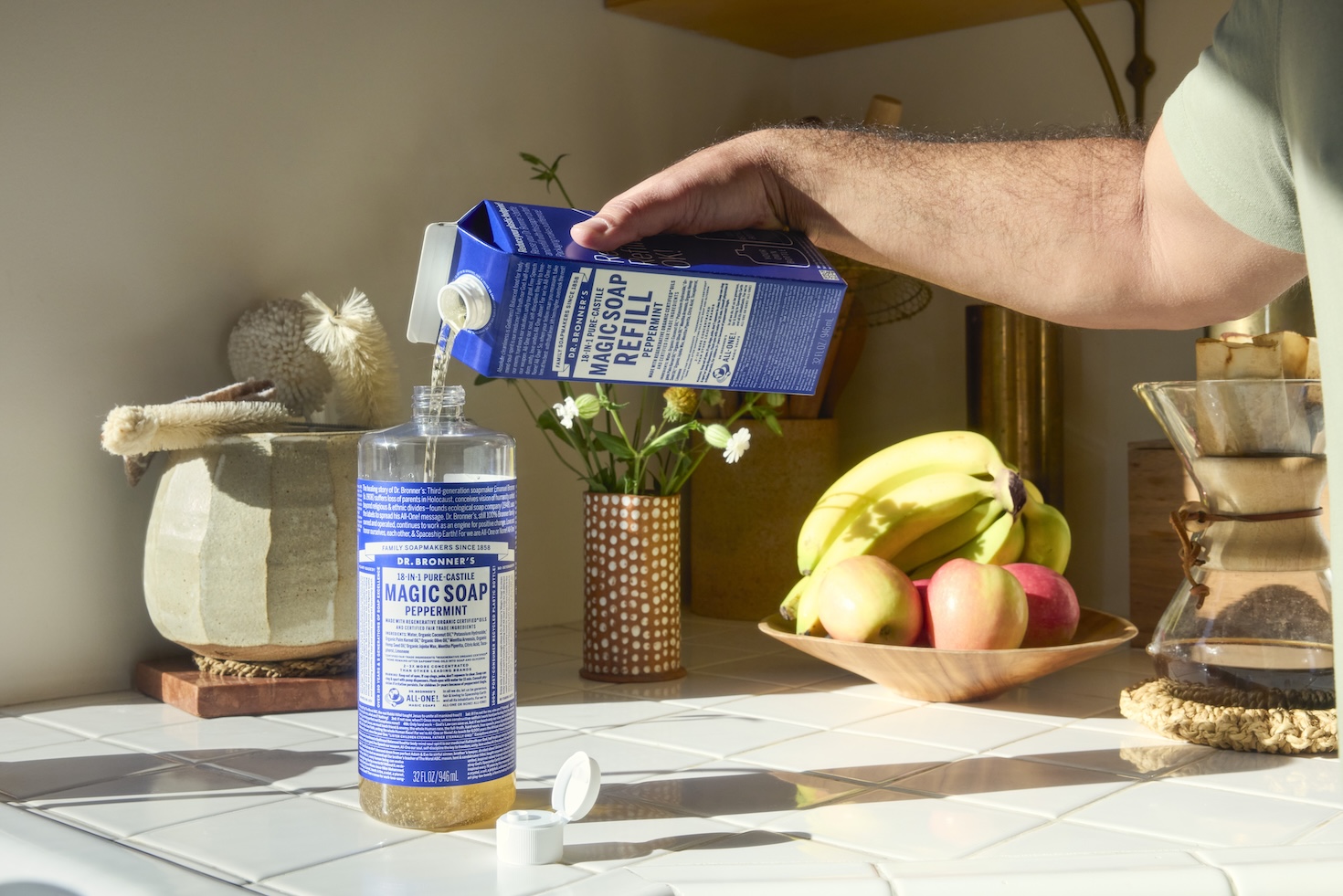
Dr. Bronner’s began testing the Purpose Pledge, an initiative that recognizes “purpose-led” businesses, with about 20 natural products companies in spring 2025 after walking away from its long-time commitment to the Certified B Corp label.
There are now 16 companies officially on board — including Dr. Bronner’s, mate beverage producer Yerba Madre and organic cereal maker Nature’s Path — with a goal to reach 25 members by the end of 2026. All of the participants generate less than $1 billion in annual revenue.
The program, run by consulting firm Lift Economy and nonprofit One Step Closer, requires participants to adopt 10 principles including a living wage plan, strict environmental standards for production and a pledge to donate 1 percent of annual revenue (or 10 percent of net profits) to philanthropy.
More importantly, it asks them to demonstrate how business processes support those commitments, said Les Szabo, chief strategy and impact officer at Dr. Bronner’s and board chair of the Purpose Pledge.
“The operationalization of purpose is really what all of this comes down to,” he said. “It’s not about intention, it’s about how we operationalize.”
Tackle the hard stuff
There’s no fee to join, but each Purpose Pledge company must publish an initial three-year timeline of their individual goals and to disclose progress toward them, often in the form of separate certifications that can cost thousands to earn. The initiative added seven organizations, called “Commitment Catalysts,” to help participating companies stress test their processes and independently validate progress, Szabo said.
Many Purpose Pledge participants already have organic agriculture certifications, but their other commitments are more nascent. “In terms of learning, it’s clear that living wage, supply chain, climate and zero waste practices are areas with more complexity to them,” Szabo said.
Dr. Bronner’s, for example, is investing in certifications to develop its living wage policy along with its materials reuse and waste management practices.
Yerba Madre’s first regenerative organic recognition and its “Fair for Life” badge, which certifies products based on ethical labor practices and fair wages, provide evidence of its commitment to the Purpose Pledge, said CEO Benjamin Mand. It has spent less time on waste management and operational sustainability but is building those measures into supplier contracts with financial incentives.
“We are all endeavoring to do things that are not the easiest to do,” Mand said. “That value is important.”
Investing in certifications can be expensive, when it comes to applications, consulting and audits needed to support them, which is difficult for small companies, said Lisa Curtis, co-founder and CEO of nutritional supplement company Kuli Kuli Foods, which has just 10 full-time employees.
For example, the cost of obtaining the Total Resource Use and Efficiency (TRUE) certification from the Green Business Certification organization starts at $4,000 per facility. Certifying ingredients with the Regenerative Organic Alliance costs thousands of dollars.
Some Purpose Pledge commitments will require hefty investments by Kuli Kuli but are worthwhile because they will establish sound environmental and ethical practices for sustainable future growth, Curtis said: “It is motivating to our entire team to feel like the work we are doing is having a positive impact.”