

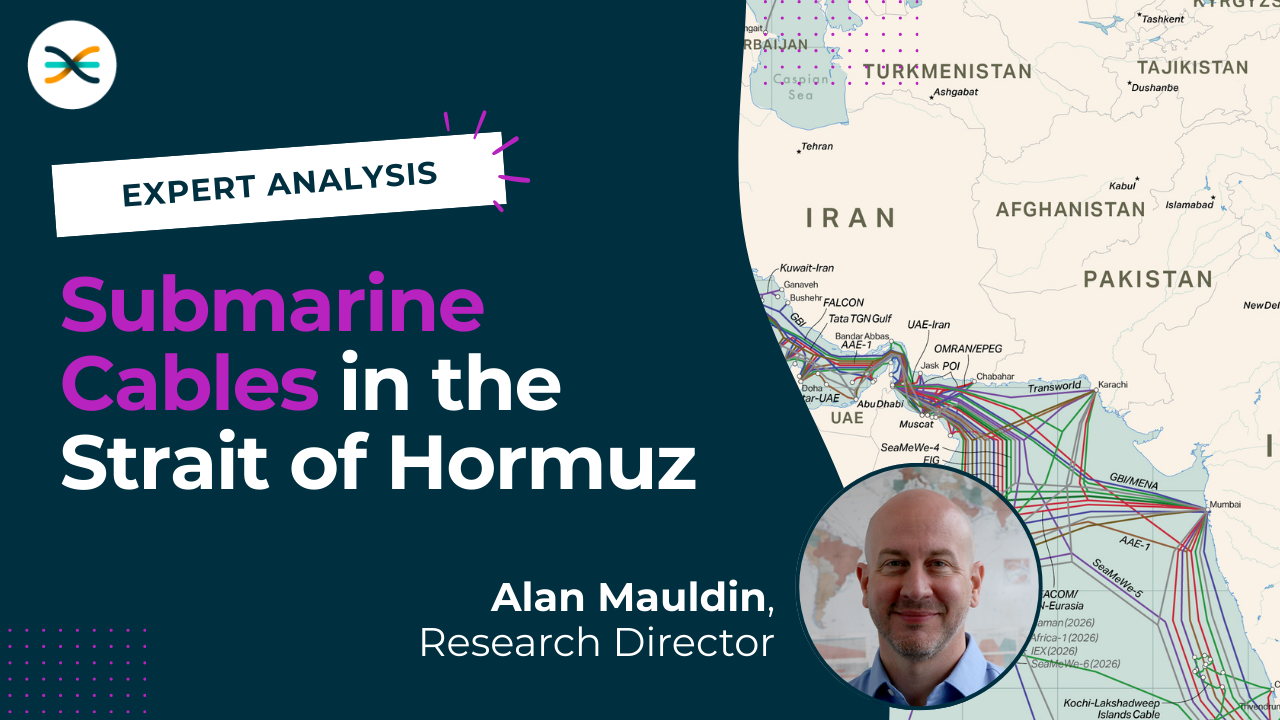
The Strait of Hormuz is a crucial artery, not only for the transit of oil and cargo but also for the data flowing through submarine cables on the seafloor. Given recent hostilities, which have included damage to data centers in the UAE and Bahrain, it is worth considering whether the potential risk to telecommunications infrastructure extends to the submarine cables in the region.
What’s the risk to submarine cables in the Middle East?
Submarine cable faults are very common, with around 200 incidents occurring annually worldwide, according to data from the International Cable Protection Committee. The vast majority of these faults are caused by routine accidents, primarily anchors or fishing activities. This constant risk of accidental damage is the primary concern for cable operators, and a dedicated fleet of repair vessels is on standby to conduct repairs. More on cable repairs here.
With military operations in this region, there is the possibility that attacks on vessels can indirectly cause cable damage. For instance, if a vessel were attacked, it could lose maneuverability, drop its anchor, and accidentally drag it across cables. This happened in the Red Sea in 2024 when Houthi rebels damaged a vessel, which then dragged its anchor for two weeks before sinking, causing damage to three cables.
One additional risk for cables in the Strait of Hormuz is related to how tightly they are clustered. Cables require permits to be laid in a country’s waters. Given the long-standing issues with Iran, all cables were laid in Omani waters as they passed through the Strait of Hormuz. More on challenges with cable routing here.
How vital to communications are submarine cables in the Strait of Hormuz?
The degree to which damage to one or more of these cables impacts network connectivity depends largely on individual network operators: How many different cables do the operators use? Do they also have capacity on terrestrial routes via neighboring countries?
The impact would vary by country as well.
- Bahrain, Kuwait, and Qatar: These countries have terrestrial network connections to Saudi Arabia, while Kuwait is also connected to Iraq. These terrestrial routes offer onward connectivity to the rest of the world.
- UAE: This country also has terrestrial connections to neighboring countries, but its submarine cables largely land in Fujairah, which faces the Gulf of Oman. This provides a reliability advantage over cables landings in the Gulf that could be a greater risk.
- Saudi Arabia: Only a few of the country’s submarine cable landings are on the Gulf coast. The vast majority of its international bandwidth comes via cables that land on the Red Sea coast.
None of these countries rely 100% on submarine cables for their international connectivity requirements. However, the capacity of terrestrial networks may not be sufficient to handle the complete re-routing of traffic if subsea systems in the Gulf are damaged. Terrestrial networks are not a perfect substitute for subsea systems, and are not immune to damage from hostilities themselves. Beyond the Gulf countries, there is not much risk to Europe-Asia data traffic from hostilities in the Strait of Hormuz. Europe-Asia cables traverse the Red Sea, no closer than about 900 miles from the Strait (more on this area below).
The active submarine cables that traverse the Strait of Hormuz include:
Existing and Planned Submarine Cables in the Gulf
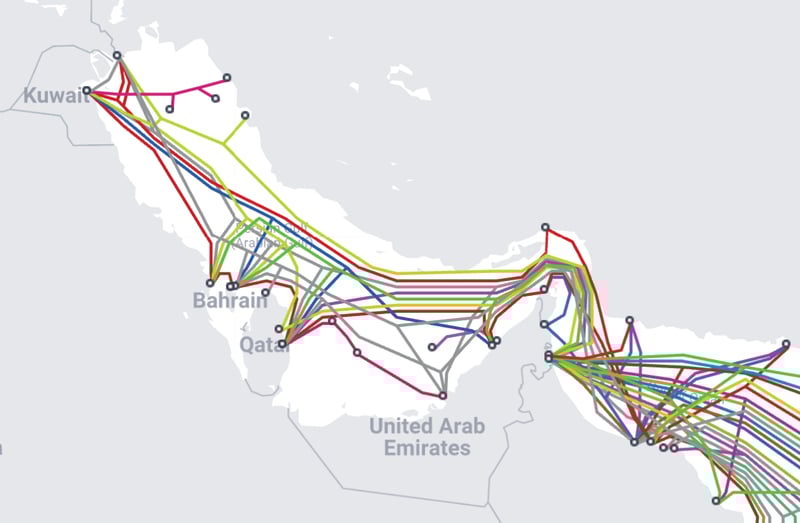
Source: TeleGeography’s Submarine Cable Map
What would happen if cable repairs are needed in the Middle East?
Specialized cable maintenance vessels must first receive permits to enter the waters where a fault has occurred. Once they locate a fault they must remain stationary during a repair, making them vulnerable in hostile waters. UAE-based e-Marine is the maintenance authority that handles repairs in the Gulf. As of today, the company operates five vessels. According to Marine Traffic, only one of these vessels is presently positioned inside the Gulf, the other vessels are in the Red Sea and Indian Ocean. If the Strait of Hormuz is inaccessible, repairs to cables inside the Gulf would be provided by only a single vessel.
What about the ongoing Red Sea risk?
While current Strait of Hormuz tensions are a concern, don’t overlook the persistent problems in the southern Red Sea off the coast of Yemen. Houthi attacks and repair permit restrictions have caused chaos. Two separate multi-cable faults in recent years severely impacted connectivity—impacts exacerbated by delays in cable repair. In 2024, three cables were damaged, taking six months to repair. In September 2025, four cables were damaged; it took five months to repair three of them (the fourth remains out of service). Red Sea cables are crucial not only for the Middle East, but also for East Africa and Europe-Asia connectivity.
What about installing new cable systems during geopolitical conflicts?
Beyond the challenges for repairing existing cables, the issues in the Red Sea have led to delays in the installation of multiple cable systems such as 2Africa, India Europe Xpress (IEX), Raman, SeaMeWe-6, and Africa-1. Plans to complete these systems remain on hold.
Hostilities in the Gulf will surely delay installation of new cables. SeaMeWe-6, which had hoped to avoid the Red Sea by routing through the Gulf to Bahrain and going terrestrially across Saudi Arabia and then Europe, appears to be delayed. Other planned cables in the Gulf include 2Africa’s Pearls extension and the Fibre in Gulf (FIG) cable would also face challenges if the conflict persists.
The inability to install new cables is frustrating, but the most acute near-term risk stems from the inability to repair them in a timely manner.
This analysis was informed by TeleGeography’s Transport Networks Research Service data and analysis platform.