

Support CleanTechnica’s work through a Substack subscription or on Stripe.
Looking back on 2025, my trip to Guangzhou in November was one of the most eye-opening experiences I’ve had. I knew that the media portrays a distorted and outdated picture of China, but I really didn’t grasp how much until seeing it with my own eyes on this latest trip. While visiting, my wife and I frequently talked about how it was like visiting the future. Everything was relatively new, even compared to when a friend was stationed at the embassy there a little over a decade ago. Technology was everywhere, but how the technology came together was perhaps the most impressive part. From the overall layout to the details, it felt more advanced. Not just like looking into the future, but also a more livable and sustainable vision of the future. Something to potentially look forward to.
The Efficiency of Cities
People have come together into cities largely due to the economic efficiency. Goods and services can be exchanged more rapidly. However, the efficiency, densification, and verticalization also tends to have net environmental benefits. Putting more people in a square mile of city means more square miles of nature can be preserved. Not just from reduced roof space, but also from the reduced pavement needed to connect people. Apartments with fewer walls facing the elements mean less energy lost to heating and cooling.
Mass transit becomes more viable as density increases, with better capacity utilization. Electrified modes become better suited to move people. Frequency can be increased for more convenience. In addition, putting virtually everything you need within walking distance means that motorized transportation is often not needed.
However, despite all the efficiency, some people do not want to live in cities. On a certain level, I can understand the sentiment. I mostly grew up in the Midwest. Going downtown meant seeing a hollowed-out core. Poverty was obvious, amplified by segregation. Almost everything was paved over to make mostly empty parking lots for businesses that were not that busy anymore. Mass transit tended to be limited. All the wealth had moved out to a seemingly unending sprawl of suburbia. Long commutes in oversized vehicles connected people from work and school to a stop at Walmart on the way to their McMansions, each with its own little patch of grass.
When I moved to New York City, I saw something different. People wanted to live in the city. People took the subway and chose not to get cars. Parks roughly within walking distance broke up the pavement. Once you got away from the tourists, it became more livable. Despite the reputation, violent crime is lower than most American cities. CO2 emissions are also lower than most of the US. However, while I have a hard time imagining living anywhere else in the states now, many people still find it a challenge to live in NYC. Even some people who currently live here find it a challenge.
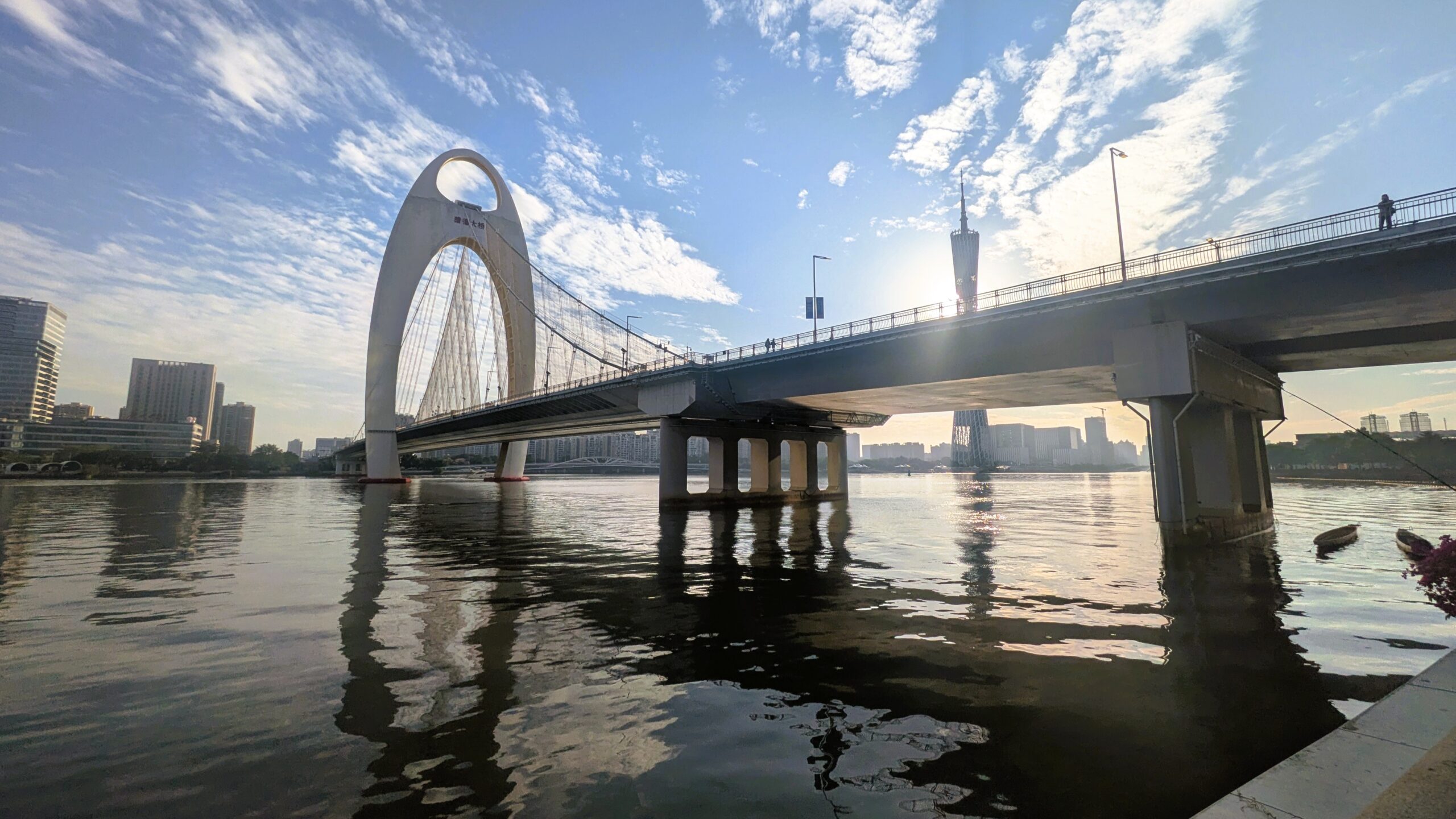
Beyond New York City, the more I travel, the more I realize there are better ways to execute cities that are both more efficient and more livable. New York was ahead of its time when it was being laid out and electric lights were being turned on for the first time. But the concept of cities has continued to evolve. Guangzhou is one of the most advanced examples that I have seen so far.
Guangzhou Sets an Example for City Planners
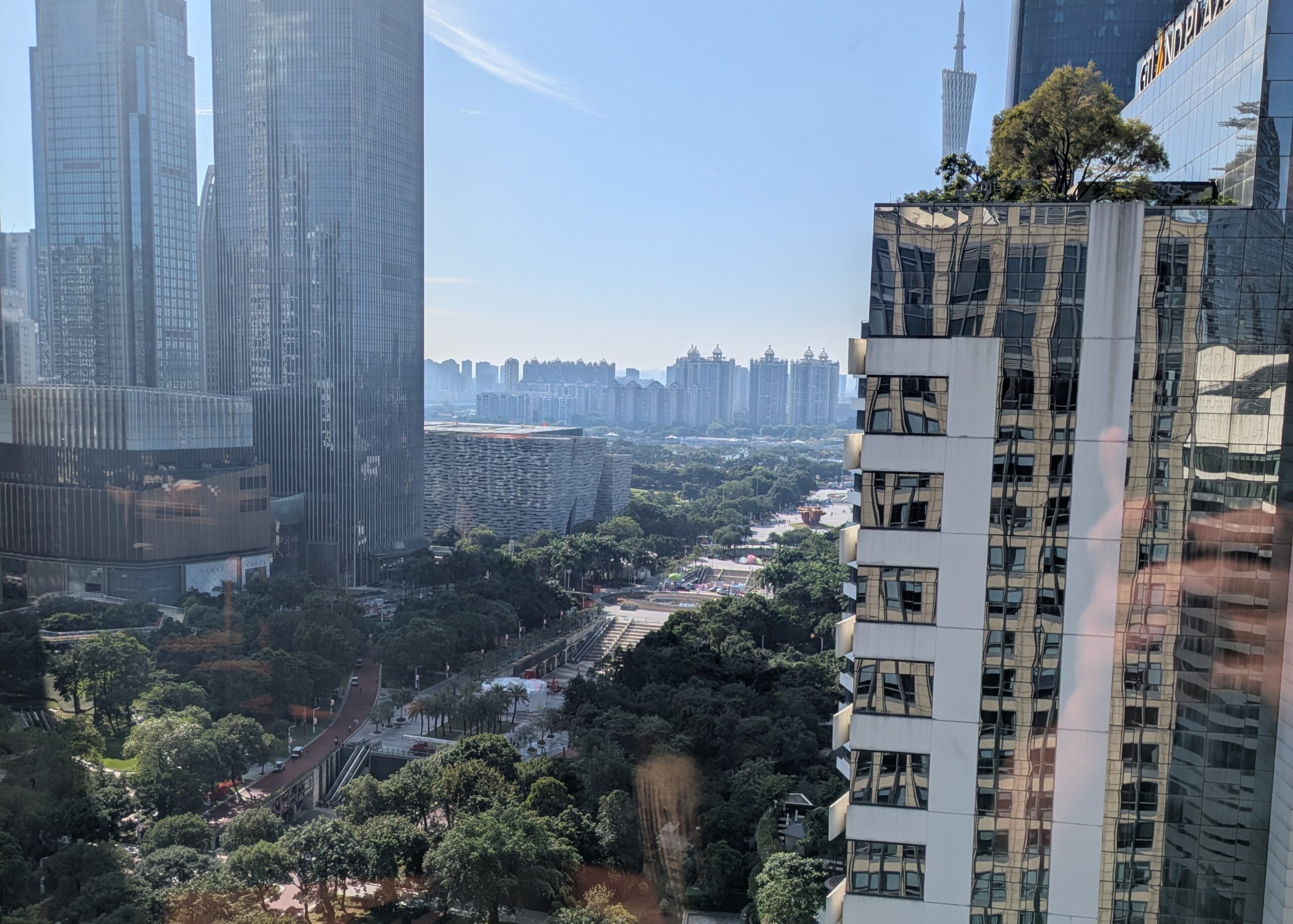
Guangzhou is a city with layers. Much of it is very vertical. Even on the towers of glass and steel, you frequently see greenery planted on balconies.
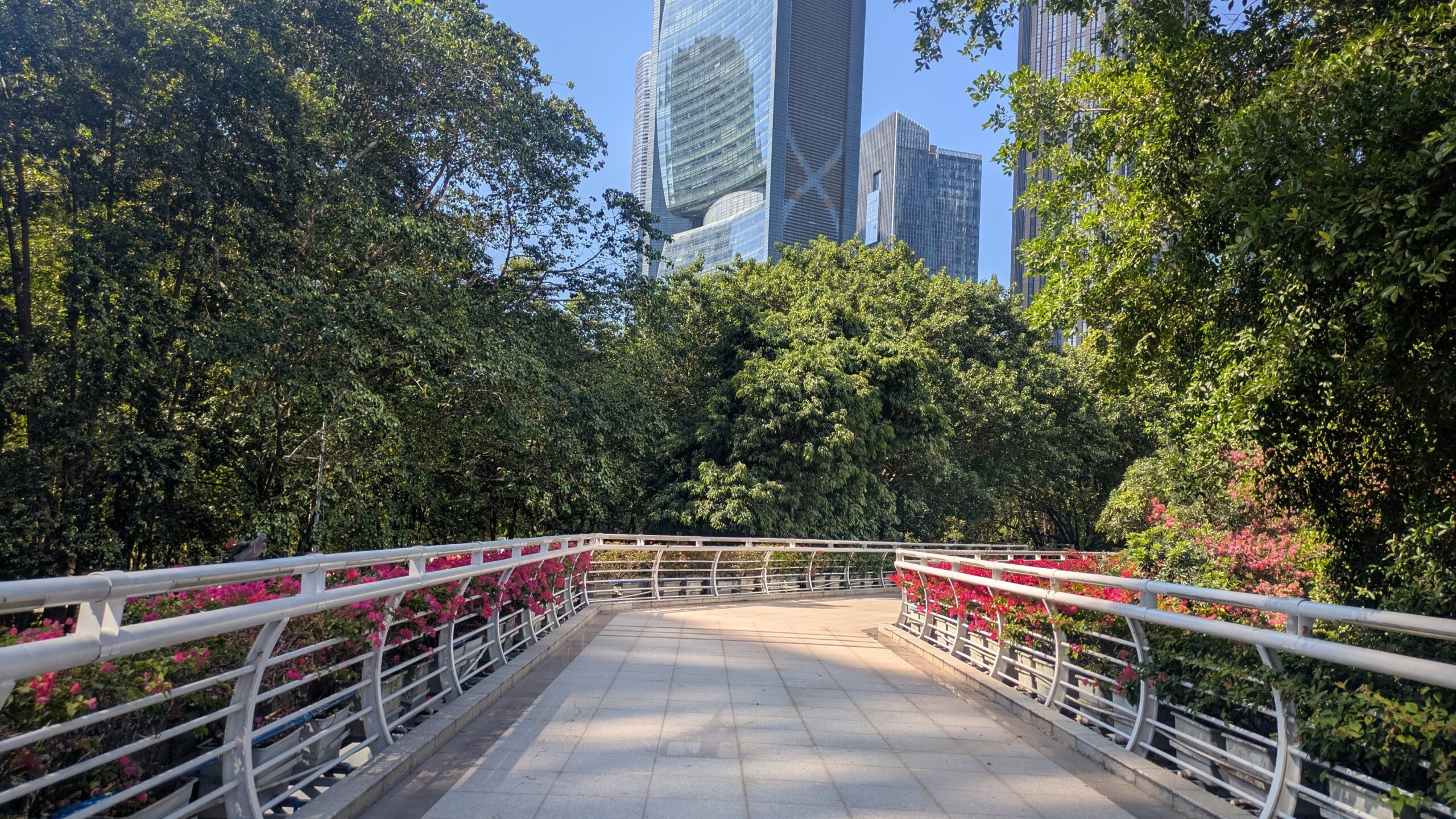
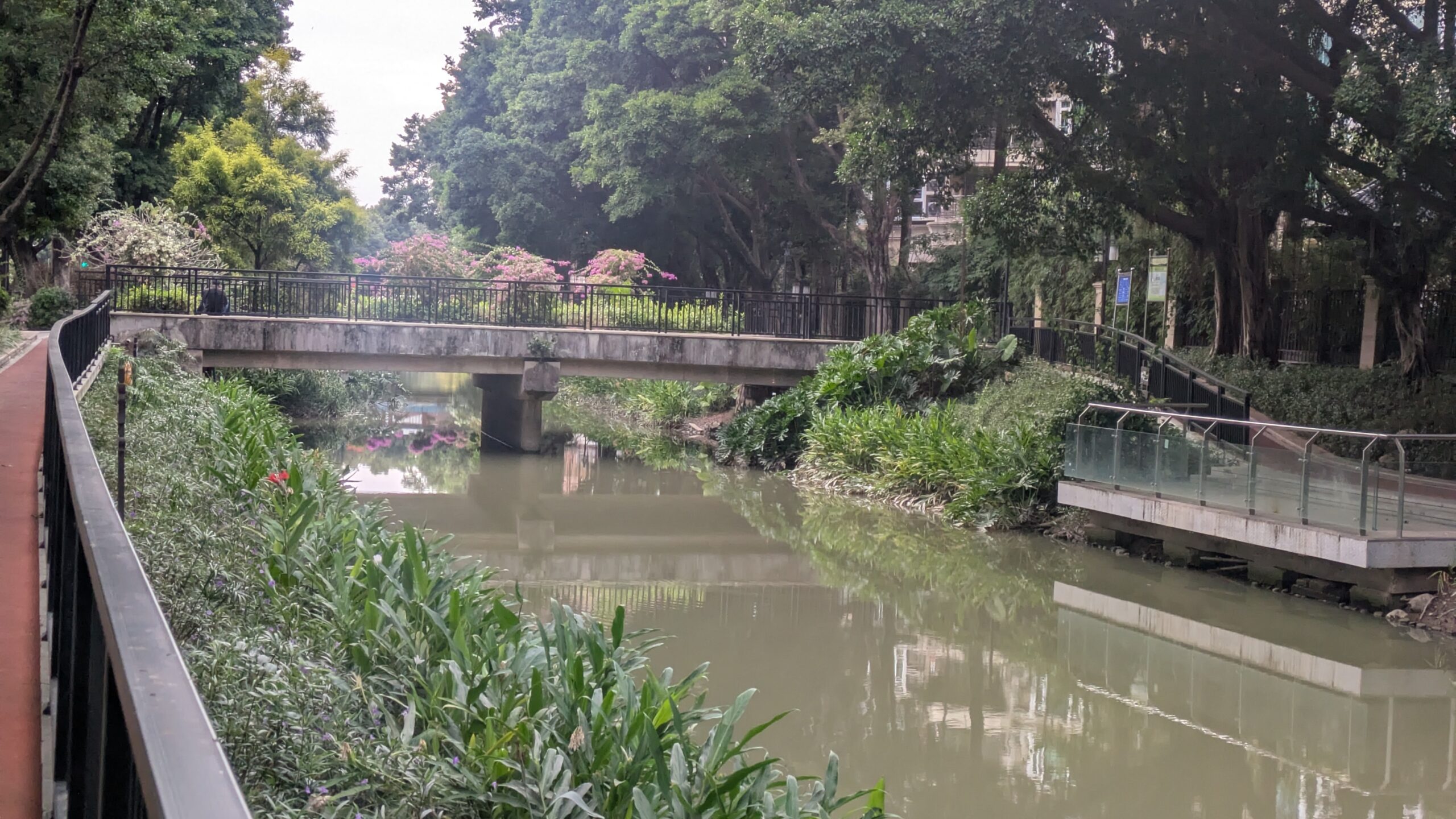
Medians are planted with trees and flowers. Overhead walkways and bridges are planted. Railings are planted … if there is a space available, there is a good chance trees or flowers are planted there.

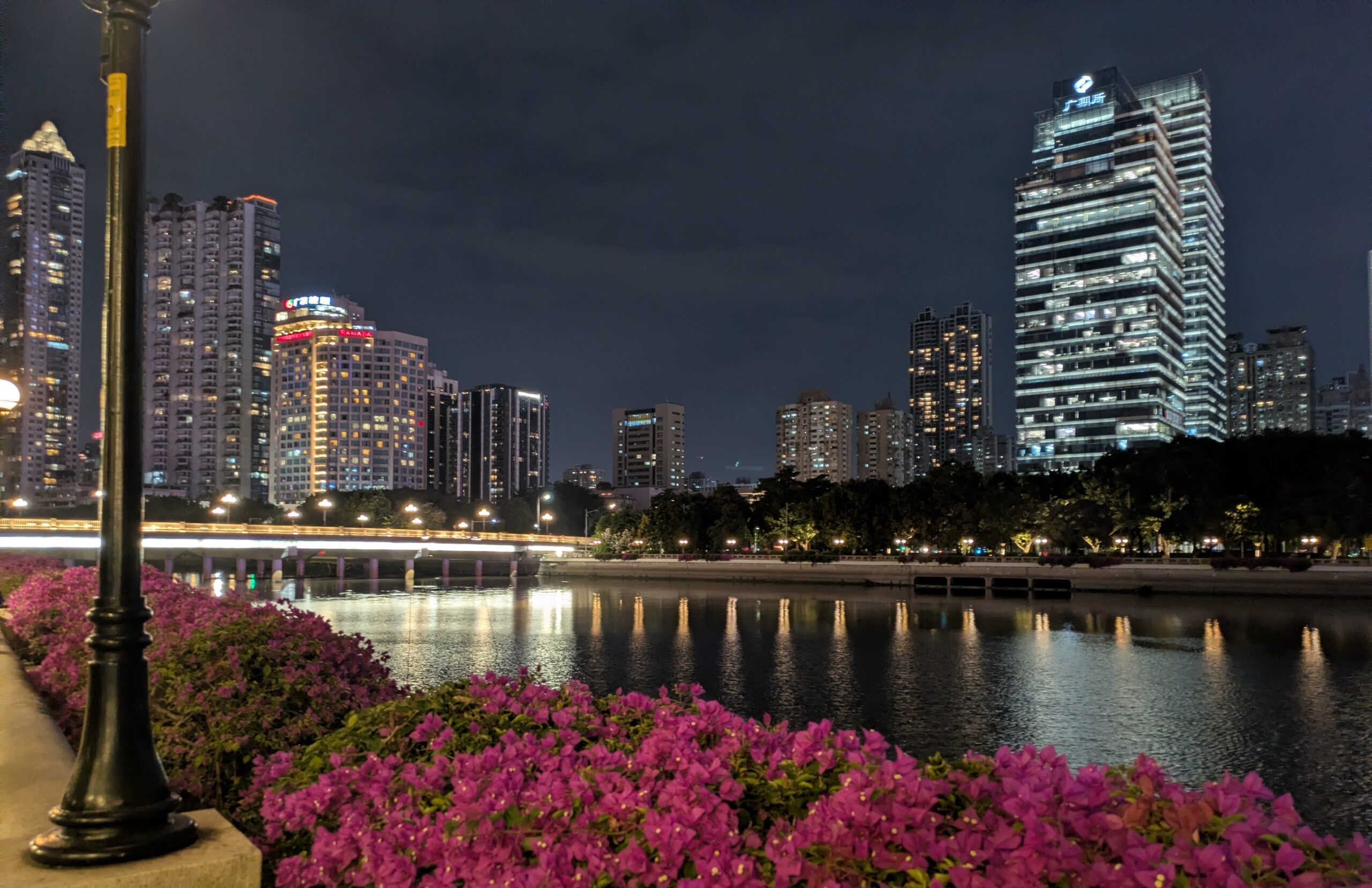
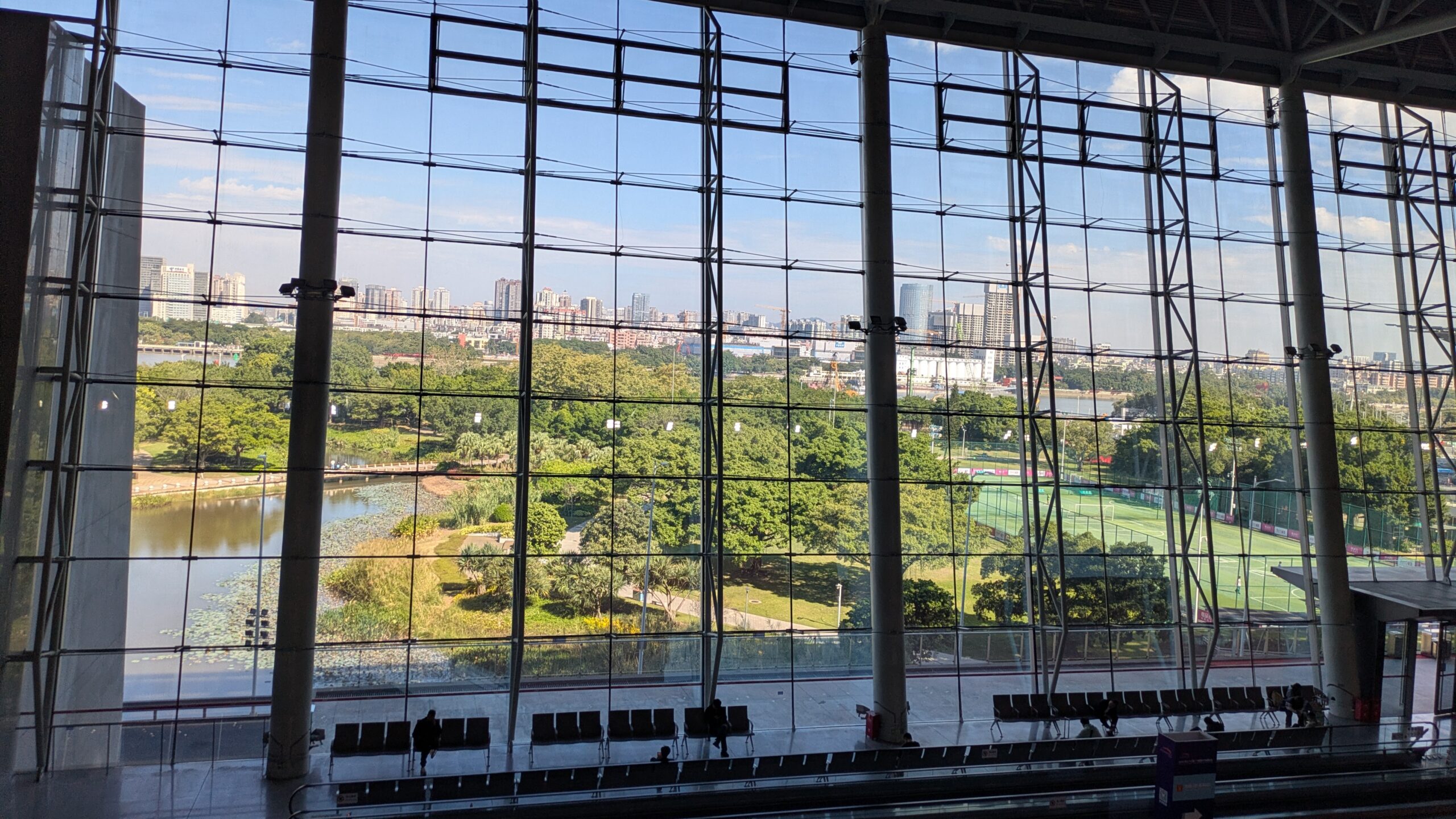
Parks are placed over the top of shopping malls, with roads and subways running under the malls. The parks are surprisingly green, clean, and well landscaped. Multiple parks are scattered throughout the city, typically no more than a block or two away. On a morning walk, you will frequently see young people running, children playing games, friends socializing, older people practicing Tai Chi, and office workers eating breakfast. In the evenings and weekends, people picnic, play games, barbecue, and even sing karaoke.
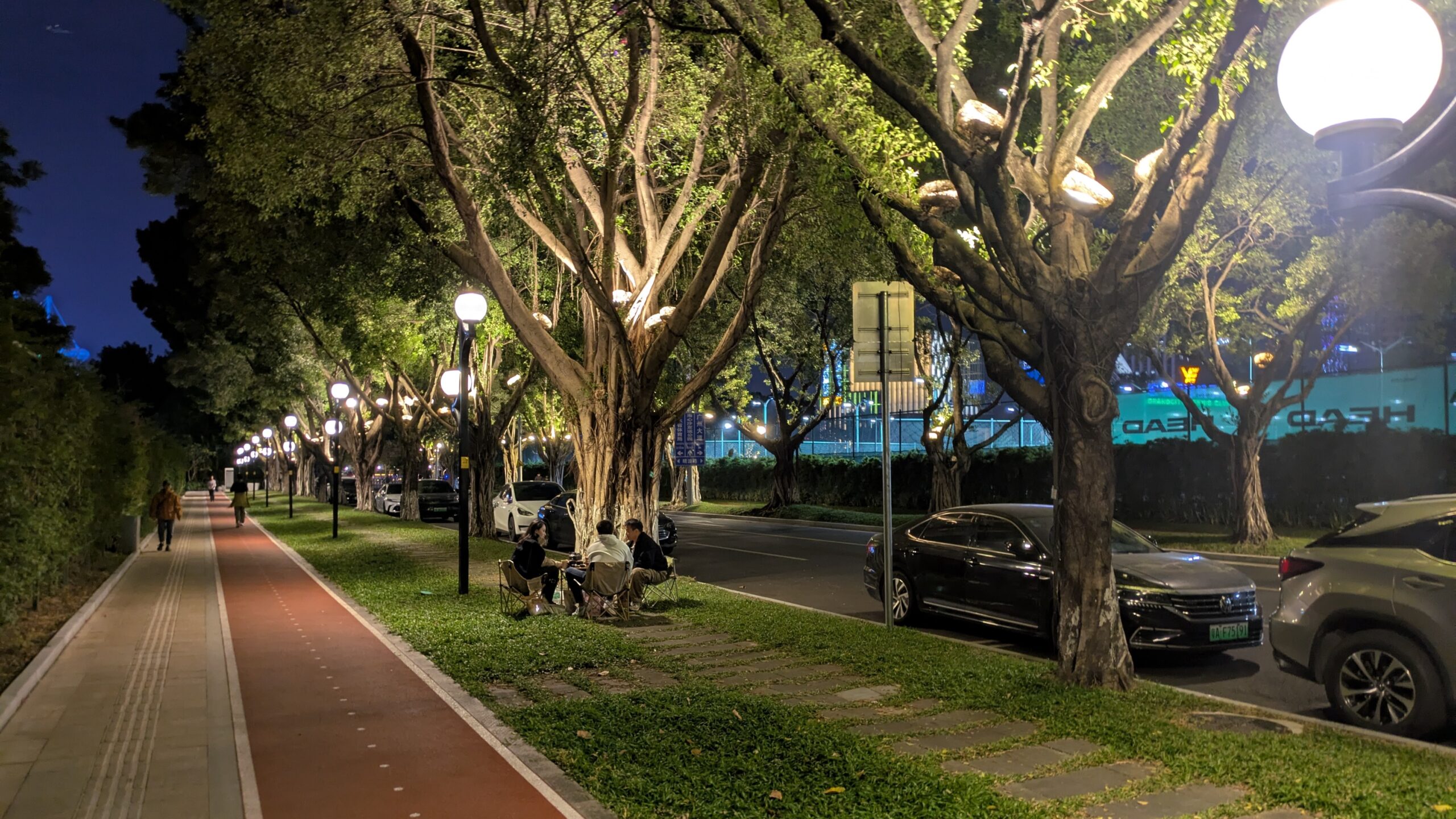
People may feel reluctant to go to Central Park after dark, but the parks in Guangzhou were well lit and felt safe any time of day. Part of that likely has to do with the cameras. Honestly, you are not interesting enough to bother following amongst the millions of other people unless you are doing something illegal. Police officers also tended to be nearby, and the few interactions I had with them were friendly, often welcoming me with English phrases that they had learned.
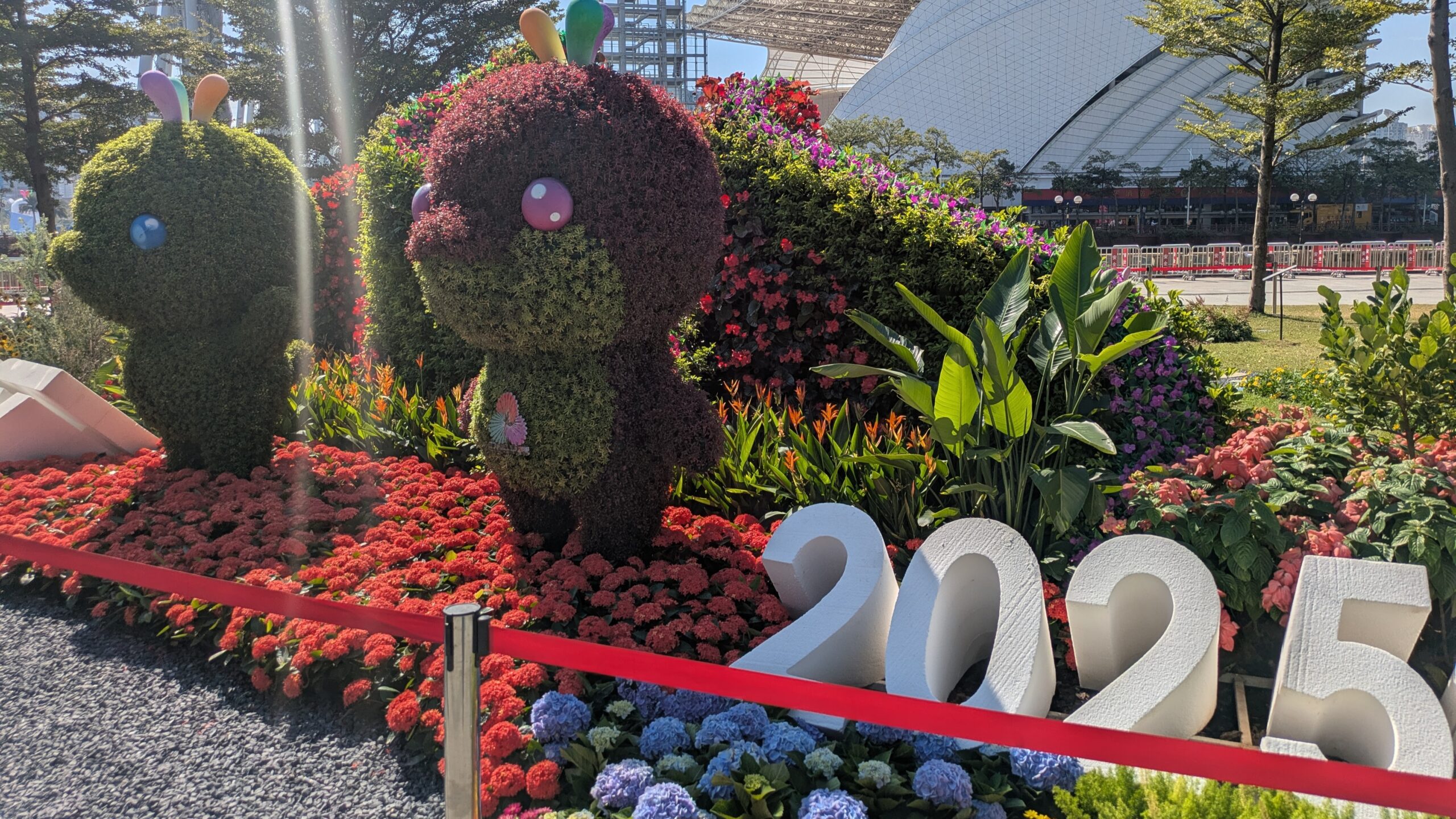
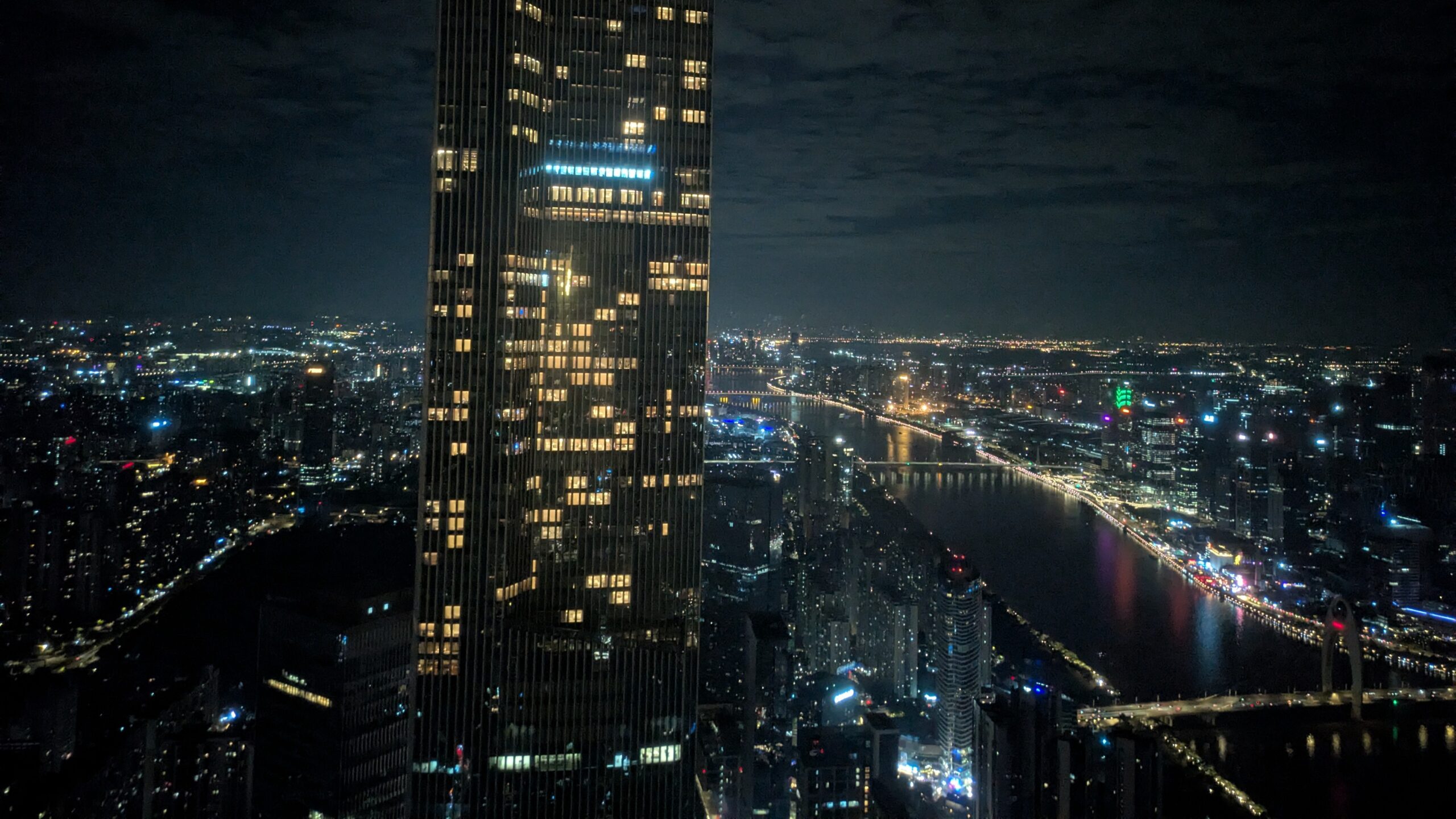
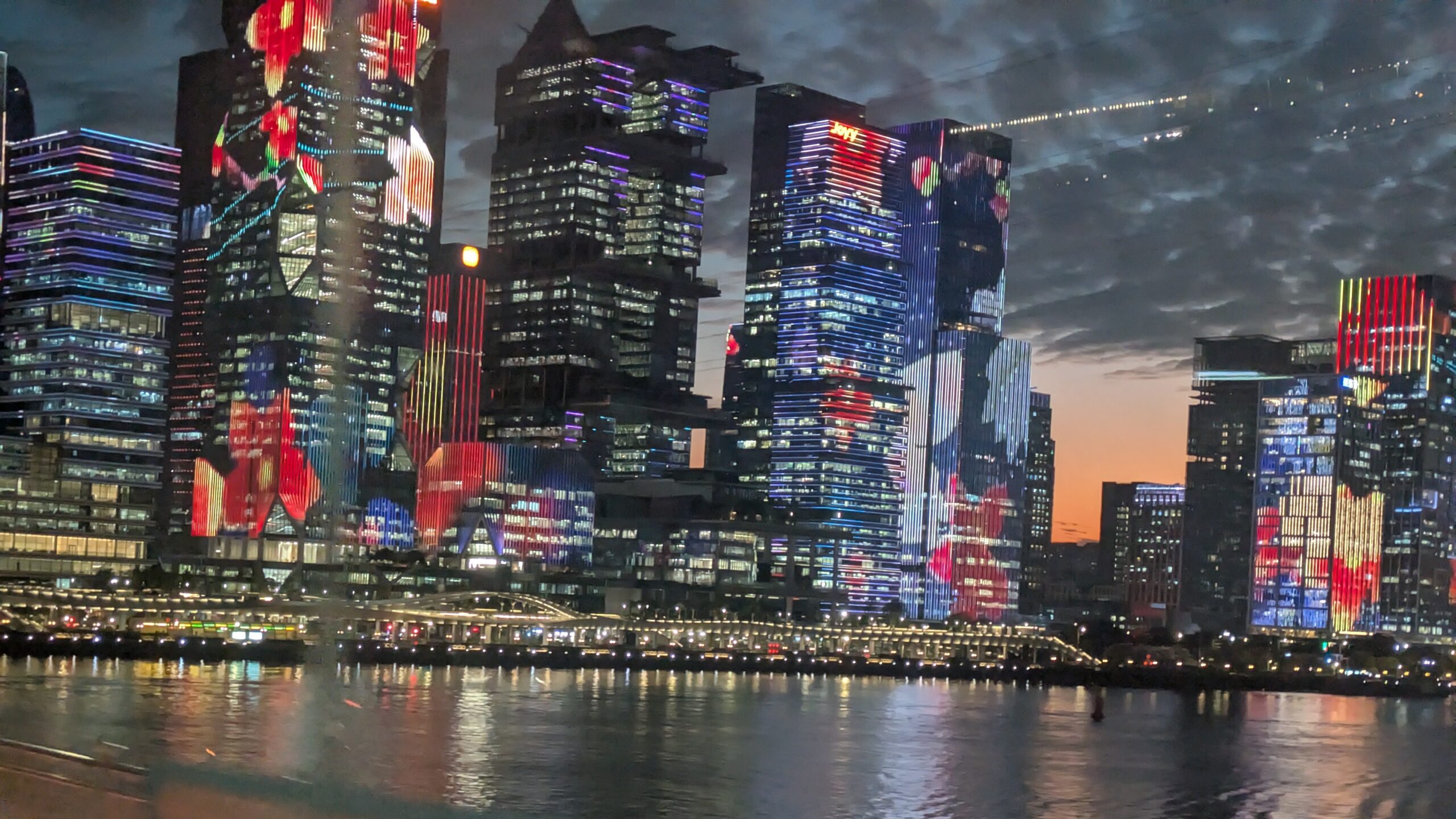
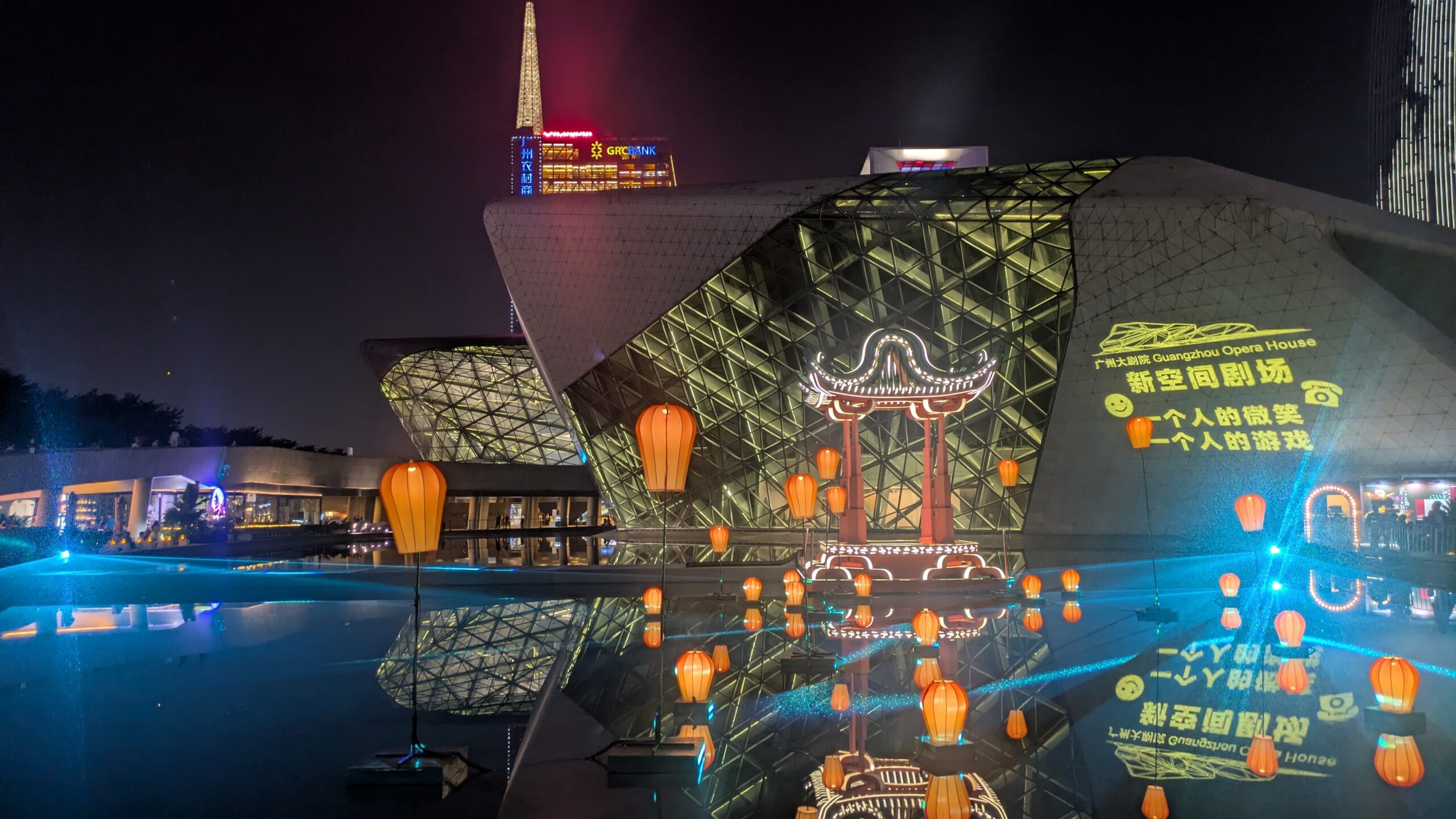
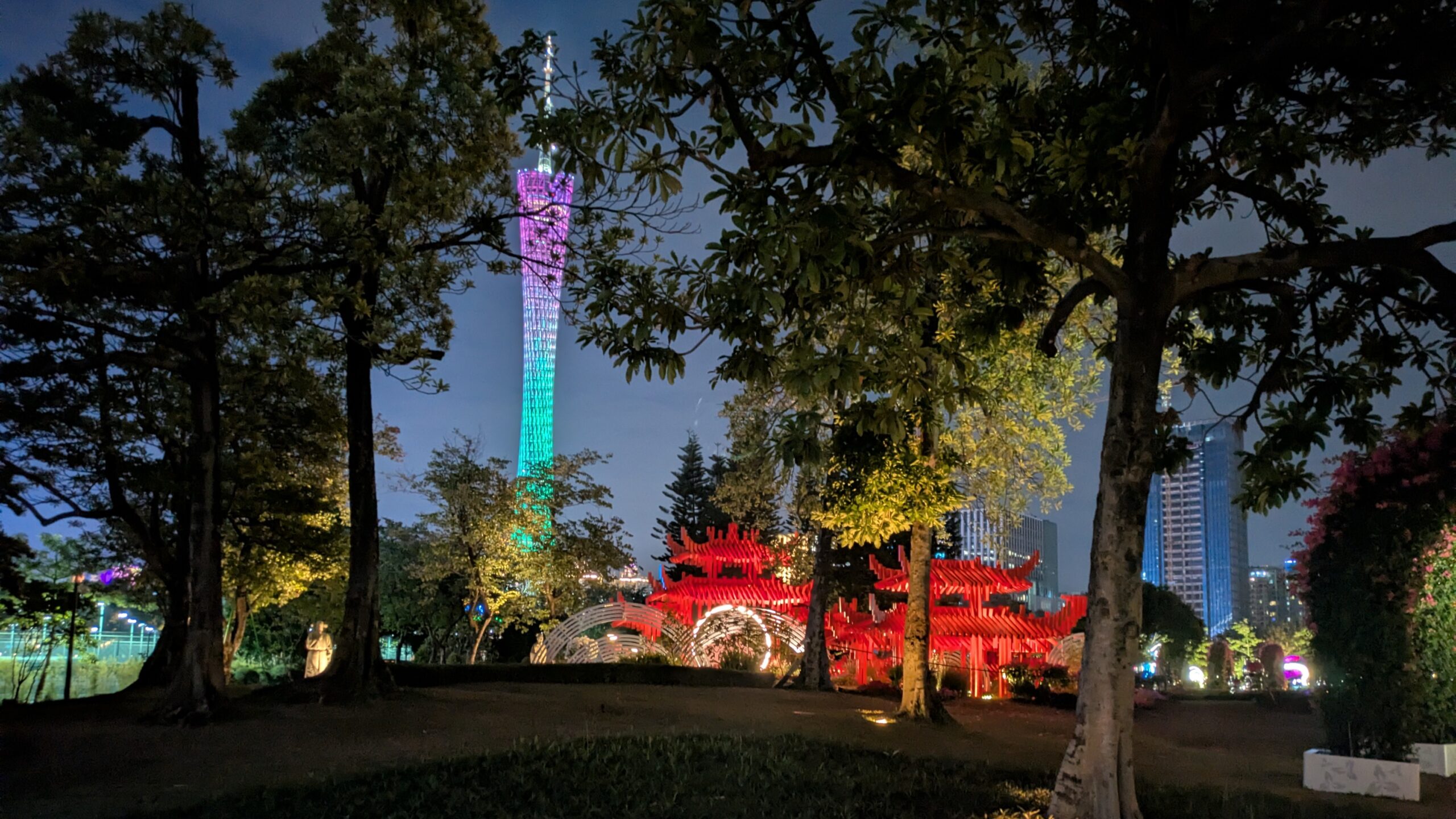
There are frequent public festivals and events. We were there during the Guangzhou International Light Festival and events for the National Games were happening nearby. While the light show undoubtedly used some energy, it was also undoubtedly cleaner than the fireworks last night. In the evening, the park next to our hotel was packed elbow to elbow with people.
The next day, it was pristine, like nothing had happened. Overall, we didn’t see people littering there, but much of the credit is undoubtedly due to people and robots cleaning up.
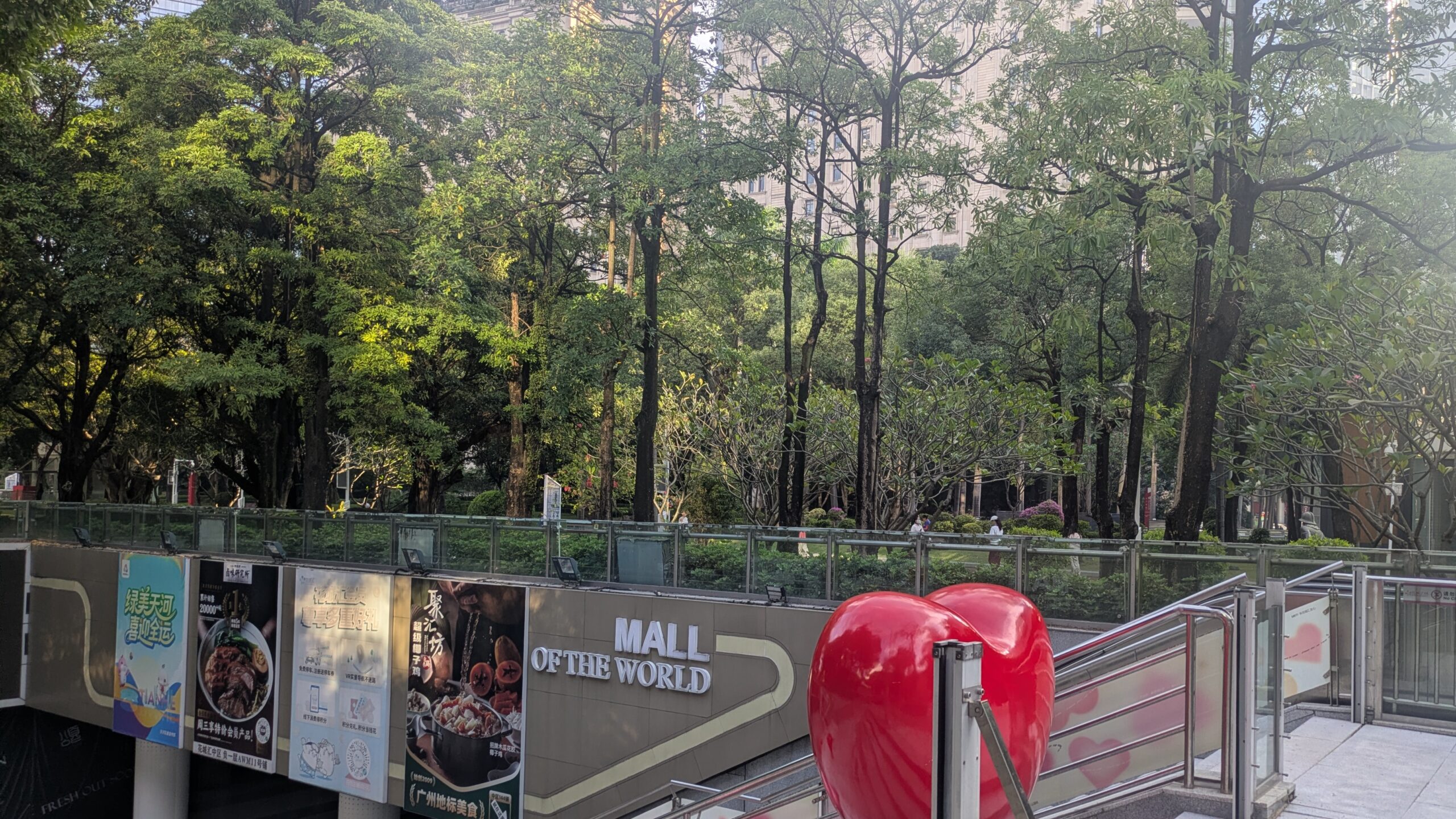
Flowers are in bloom throughout the year, which gives Guangzhou the nickname “Flower City.” However, like the “place of flowers” (Florida), it can get hot in the summer. Beyond tree-shaded walkways, underground malls connect large parts of the city together to let people walk for miles in air-conditioned comfort. It reminds me of a larger version of the Montreal underground city but dealing with the other extreme of temperature. Within the malls there are a wide range of shops and restaurants. If you need something from somewhere else, the malls also tend to include subway stations. Back on the surface, many of the parks form greenways, allowing people to easily walk without traffic and connect to mass transit.
Speaking of the subway (or Metro), it was surprisingly clean and civilized. Trains ran regularly and people got on and off relatively orderly. No graffiti, homeless, or rats. It doesn’t stink. Despite the language barrier, it is an easy way to get around, and preferable to getting stuck in traffic during peak hours. If you need to go farther, high-speed rail is also available.
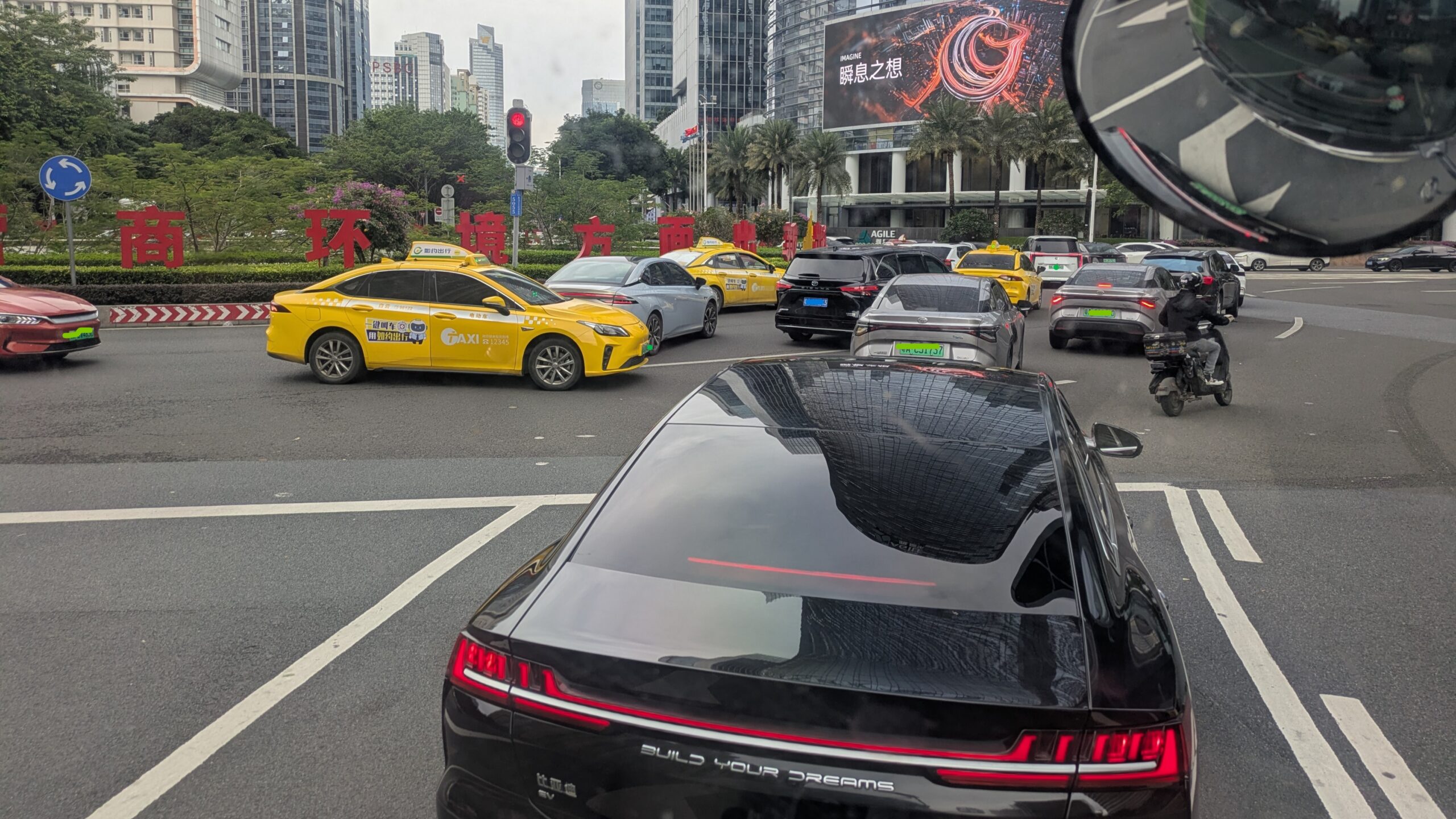
Beyond the mass transit, easily 80% of cars on the road were NEVs (BEV and PHEV, identifiable by green plates). Almost all newer domestic-branded cars were EVs. All of the car service cars we took were EVs. Busy streets are surprisingly quiet and free of exhaust fumes. Roads are pristine, and I had to explain to people there what a pothole was. Although you didn’t see too many chargers on the street, much of parking and charging was underground.
In speaking with my friend Leonard, who lives in Guangzhou, he mentioned that electric vehicles have better access to underground parking spaces with access to charging. This not only makes charging more convenient than trying to find a gas station but also adds convenience by letting people park closer in a covered spot. In contrast, I saw groups of ICE vehicles (identifiable by blue plates) forced to park outside. It reminded me of when NYC banned smoking in bars, and you would often see smokers huddled in the sidewalk.
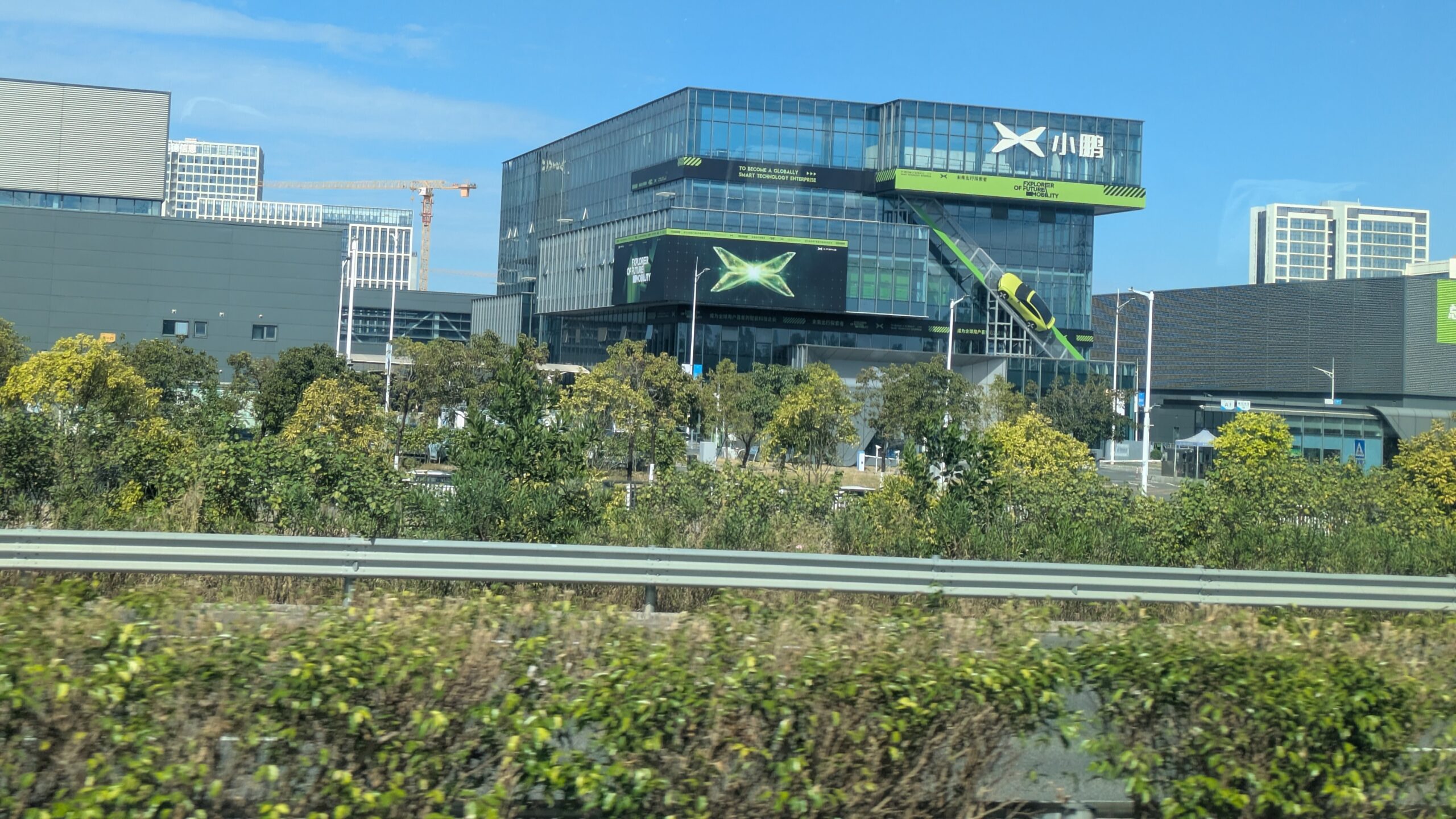
Beyond the City Center
XPENG, who sponsored my trip, had us take shuttle buses to events at their headquarters and factory in the suburbs of Guangzhou. While their new factory and headquarters were advanced and impressive, I found the view on the ride interesting. Shortly outside of the city center, you see large areas of green space.
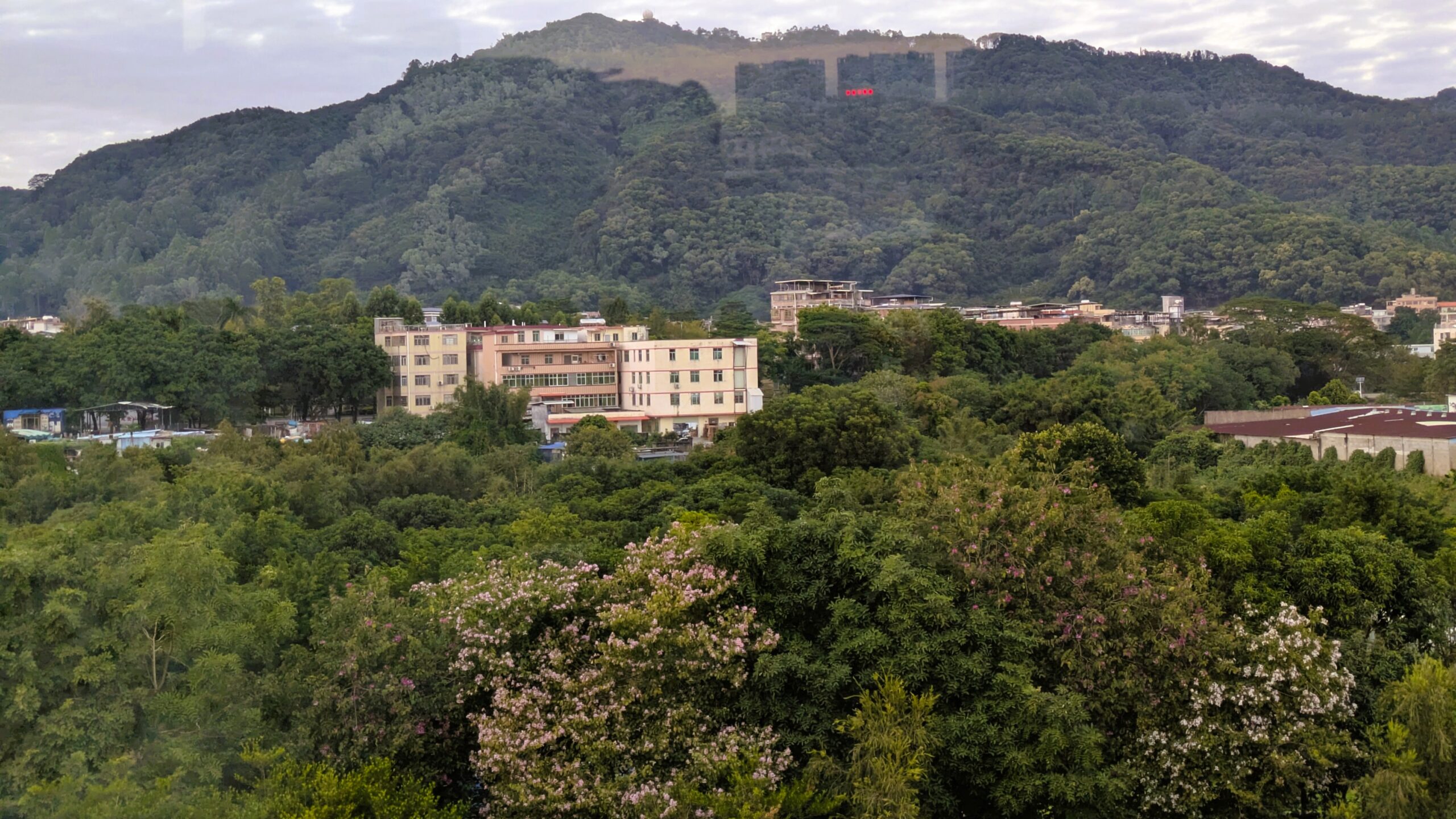
Suburban housing appeared to be clusters of apartment buildings surrounded by more green space. In a typical US city, the entire landscape would be completely segmented into quarter acre or smaller lots with detached houses.
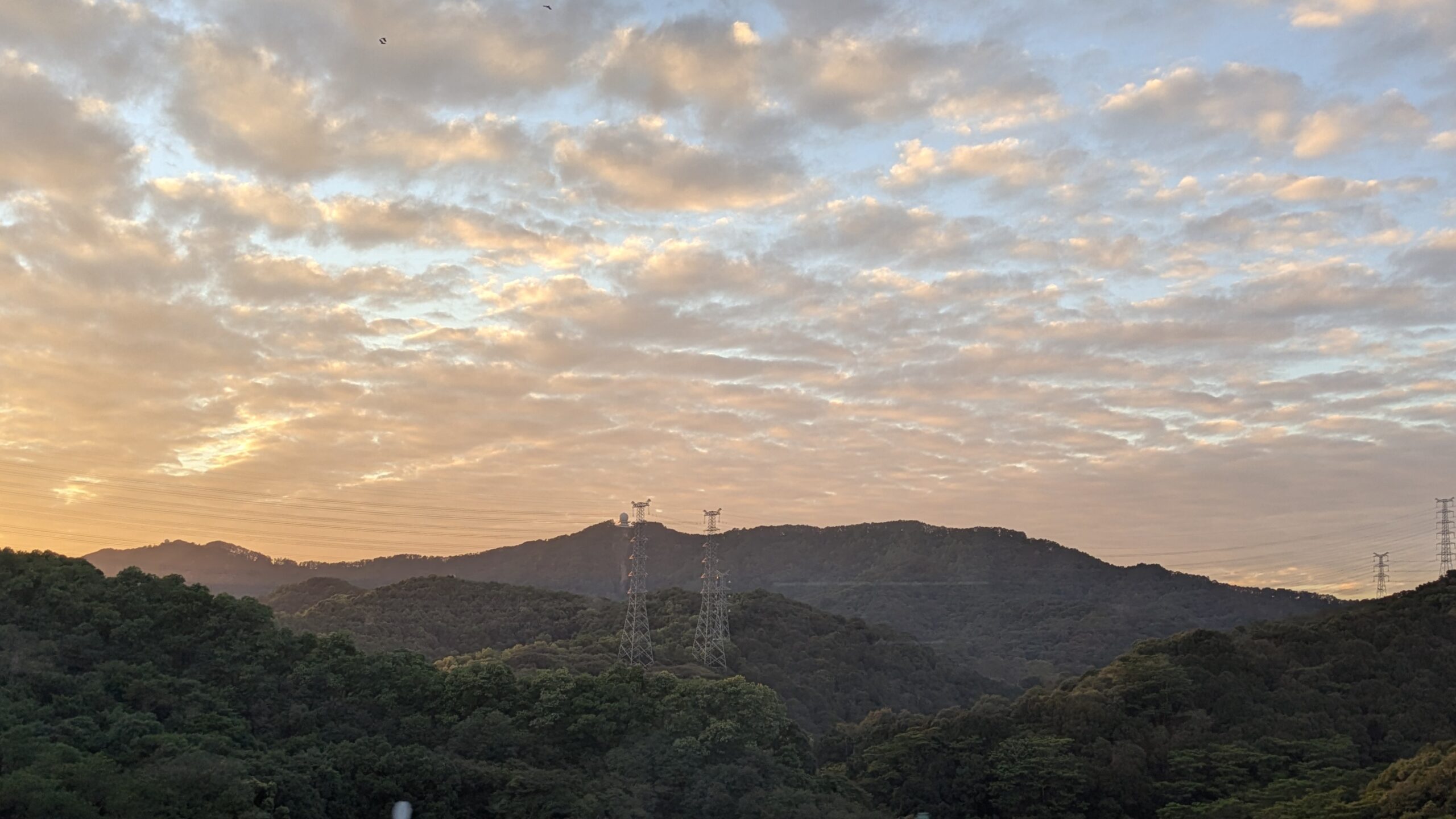
Often in the distance, you could see transmission lines heading into the city, likely also connecting to nearby cities, like Shenzhen and Hong Kong. Those transmission lines power the electrification of the city, with renewables taking an increasing part of the mix.
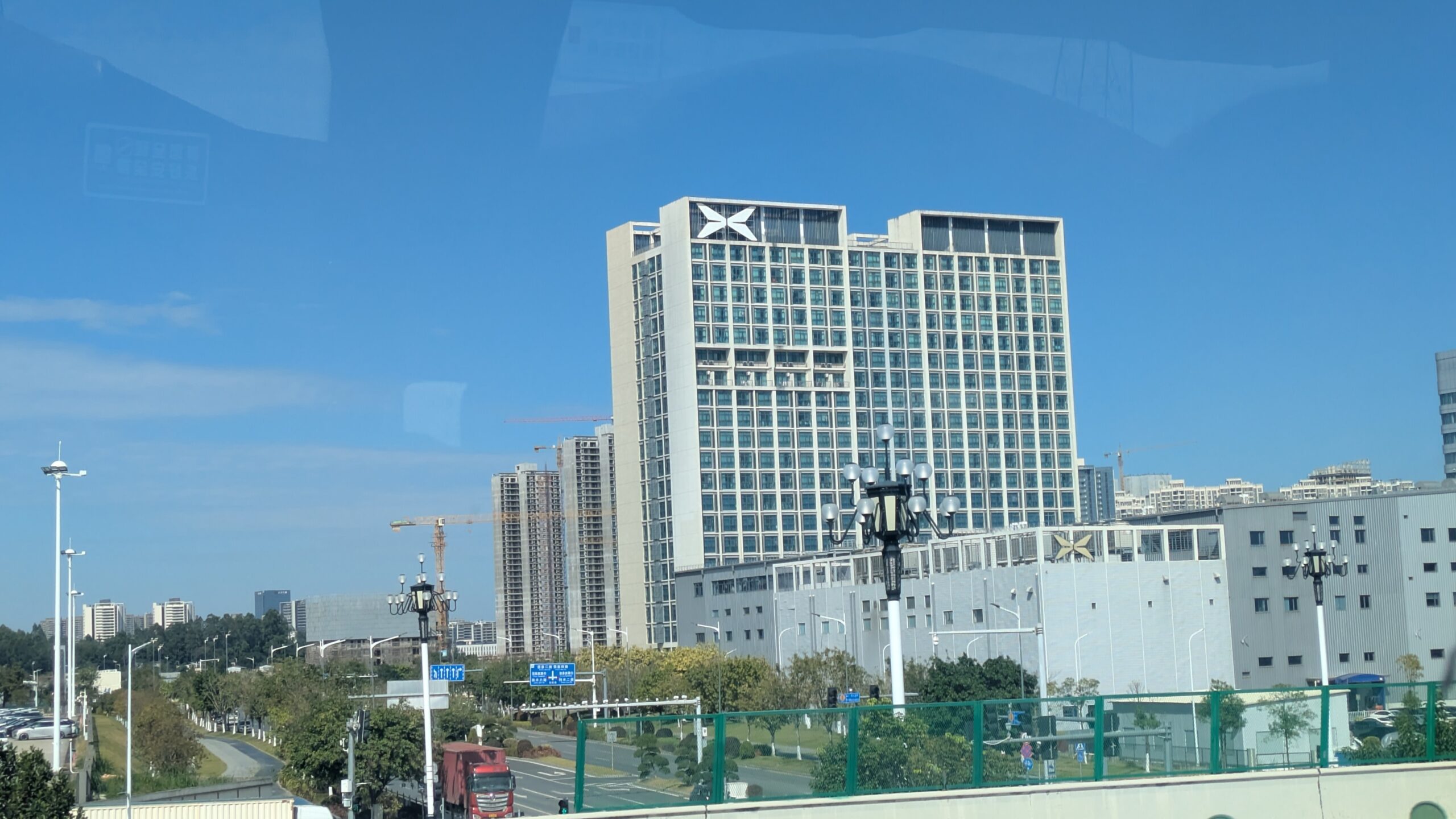
Industrial areas were also surrounded by green spaces. While public transit seemed accessible, housing was built next to the XPENG factory, making the commute even shorter. The cafeteria food at their facilities was also surprisingly good and affordable, with multiple options available for people who wanted to stay on campus.
A Surprisingly Human City
Despite having almost 20 million people as part of the Pearl River Delta megalopolis that has around 100 million people (depending on how you define it), the city seems smaller than it actually is. It doesn’t seem overwhelming or oppressive.
Guangzhou feels livable. Not just for people who love cities. If you want to experience the most advanced technology, cultural events, or natural surroundings, they all are available. If you want dinner for a couple of bucks or with a couple of Michelin Stars, both are nearby.
Living more efficiently while preserving natural spaces doesn’t just seem possible, it becomes more appealing. Surely some will still prefer to mow their segregated patch of grass, but that added work becomes less appealing when attractive shared spaces are available. Some may want to drive miles to get to the store, but having everything you need within a couple of blocks is more convenient. Some might feel scared of the cameras, but other people like not having to be scared of crime.
Overall, bringing clean technologies together can improve people’s quality of life. The improvement in people’s lives is dramatic in Guangzhou and goes far beyond the recent pollution reductions. My friend’s father grew up on a small farm and slept with pigs because they did not have room inside of the house for him. Now he owns a successful company that is currently working on the next generation of clean technology products.
Clean can be more appealing. While some of us may wear sacrifices made in the name of saving the environment as a badge of honor, many are not willing to make those sacrifices. Even if the clean technology is a more appealing proposition overall, some perspectives may need to change. Some may miss the roar of cars driving by or the smell of smoke. But people can live better and have lower impact than they do now. They can drive a better car that just happens to be an EV. They can spend more time enjoying nature without having to fence off their own small piece of it. They can commute faster living closer to work.
Guangzhou isn’t perfect. Scooter and e-bike traffic can be chaotic. Some commercial vehicles still need to electrify. Many people still work too many hours, which will need to change as China’s economy shifts to more domestic consumption. Their economy is still developing. Their electricity is not 100% renewable yet, which will also need to change. But they are embracing change.
Ultimately, while much of our politics are driven by fear, we shouldn’t fear a cleaner future. Some things will change, as change is inevitable. Fighting progress tends to leave people worse off in the long run. Cities like Guangzhou show how technology-driven change can become cleaner and better. If we also embrace change, we can expect cleaner and better years to come.
Sign up for CleanTechnica’s Weekly Substack for Zach and Scott’s in-depth analyses and high level summaries, sign up for our daily newsletter, and follow us on Google News!
Have a tip for CleanTechnica? Want to advertise? Want to suggest a guest for our CleanTech Talk podcast? Contact us here.
Sign up for our daily newsletter for 15 new cleantech stories a day. Or sign up for our weekly one on top stories of the week if daily is too frequent.
CleanTechnica uses affiliate links. See our policy here.
CleanTechnica’s Comment Policy